
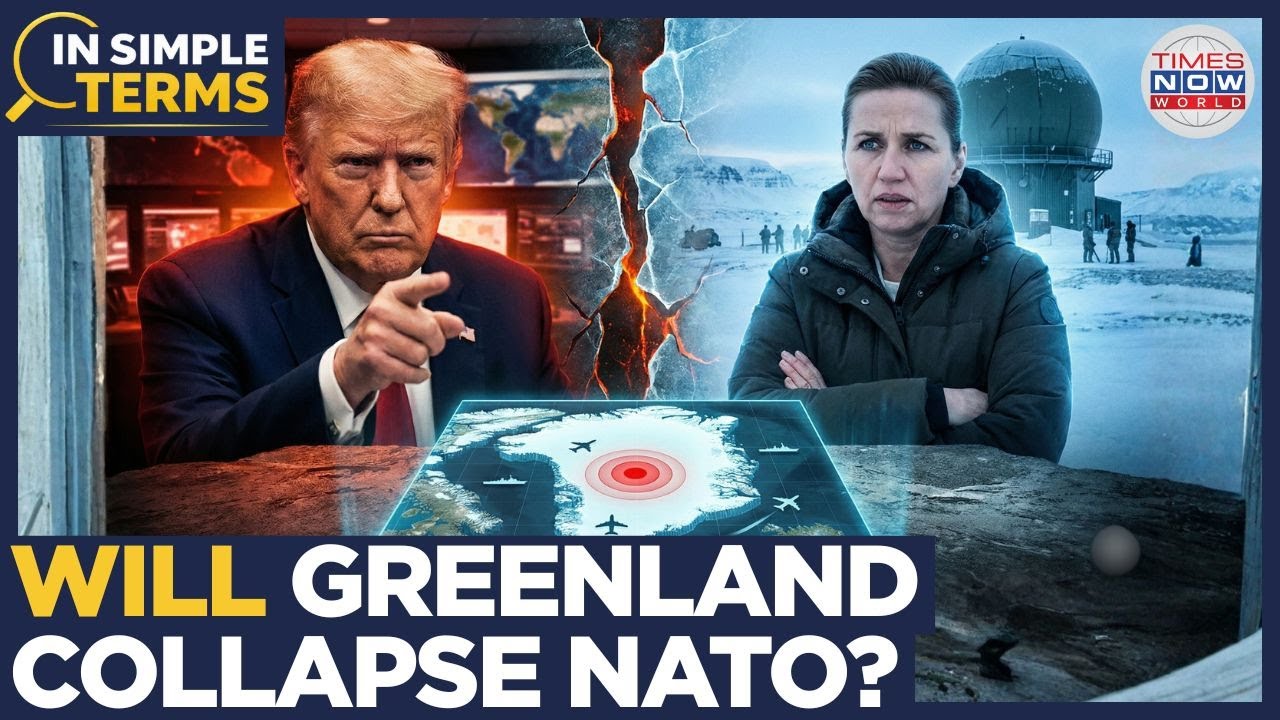
Brief Summary
The video discusses the potential crisis arising from the United States' interest in acquiring Greenland, highlighting the implications for NATO, international law, and global power dynamics. It examines the strategic importance of Greenland due to its geography, rare earth mineral resources, and future shipping lanes, while also addressing the concerns of Greenland's population and the potential for coercion. The video further explores the broader implications of this situation, questioning the relevance of international law and the potential return to a world dominated by power politics, using the example of Taiwan.
- The US wants Greenland for strategic and economic reasons, but already has access through existing agreements.
- Denmark refuses to sell Greenland, leading to a potential crisis within NATO.
- Europe is caught between supporting Denmark and relying on the US for security.
- The situation raises questions about international law, sovereignty, and the potential for a return to power-based global politics.
- The future of Greenland and the relevance of international rules hang in the balance.
Greenland at the Center of a Global Storm
The video starts by highlighting the US President's interest in acquiring Greenland, the world's largest island, and the potential consequences for NATO. The US President's statement about acquiring Greenland has been taken seriously, especially after the events in Venezuela. The video suggests that this is not a joke or campaign rhetoric.
Venezuela Raid That Changed Everything
The video references a hypothetical scenario where American special forces raid Venezuela to arrest President Nicholas Maduro, emphasizing the Trump administration's willingness to use military force. This action is portrayed as a demonstration of power and a departure from traditional diplomatic norms. The Trump administration claims it was a law enforcement operation serving an arrest warrant on a drug trafficker who happened to be president.
From Buying Greenland to Demanding It
The United States has attempted to purchase Greenland three times before, offering money each time, but this time, there is no offer, only a demand based on national security. The US is demanding Greenland for national security reasons, and the White House is not ruling out military force. This approach differs from previous attempts to buy Greenland, which acknowledged Denmark's sovereignty.
The Don Roe Doctrine and American Power
The Trump administration's policy, named the "Donroe Doctrine," expands the Monroe Doctrine to include the Arctic and Greenland, asserting absolute American dominance in the Western Hemisphere. This doctrine signals a shift towards a "might makes right" approach in international relations. The Western Hemisphere now includes everything from Alaska through the Arctic and Greenland down to Antarctica.
Why Greenland Matters to U.S. Security
Greenland's geographical location is crucial for US national security because it sits directly under the flight path of Russian nuclear missiles targeting the US east coast. The US operates the Thule Air Base in Greenland, which houses a critical early warning radar system. The Trump administration argues that mere access to this base is insufficient and seeks ownership for complete control. Greenland, Iceland, United Kingdom is the only route Russian submarines can take to reach the Atlantic without being detected.
Rare Earths, China, and the Arctic Race
Greenland possesses significant deposits of rare earth elements, essential for modern technology and military applications. China controls 70% of global reserves and almost all the processing of rare earths. An American company owns a valuable rare earth deposit in Greenland called Tarn Breeze, but it is located on Danish territory.
Melting Ice and Future Shipping Lanes
Climate change is melting Arctic ice, opening new shipping routes that could significantly shorten travel times between Asia and Europe. Control of Greenland would grant control over access to these future shipping lanes. Nuclear missile defense, critical minerals, future shipping lanes are the reasons why Trump wants Greenland.
Ownership vs Access: Trump’s Logic
Despite already having access to Greenland through the 1951 Defense of Greenland agreement, the US seeks ownership to ensure long-term control and defense. Trump argues that "you defend ownership, you don't defend leases," drawing a parallel to the Iran deal. Denmark has never refused American security requests.
NATO’s Article 5 Crisis
The potential US military action against Greenland, a part of NATO member Denmark, poses a crisis for NATO's Article 5, which states that an attack on one member is an attack on all. Such action could effectively end the alliance, undermining the foundation of European security and the promise of mutual defense. If the United States takes military action against Greenland, even limited action, that's one NATO member attacking another.
Europe’s Dangerous Dependence on America
Europe is heavily dependent on the United States for military and technological capabilities, making it difficult to oppose US actions. While European leaders have issued statements supporting Denmark's sovereignty over Greenland, they have not threatened any consequences if the US ignores this. Europe wants to defend Denmark, but they also desperately need the United States.
The Law of the Strongest Returns
The situation highlights a potential return to a world where the "law of the strongest" prevails, with the US potentially taking Greenland despite international norms. Europe is unlikely to stop the US, as they cannot afford to risk the relationship. The president is willing to go as far as he has to to make sure he defends America's interest.
The People of Greenland
The video emphasizes the perspective of the 57,000 Greenlanders, who have their own culture, language, and parliament, and are watching their future being decided without their input. They are a people, not a product, and their identity and rights should be respected. Greenland is not a business.
Money, Independence, and Coercion
Greenland relies heavily on financial support from Denmark, making independence economically challenging. The Trump administration has reportedly considered offering Greenlandic citizens $100,000 each to vote for independence and alignment with the US, raising questions about whether this constitutes a free choice or coercion. Greenland gets $620 million a year from Denmark, half their government budget.
Greenland, Taiwan, and Global Precedent
The US pursuit of Greenland sets a precedent that could be used by China to justify taking Taiwan, which China claims as its territory. The video questions the principle by which the US can take Greenland but China cannot take Taiwan. The US position completely violates international law and fundamentally contradicts the norms of international relations established after World War II.
Are We Back to Empires
The situation raises fundamental questions about the future of international relations: Are we living in a world of sovereign nations with equal rights, or are we returning to a world of empires and spheres of influence where the strong do what they want? This is the real crisis. Not just whether America takes Greenland, but what it means for every other dispute in the world.
NATO’s Existential Question
NATO faces an existential crisis, as it was not designed for a situation where one member threatens another. The world is watching to see if international law and sovereignty still mean anything, or if power is the only thing that matters. What happens when one member threatens another?
Do the Rules Still Matter?
The negotiations between the US and Denmark will determine Greenland's future and, more broadly, whether the rules that have governed the world for 75 years still apply, or whether we are in a new era where might makes right. The Greenland crisis is a question that will define the 21st century.

