
Brief Summary
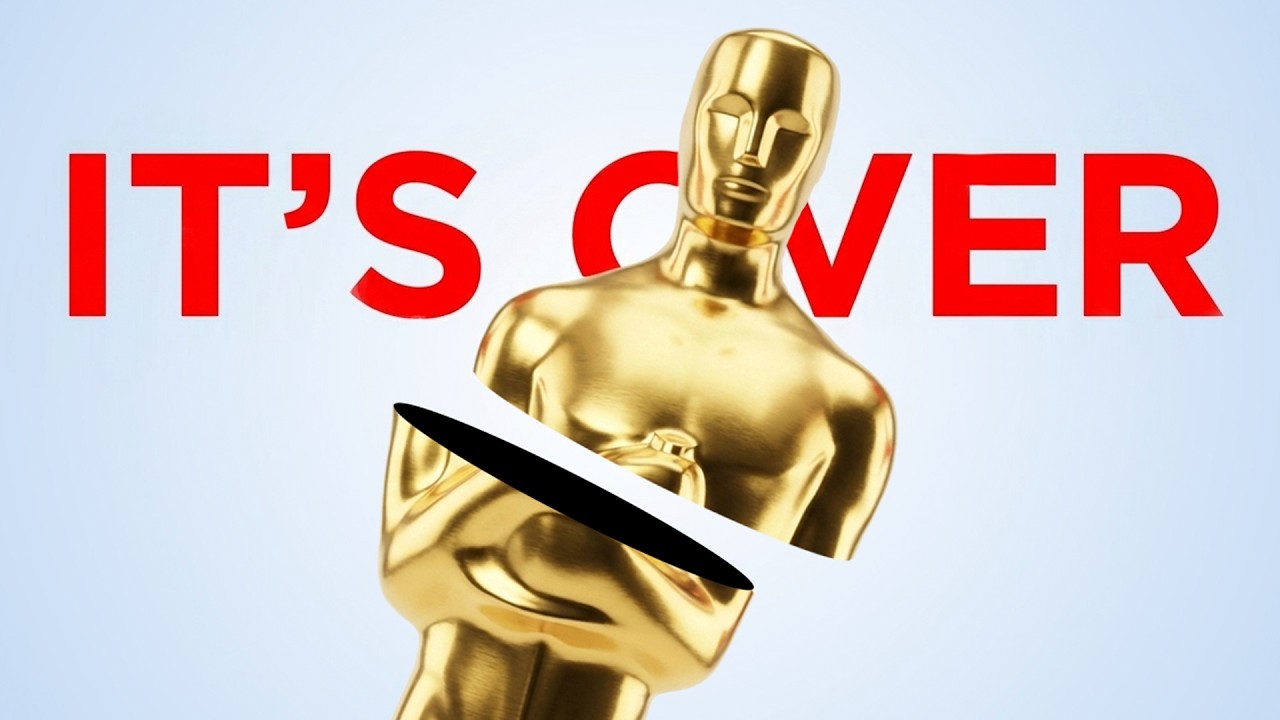
This video analyzes the decline of the Oscars, from a major cultural event to a struggling show for relevance. It identifies key factors contributing to this downfall, including loss of credibility due to controversial wins, scandals that tarnished its image, failure to adapt to the changing media landscape, lack of creativity in the ceremony itself, a decline in the prestige of the award, and the fragmentation of the audience's attention. The video concludes with the Oscars' attempt to revitalize itself by partnering with YouTube for future broadcasts, questioning whether this move will be enough to save the show.
- Loss of Credibility
- Scandals and Loss of Dignity
- Failure to Adapt to the Changing World
- Lack of Creativity
- Decline in Prestige of the Award
- Fragmentation of the Audience
Intro
The Oscars have experienced a significant decline in viewership, dropping from nearly 60 million in 1998 to just 9 million in 2021. In today's world, dominated by platforms like TikTok and YouTube, the Oscars have lost their ability to capture and maintain public attention. The video suggests that the upcoming Oscars ceremony may be a make-or-break moment for the event, highlighting a series of missteps, scandals, and poor decisions that have led to this critical juncture.
Losing credibility
The Oscars have a history of controversial decisions that have undermined their credibility. Examples include Raging Bull losing to Ordinary People in 1980, The Exorcist losing to The Sting in 1974, and Saving Private Ryan losing to Shakespeare in Love in 1999. In 2022, CODA won Best Picture over Licorice Pizza, a decision that quickly faded from public memory. These instances reflect a pattern of the Academy favoring safe, politically correct choices over bold, challenging films. The Academy has also overlooked great directors like Alfred Hitchcock and Stanley Kubrick. The Oscars have also shown a bias against popular genres like comedy, adventure, sci-fi, and horror, often relegating them to technical categories. The influence of figures like Harvey Weinstein, who manipulated the system through aggressive campaigns and fake rumors, further damaged the integrity of the awards. The audience perceives that the winners are not always the best, but the most convenient, diminishing excitement and interest in the Oscars.
Scandals
Scandals have significantly damaged the public image of the Oscars, with several awkward and embarrassing moments exposing the ceremony's fragility. In 1974, a naked man ran across the stage during David Niven's introduction of Elizabeth Taylor. In 1993, Jack Palance announced Marisa Tomei as Best Supporting Actress, leading to rumors that he had misread the name due to alleged intoxication. In 2017, Warren Beatty and Faye Dunaway incorrectly announced La La Land as Best Picture instead of Moonlight. In 2004, Carmine Caridi was expelled from the Academy for leaking screeners. In 2023, Andrea Riseborough's Best Actress nomination was controversial due to an unusual social media campaign. The most prominent scandal involved Will Smith slapping Chris Rock at the 2022 ceremony, overshadowing Smith's Best Actor win. While these scandals brought attention to the Oscars, they also diminished its prestige, turning the event into a global meme and causing people to stop taking it seriously.
The changing world
The Oscars' origins are rooted in a different era when television was the primary form of home entertainment. The first televised ceremony in 1953 transformed the Oscars from a private Hollywood event into a widely watched spectacle. The 1998 ceremony, boosted by the popularity of Titanic, drew record viewership. However, the culture around the Oscars began to decline in the early 21st century due to several factors. The Academy's increasing focus on independent and European productions, often featuring lesser-known actors, alienated the general public. Movie stars lost their commercial dominance to franchises and recognizable brands. The shift from television to computers, the internet, and streaming platforms altered viewing habits. The pandemic further exacerbated the problem, with theater closures and a somber 2020 ceremony resulting in the lowest viewership in Oscars history. The Oscars have struggled to adapt to these changes, continuing to operate as a TV event from the past.
Lack of creativity
The Oscars have struggled to maintain audience interest due to a lack of creativity in its presentation. Historically, charismatic hosts like Bob Hope and Billy Crystal were key to the ceremony's success, but recent choices have been less effective. The 2011 hosting by James Franco and Anne Hathaway was widely criticized, and the Kevin Hart situation in 2019 led to the Academy going without a host for several years. Jimmy Kimmel, a more recent consistent choice, has also faced controversy. Musical numbers, another staple of the Oscars, have also seen questionable decisions, such as the 2005 performance of "Al otro lado del río" by Antonio Banderas and Santana instead of the nominated artist, Jorge Drexler. While there have been creative successes, such as the T-Rex animatronic in 1994 and Ellen DeGeneres's group selfie in 2014, recent attempts to make an impact have often felt forced or counterproductive. The new format for presenting acting categories, with actors giving speeches to each nominee, has been criticized for dragging out the ceremony and increasing awkwardness.
Nobody wants to win
The prestige of winning an Oscar has diminished, with many in Hollywood no longer viewing it as a top priority. Some actors have experienced a career downturn after winning, such as Halle Berry, whose career faltered despite her historic Best Actress win. Melissa Leo, who won Best Supporting Actress in 2011, admitted that the award pigeonholed her and did not improve her career. Denzel Washington has stated that the Oscars hold no personal significance. Brendan Fraser revealed that his Best Actor win in 2023 did not lead to more job opportunities. Newer generations, like Amanda Seyfried and Seth Rogen, are increasingly skeptical of the award's importance. Actors now prioritize franchises, streaming roles, and viral moments over Oscars. Studios value social media followers and online buzz more than Academy Awards. Many recent Best Picture winners are not widely known or appreciated by the general public, limiting their cultural impact. International film festivals like Cannes have gained prestige, offering a platform for auteur cinema and bold filmmaking.
The audience
The fragmentation of the audience is a key factor in the Oscars' decline. The shared cultural experience of knowing the biggest films and actors has disappeared. Today, many people struggle to name even a few of the nominated films or their stars. The audience's attention is divided across numerous platforms and interests. The rise of social media platforms like Instagram, TikTok, and YouTube has further fragmented attention, with viral clips often overshadowing the entire ceremony. YouTube has become a popular alternative for following the Oscars without watching the full broadcast. Media outlets now focus on keeping the audience hooked for as long as possible, as demonstrated by Netflix's optimization for "second viewing." The rise of new screens has weakened the awards season media machine, making it harder for movies to gain traction. The "Barbenheimer" phenomenon in 2023 showed that interest can be reignited, but it requires an external cultural context to drive the event.
The future might be different
In December 2025, the Academy announced the end of its partnership with ABC and a new deal to stream the Oscars on YouTube starting in 2029. This move aims to connect with younger audiences who primarily consume content online. The YouTube deal allows for a live, free broadcast to over two billion users and removes the strict time constraints of traditional TV, allowing for longer speeches and full inclusion of technical categories. The plan includes multiple real-time audio tracks in different languages and integrates the red carpet, ceremony, behind-the-scenes content, and the Governors Ball into one experience. The Academy hopes this marks a new era for the Oscars, but it will likely spark new controversies. The Oscars lost their central position in global entertainment due to a combination of factors, including credibility issues, scandals, a ceremony that felt out of touch, creative exhaustion, the loss of the award's symbolic value, and a fragmented audience. Despite these challenges, the Oscars remain a widely discussed event. The video concludes by questioning whether these changes will be enough to adapt to the modern world or if this will be the final curtain call for the Oscars.

