
Brief Summary
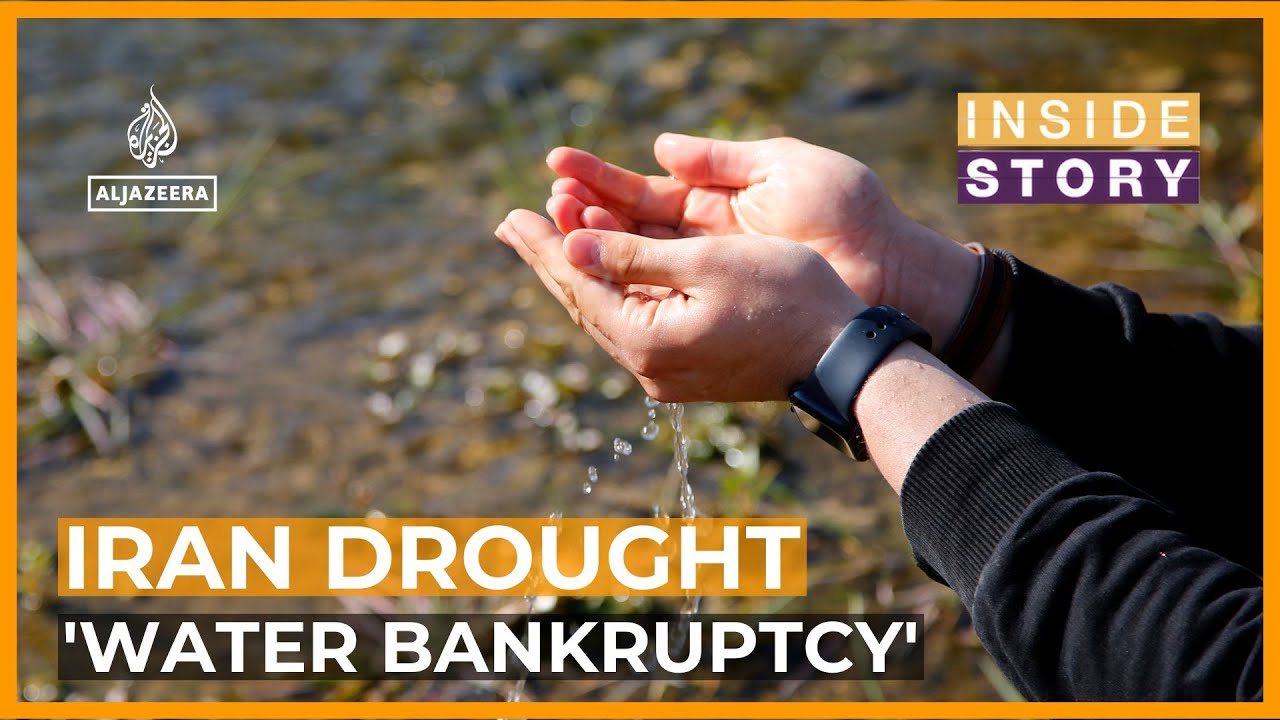
This episode of Inside Story on Al Jazeera English addresses the escalating water crisis, focusing on Tehran's potential water bankruptcy and the possibility of evacuation due to severe drought. It explores the factors contributing to water stress globally, including climate change, mismanagement, and increasing demand, and discusses potential solutions such as desalination, water recycling, and improved water management policies. The discussion also covers the risk of conflict arising from water scarcity and the importance of international cooperation to address this critical issue.
- Tehran is facing its worst drought in recorded history, potentially leading to water bankruptcy and possible evacuation.
- Climate change, mismanagement, and increasing demand are key factors contributing to global water stress.
- Solutions include desalination, water recycling, improved water management, and international cooperation.
Introduction: Tehran's Impending Water Crisis
Iran's capital, Tehran, is facing its worst drought in recorded history, leading to warnings from the president about potential evacuation. Water cuts have already begun, and no rain is expected, raising concerns about how the situation deteriorated and whether other cities face a similar fate. The program "Inside Story" addresses these questions, highlighting that Iran is facing water bankruptcy, with Tehran, home to over 10 million people, potentially unable to meet water demands within weeks.
Global Water Shortages and Conflicts
Many attribute Iran's water shortage to mismanagement, but climate change has worsened the problem, leaving dams and rivers dry after a summer of record-breaking temperatures. Iran is not alone; water shortages globally are disrupting trade, food production, and leading to conflicts, potentially forcing people to migrate. The UN predicts that by 2030, 700 million people may be displaced due to water shortages, with millions already caught in water-related conflicts. Examples include Mexico's inability to meet its water supply agreement with the US, Ethiopia's dam construction on the Nile causing concern in Sudan and Egypt, and water-related tensions between India and Pakistan. The expansion of digital technology and energy-hungry data centers also exacerbate the problem due to their massive water consumption for cooling systems.
Can Tehran Be Saved?
Alam Ahmed believes Tehran can be saved through massive national efforts, addressing multiple factors contributing to the crisis. Warnings about water scarcity have been issued for over 20 years, with the European Union identifying water as a potential source of conflict in the Middle East. The efficiency of water usage in Tehran and other Middle Eastern countries is a problem, along with a lack of public awareness about water conservation. Government policies also need improvement, with investments in serious measures to make water available. Peter Newman attributes the crisis mostly to climate change, drawing parallels to Perth, Australia, which faced a similar situation and implemented wind-powered desalination to overcome water bankruptcy.
Potential Solutions and Water Management
Marcus King suggests that while abandoning a city of 10 million is a possibility, ingenuity and improved water governance can avert such a scenario. He points to examples like Mexico City and Cape Town, which narrowly avoided "day zero" through resource reallocation and water tankers. Alam Ahmed suggests cities conduct water audits to evaluate water supply and demand, address water leakages, and educate the public on water conservation. He also recommends contingency plans and emergency measures, similar to the UK's "Cobra" meetings, to address the crisis. Peter Newman suggests desalination, recycling wastewater, and water-sensitive urban design as potential solutions, drawing from Australia's experience.
Education and Water Pricing
Marcus King emphasizes the importance of education in making people understand that water is a finite resource, especially in regions where water is heavily subsidized. He suggests governments should educate people on efficient water use rather than privatizing water. Water stress refers not only to the lack of water volume but also to water quality and timing, which are affected by climate change. Over-withdrawal of aquifers and population increase also contribute to water stress.
Desalination and Renewable Energy
Alam Ahmed notes that desalination is a key component of water management in the Gulf region, with Saudi Arabia having extensive experience in this area. He suggests cooperation among Gulf countries to benefit from desalination knowledge, given its high cost. He reiterates the importance of public education and expresses skepticism about evacuating Tehran. Peter Newman mentions that desalination can be powered by renewable energy, such as wind power, making it carbon neutral. He suggests that even though Tehran is not on the coast, it could potentially bring water from the Caspian Sea.
Water Stress and Conflict
Marcus King explains that water stress is shifting from being a threat multiplier to a catalyst for conflict, particularly in regions like the Horn of Africa and the Afghan-Iran-Pakistan corridor. Water stress can also trigger migration, potentially leading to conflicts in countries with protectionist regimes. Alam Ahmed agrees that water will be a trigger for conflict between countries, citing examples like tensions between Egypt, Ethiopia, and Sudan, as well as India and Pakistan. He emphasizes the need for international cooperation and a security-focused approach to water management.
Cooperation and New Threats
Peter Newman highlights positive progress in providing access to clean water globally through cooperation and aid projects. Marcus King identifies data centers as a new threat to global water scarcity, particularly when located in water-stressed regions. Alam Ahmed points out that aging and inefficient water pipes are a threat, requiring costly upgrades that create conflict between the public and private sectors. He also emphasizes the need to address growing populations and invest in infrastructure to improve water efficiency.

