
Brief Summary
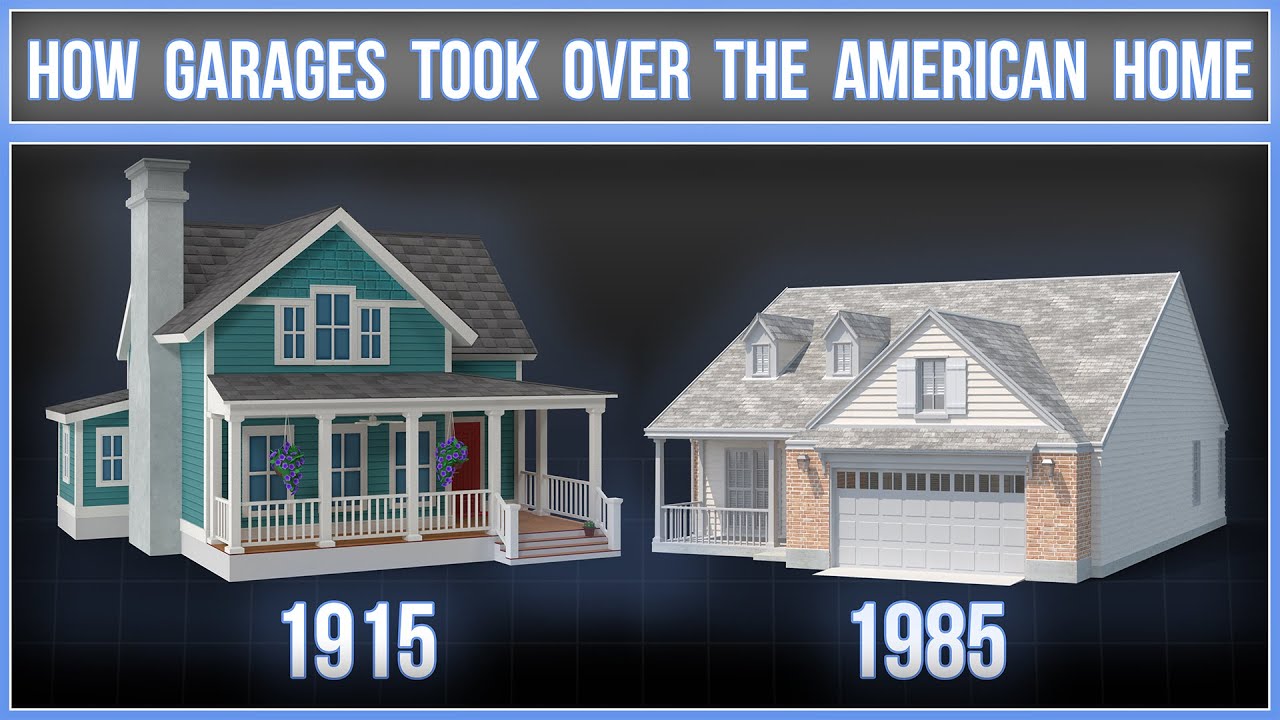
This video explores the evolution of the garage in American residential architecture, from its origins as a humble carriage house to its prominent placement in modern "snout houses." It examines how the rise of the automobile, suburban development, and changing lifestyles transformed the garage from a mere storage space to a dominant feature of the home's facade, often at the expense of front porches and pedestrian-friendly streetscapes.
- The garage evolved from a hidden, practical outbuilding to a prominent feature of the American home.
- The rise of the automobile and suburban development significantly influenced garage design and placement.
- The "snout house" archetype reflects the extreme prioritization of garage space in modern home design.
Introduction
The video introduces the prominent placement of garages in modern American suburban houses, contrasting it with the historical context where garages were discreetly tucked away. It poses the question of how garages replaced front porches as a defining feature of home facades.
Carriage Houses: The Precursors to Garages
In the 19th century, wealthy families used carriage houses to store horse-drawn carriages, hay, and tack, often located at the rear of the property. These structures were separate from the main house due to their practical and messy nature. Front porches were the social hubs of homes, fostering interaction with neighbors.
Early Adaptations: Repurposing Carriage Houses
When automobiles emerged in the late 1800s and early 1900s, early car owners initially used existing carriage houses and stables to store their vehicles. However, this solution had drawbacks, such as the unpleasant smells associated with horses.
The Rise of the Automobile and the Need for Garages
The invention of affordable, mass-produced cars, like Henry Ford's Model T, led to increased car ownership among middle-class families. This created an urgent need for dedicated shelters for automobiles, as they were more delicate than horses and required protection from the elements.
Early Garage Designs and Innovations
In the 1910s and 1920s, Americans began constructing detached private garages, often simple sheds located at the rear of the lot. Inventors introduced improvements like sliding garage doors and, in 1921, the overhead sectional garage door, which was patented by C.G. Johnson. In 1926, Johnson also introduced the first electric garage door opener.
Garages Become a Standard Feature
Government investments in roads encouraged driving and made cars more central to American life. By the 1920s, homebuyers expected a garage on any house they considered. Companies like Sears, Roebuck & Co. offered prefabricated garage kits. Architect Frank Lloyd Wright anticipated the attached-garage trend as early as 1910 with his Robie House, featuring a three-car garage integrated into the home's design.
Post-War Expansion and Suburban Development
The attached garage gained popularity in the post-World War II era, driven by economic prosperity and increased car ownership. Garages expanded in size, often accommodating two cars side by side. Suburban developments were planned with the automobile in mind, featuring wide front yards and driveways, leading to the placement of garages at the front of the house.
The Garage as a Multipurpose Space
Garages became multipurpose spaces for storing tools, lawnmowers, and other items. The image of the American dad working in his garage became a cultural icon. As garages moved to the front, front porches shrank, and living spaces shifted to the backyard.
The Rise of the "Snout House"
In the late 20th century, garages grew even larger, dominating the front facade of homes, leading to the "snout house" archetype. This design prioritized garage space, often making the garage door the defining feature of the front elevation.
Critiques and New Urbanism
Architects and urban planners criticized the monotony and unfriendliness of streetscapes dominated by front-facing garages. Some newer communities reintroduced rear alleys or required garages to be set back, bringing back front porches and a more traditional street presence.
Conclusion
These planning trends signal a recognition that the garage doesn't need to be the front-and-center "face" of the home. The video concludes by noting the garage's significant impact on American domestic life and its likely continued importance in home design.

