
Brief Summary
This video explores the history, production, and varieties of soy sauce. It details the ancient origins of soy sauce in China, its evolution and spread to Japan and Korea, and the key ingredients and fermentation processes involved in its creation. The video also contrasts traditional brewing methods with modern, faster production techniques, highlighting the differences in flavor and quality.
- Soy sauce originated in ancient China as a fermented paste for preserving food.
- Traditional soy sauce production involves fermenting soybeans and wheat with koji mold, yeast, and bacteria over months.
- Different types of soy sauce exist, varying in saltiness, sweetness, and ingredients.
- Modern production methods can significantly shorten the fermentation process, but often at the expense of flavor and quality.
Intro
The video introduces soy sauce as a common condiment with a rich history and complex production process. It promises to explain how this umami-packed liquid is made, emphasizing that it's more than just salty water with food coloring. The introduction highlights the centuries-old process involving craftsmanship, patience, and microbial activity that goes into making authentic soy sauce.
Where Soy Sauce Comes From
Soy sauce originated in ancient China over 2,000 years ago from a fermented paste called "jang," used to preserve meat, grains, and vegetables. As it spread to Japan and Korea, it evolved into the liquid condiment we know today. The Japanese version, "Sho Yu," and the Chinese "Jang Yu" differ slightly in ingredients and taste but share the same foundational process: fermenting soybeans with grains using mold, yeast, and bacteria.
The Basic Ingredients
Soy sauce is made from soybeans, wheat, salt, water, and a fermentation culture known as koji. The soybeans are steamed until soft, while the wheat is roasted and crushed to enhance flavor, aroma, and sweetness. Combining these ingredients creates an ideal environment for koji mold to thrive.
Koji Mold & Fermentation
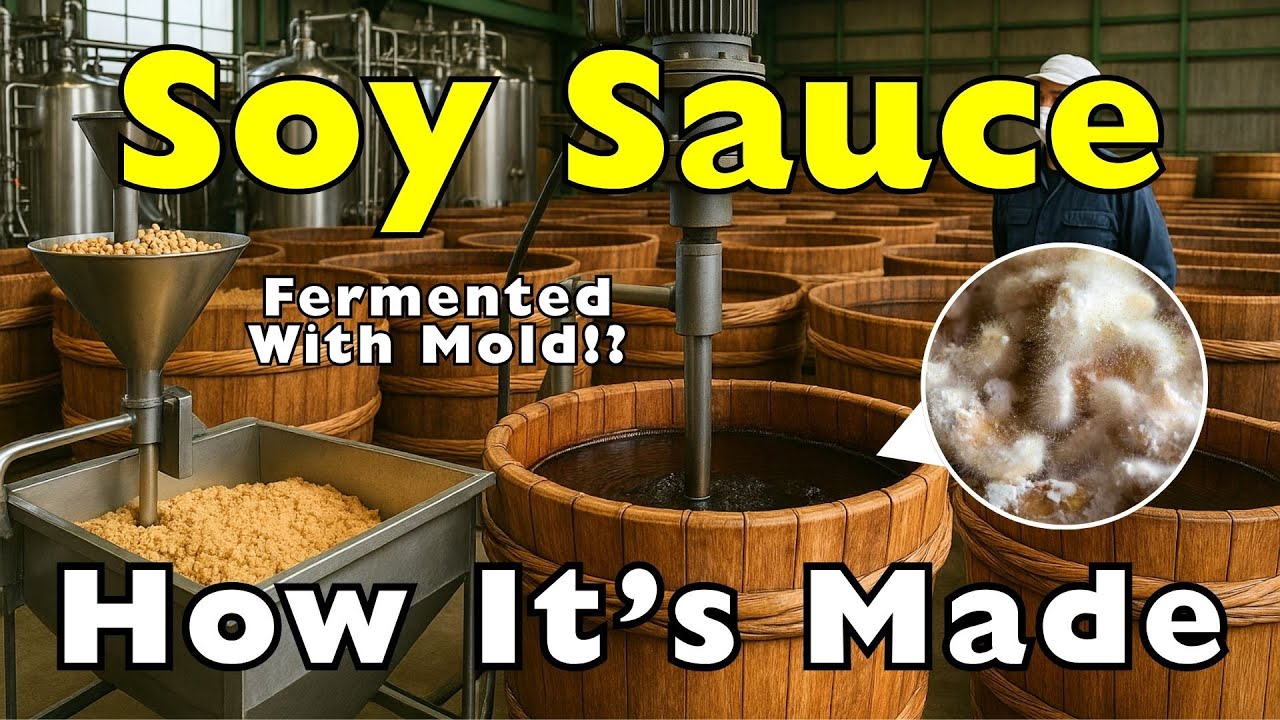
Koji mold, specifically aspergillus, is crucial for soy sauce production, initiating enzymatic breakdown. This process breaks down proteins into amino acids, including glutamic acid (responsible for umami flavor), and starches into sugars that feed subsequent fermentation stages. After the koji mold works for a few days, the mixture is combined with brine to form moromi, a thick mash that ferments for 6 months to over a year. During fermentation, yeast and lactic acid bacteria further break down the mash, producing alcohol, aroma compounds, and a stable, flavorful sauce. Regular stirring in open vats allows naturally occurring microorganisms to contribute, developing the color, flavor depth, smooth mouthfeel, and tanginess of authentic soy sauce.
Pressing and Refining
After months of fermentation, the moromi is pressed through cloth-lined presses to separate the liquid from the solids. The first pressing yields the highest quality soy sauce, sometimes labeled "first draw" or "nama shoyu." The remaining solids can be repressed or repurposed as lower grade soy sauce. The extracted liquid is then refined by allowing it to settle, removing proteins and sediments. Some producers pasteurize it to halt fermentation, stabilize flavor, and intensify color and aroma through Maillard reactions.
Different Types of Soy Sauce
Different types of soy sauce include light soy sauce (usukuchi), dark soy sauce (koi cuchi), tamari, and double-fermented soy sauce, with variations arising from wheat-to-soy ratios, fermentation time, and added flavors. Light soy sauce is saltier and thinner, suitable for seasoning without overpowering dishes, while dark soy sauce is thicker and sweeter, ideal for marinades and rich cooking. Tamari is often gluten-free, made with little to no wheat, and is richer and less salty as a byproduct of miso production. Commercially, there's a divide between naturally brewed and chemically hydrolyzed soy sauces, the latter using acid hydrolysis for quick protein breakdown, resulting in a less nuanced flavor and often containing added caramel color and artificial flavoring.
Modern Production vs Traditional
Modern soy sauce production often prioritizes speed, with some factory-made versions completing the process in days using hydrolyzed vegetable protein (HVP), salt, corn syrup, and flavor enhancers to mimic traditional soy sauce. These sauces often require colorants and chemical preservatives to achieve the look and shelf stability of real soy sauce. However, many manufacturers, especially in Japan, China, and Korea, still use traditional brewing methods or blend naturally brewed soy sauce with HVP to balance cost and quality. Checking the label for ingredients like hydrolyzed soy protein or caramel coloring can help identify shortcut versions.
Final Thoughts
Soy sauce is more than just a salty condiment; it's the result of steamed soybeans, roasted wheat, friendly mold, months of fermentation, and the combined effort of countless microbes. It reflects centuries of culinary tradition and a deep understanding of flavor chemistry. Despite its simple appearance, the journey from bean to bottle is complex, showcasing how patience, time, and nature can transform simple ingredients into something extraordinary.

