
Brief Summary
The video explains how cotton is transformed from a plant into fabric for clothing and other products. It highlights cotton's versatility, historical use, and the multi-stage process required to convert raw cotton fibers into durable fabric. The process includes harvesting, ginning, baling, spinning, weaving or knitting, dyeing, and finally, cutting and sewing into finished products.
- Cotton is a versatile crop used for clothing and home furnishings.
- The transformation process involves harvesting, ginning, spinning, weaving/knitting, dyeing, and sewing.
- Mechanical harvesters and cotton gins have significantly improved efficiency.
Introduction to Cotton
Cotton is a versatile crop grown in tropical and subtropical regions, used globally for clothing and home furnishings. Its use dates back to 3,000 BCE in Asia and South America. The video outlines the transformation of cotton from its natural fluffy fibers into durable fabric through several stages.
Harvesting Cotton
The initial step involves harvesting the cotton plant, which has evolved from manual labor to machine-driven processes. Stripper harvesters use rollers or mechanical brushes to remove the entire cotton boll, while spindle pickers use revolving spindles to extract the fiber. This mechanical harvesting significantly speeds up the process.
Fiber Separation and Yarn Production
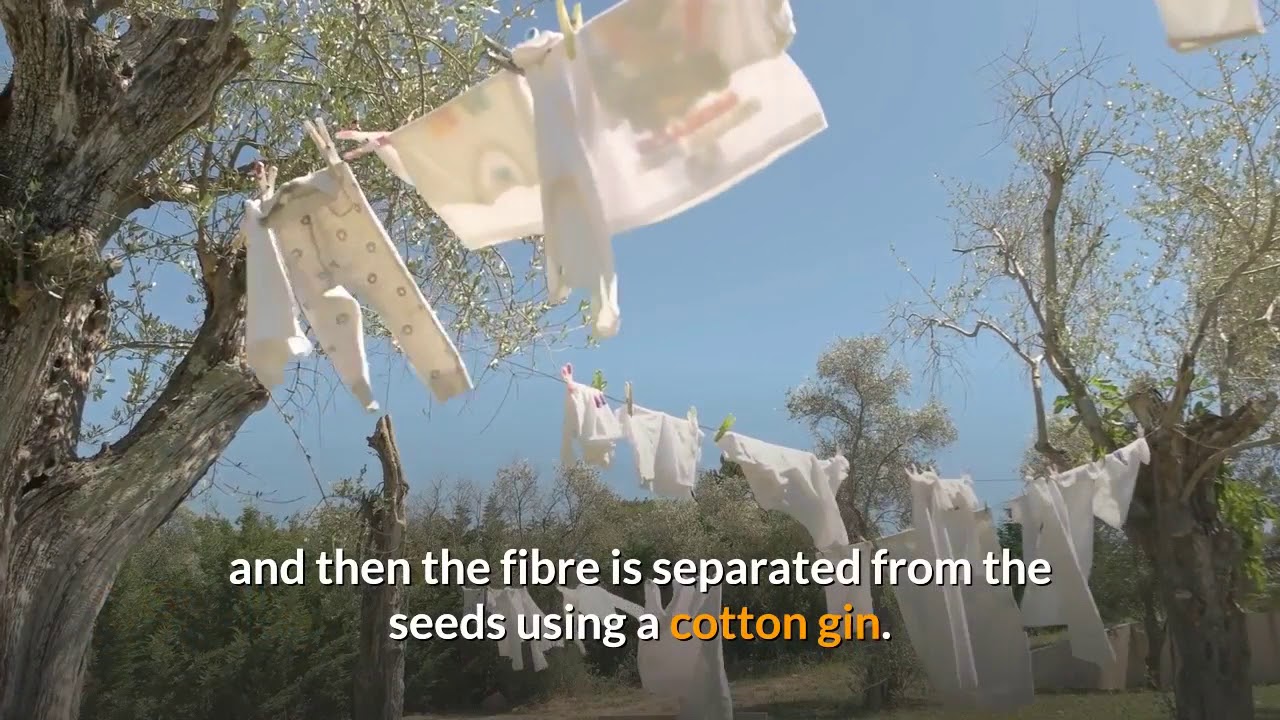
After harvesting, the cotton fibers are separated from the seeds using a cotton gin. The separated fibers are then spun into strong yarn suitable for weaving or knitting. Cotton fabric is favored for clothing due to its durability, washability, and moisture-absorbing properties, making it comfortable to wear.
From Field to Fabric: Step-by-Step
The video details the steps to producing cotton fabric:
- Harvesting: Mechanical harvesters strip the fibers from cotton bolls.
- Ginning: The harvested cotton is dried, and the fibers are separated from the seeds using a cotton gin.
- Fiber Bales: The cotton fiber is compressed into bales weighing about 225 kilograms for delivery to a textile mill.
- Spinning: Individual strands of cotton fiber (slivers) are twisted together to create thicker cotton yarn.
- Weaving or Knitting: The yarn is woven on a loom or knitted using needles to create fabric.
- Dyeing: The fabric is passed through a hot dye solution and squeezed through rollers to remove excess liquid.
- Cutting and Sewing: Pieces of the dyed fabric are cut and stitched together to make clothing and other textile products.
- Ready for Customer: The finished products are sold to retailers and purchased by consumers.

