
Brief Summary
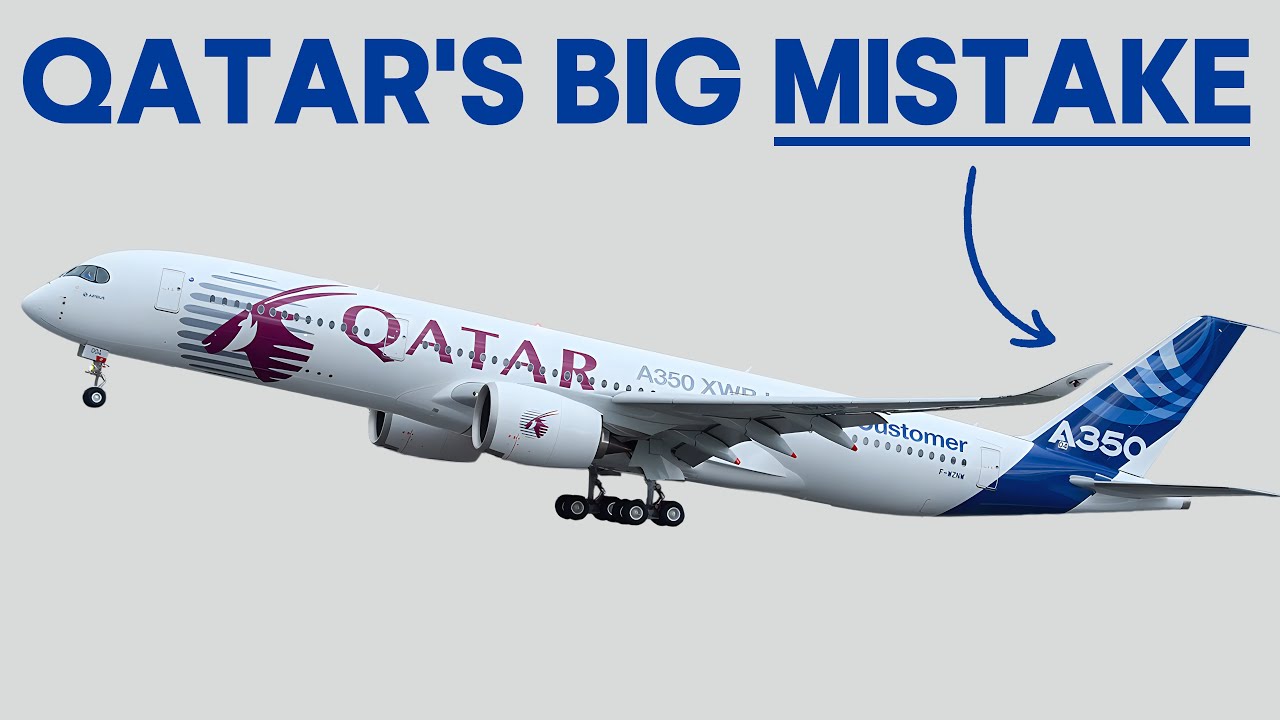
This video explores the high-stakes corporate war between Qatar Airways and Airbus, triggered by a paint issue on Qatar's A350 aircraft. The conflict escalated from a minor quality concern to a full-blown legal battle, resulting in significant financial losses for Qatar Airways, operational disruptions, and the departure of its CEO.
- The dispute began with concerns over the degradation of paint and a metallic mesh on Qatar Airways' A350 aircraft.
- Qatar Airways grounded 13 A350s, citing airworthiness concerns, despite Airbus and aviation authorities deeming the aircraft safe.
- Airbus retaliated by canceling billions of dollars' worth of orders, including A350s and A321neos, and Qatar Airways was forced to reactivate retired aircraft to compensate for grounded A350s.
- The legal battle ended in a settlement, with Qatar Airways facing significant delays in aircraft deliveries and a tarnished reputation.
Introduction
In January 2015, Qatar Airways became the launch customer for the Airbus A350-900, followed by the larger A350-1000 variant. By 2021, Qatar Airways grounded 13 of its A350s, citing airworthiness concerns and demanding compensation. Airbus and aviation authorities deemed the aircraft perfectly safe. The paint issue escalated into a corporate war, with allegations that Qatar was using safety concerns as a tactic to pressure Airbus. Airbus retaliated by canceling $20 billion worth of orders and invoking a contractual clause that impacted Qatar's fleet strategy. The conflict resulted in financial losses for Qatar, the resurrection of retired aircraft, and the end of the CEO's career.
A Partnership Destined for Greatness
Qatar Airways became the launch customer for the Airbus A350-900 in January 2015 and later for the A350-1000 variant. Qatar Airways operated the world's second-largest A350 fleet, utilizing these jets on long and medium-haul routes. The airline marketed the A350 as the backbone of its premium product, highlighting its technology, fuel efficiency, and passenger comfort. Despite the positive image, a minor quality concern emerged, leading to a corporate battle.
Trouble Brewing
A year after operating the A350, Qatar Airways noticed that the paint on the aircraft was not holding up as expected, with patches chipping and surfaces degrading. Five other A350 operators reported similar issues to Airbus. Airbus addressed the complaints by repainting damaged sections and implementing fixes. In 2020, Qatar Airways sent an A350 to Shannon, Ireland, for a World Cup paint scheme. Technicians found that the damage extended beyond the paint layers, affecting the metallic mesh embedded between the carbon fiber structure and the exterior coating. Qatar Airways raised concerns with Airbus, arguing that the degradation represented a serious airworthiness concern.
A Revolutionary Leap in Aircraft Construction
The A350 is built from carbon fiber composite materials rather than aluminum. Carbon fiber composites behave differently from aluminum, with carbon fiber structures remaining dimensionally stable despite temperature changes. A metallic mesh is embedded in carbon composite sections to replicate aluminum's lightning protection. Qatar Airways was concerned that if this protective mesh was degrading, it could compromise its safety function. Airbus and the European Aviation Safety Agency (EASA) investigated the issue and concluded that it was purely cosmetic and did not compromise airworthiness.
An Uncompromising Pursuit of Perfection
Qatar Airways rejected Airbus' assessment and demanded a root cause analysis and compensation, threatening to refuse delivery of new A350 aircraft. Under CEO Akbar Al Baker, the airline had a reputation for perfectionism, but its management approach was considered excessive. Qatar Airways routinely rejected aircraft deliveries over minor imperfections, creating friction with Airbus. When Qatar publicly questioned the airworthiness of its aircraft based on a cosmetic issue, Airbus was furious.
Gloves Come Off
Airbus rejected Qatar Airways' characterization of the paint issue as a safety concern and refused to provide the demanded compensation. Qatar Airways, working with the Qatar Civil Aviation Authority, grounded 13 A350 aircraft in August 2021, citing airworthiness concerns. Airbus viewed this as an attempt to force them into meeting Qatar's demands, jeopardizing the A350 program and Airbus's reputation for safety. Airbus suggested that Qatar Airways might have influenced its civil aviation authority to ground the aircraft for financial advantage.
Devastating Force
In January 2022, Qatar Airways launched a lawsuit against Airbus in British courts, demanding $600 million in damages plus $4 million for every day each grounded aircraft remained out of service. Airbus responded with a counter-suit and canceled all 19 remaining A350 aircraft on Qatar Airways' order book. Airbus then canceled Qatar Airways' entire order for 50 A321neo aircraft, invoking a cross-default clause. Qatar Airways challenged Airbus's decision in UK courts and approached Boeing, ordering 25 Boeing 737 MAX 10 aircraft with options for 25 more.
Operational Nightmare
Qatar Airways faced an operational nightmare due to its decision to ground A350s, especially with the FIFA World Cup approaching. The airline had to reactivate its aging Airbus A330 fleet, which had been retired and placed in long-term storage. This process was time-consuming and expensive, costing millions of dollars per aircraft. Qatar Airways also decided to return its entire fleet of 10 Airbus A380s to service, reversing a previous decision to retire them.
Increasingly Unfavorable Rulings
As the legal battle progressed, Qatar Airways faced unfavorable rulings in British courts. The court sided with Airbus, ruling that the contracts were covered by the cross-default clause and that Qatar Airways' refusal to accept A350 deliveries was a valid basis for canceling the A321neo order. The court ordered Qatar Airways to provide evidence justifying its decision to ground the A350 fleet.
Humiliating Public Defeat
Airbus and Qatar Airways reached a confidential settlement agreement. Airbus agreed to reinstate the canceled orders for both A350s and A321neos, but deliveries would not commence until 2026, a three-year delay. CEO Akbar Al Baker resigned, and the new CEO announced a commitment to bringing a culture of trust and empowerment to Qatar Airways. The conflict cost Qatar Airways hundreds of millions of dollars, years of operational headaches, and the job of its former CEO.

