
Brief Summary
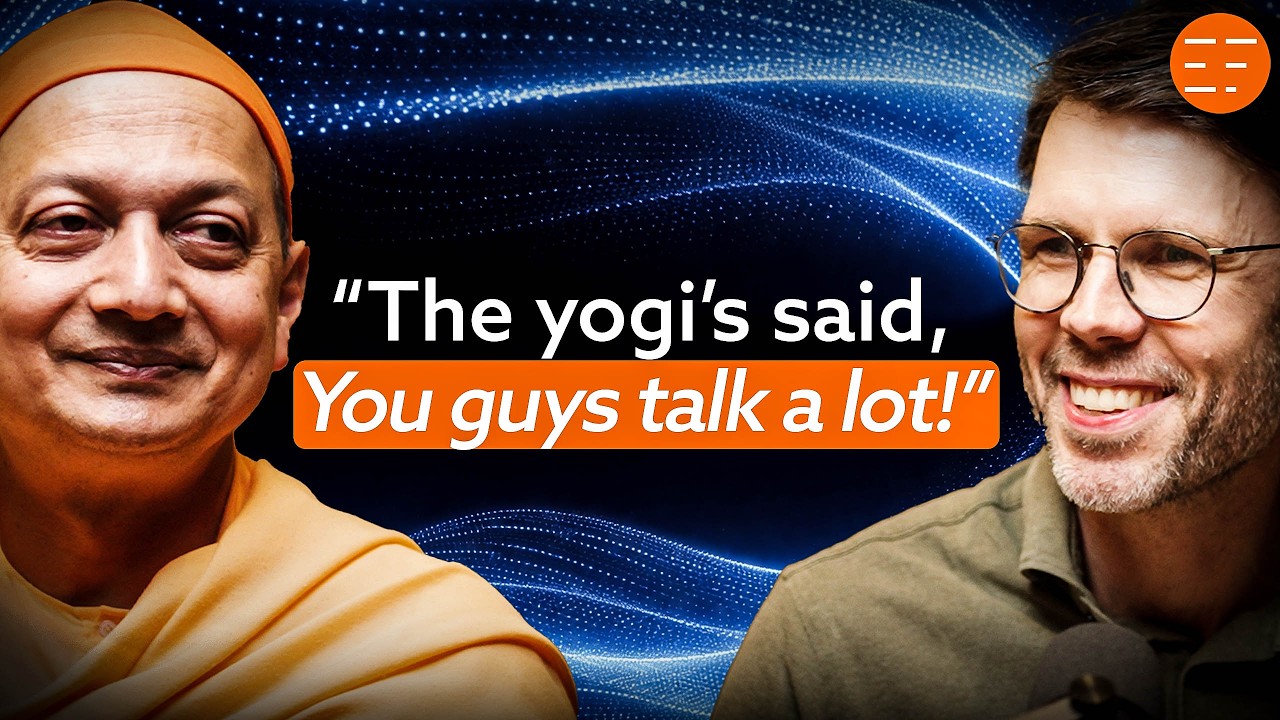
The video features a conversation with Swami Sarvapriyananda about Advaita Vedanta, a non-dual philosophy rooted in Hinduism that combines elements of rational thought, philosophy, spirituality, and personal experience. Key points include the importance of individual experience and rational inquiry in spiritual practice, the nature of reality and consciousness, the interplay between suffering and bliss, and the value of service to humanity. Swami Sarvapriyananda emphasizes that enlightenment and understanding of reality can be achieved through philosophy and rational thought.
- Advaita Vedanta emphasizes rational inquiry and self-experience.
- Suffering is a universal aspect of life, yet bliss can be found in the non-dual reality.
- Service to humanity is seen as worship in Advaita Vedanta.
Introduction
Swami Sarvapriyananda introduces Advaita Vedanta, stating that enlightenment can be approached through philosophical understanding. He stresses the role of rational thinking and self-inquiry, addressing critiques from devotional schools of Hinduism that question the spiritual depth of philosophical discourse.
Introducing YouTube Memberships
The channel announces YouTube memberships that provide access to further resources, including an app designed to enhance understanding of Advaita Vedanta with AI-powered tools. They emphasize the importance of community support to continue their mission of sharing knowledge.
Podcasting as a Yogic Practice
Swami Sarvapriyananda discusses the intersection of modern technology and ancient wisdom, suggesting that podcasting can serve as a form of yogic practice. He links Swami Vivekananda's perspectives to the dissemination of spiritual ideas through contemporary channels, framing the internet as a modern "empire" for sharing wisdom.
Why Swami Sarvapriyananda Became a Monk
Swami Sarvapriyananda shares his personal journey to monastic life. Raised in a spiritually inclined family, he initially pursued a worldly path, earning an MBA but ultimately decided to dedicate his life to spirituality. He clarifies that his decision was driven by a desire for everything, which he defines as spiritual realization over material success.
Understanding Brahman Through the Cinema Metaphor
Using a cinema metaphor, Swami Sarvapriyananda explains Brahman as the reality underlying the transient images of life. He illustrates the challenge of grasping this reality, comparing it to a child trying to see the screen behind the movie. The screen represents the eternal and unchanging essence, while the images symbolize our experiences in life.
One Answer to All of Life's Questions
Swami Sarvapriyananda presents a unified perspective on life's fundamental questions, asserting that Vedanta offers a singular insight: the essence of reality—Brahman, consciousness, and bliss—is all interconnected. He relates these concepts to the quest for understanding existence, knowledge, and value in life.
Advaita Vedanta and Quantum Mechanics
Exploring the relationship between Advaita Vedanta and quantum mechanics, Swami Sarvapriyananda emphasizes the shared metaphysical insights of both realms. He notes that many foundational figures in quantum theory were influenced by Vedantic ideas, highlighting the need for consciousness in understanding the nature of reality.
How Can Reality Be Bliss Despite Suffering?
The discussion shifts to the nature of reality and suffering. Swami Sarvapriyananda explains that while suffering exists, non-dual awareness provides a perspective where bliss is accessible beyond physical and mental struggles. This bliss exists regardless of external circumstances.
The Story of Two Arrows
In the story of the two arrows, Swami Sarvapriyananda illustrates the difference between suffering caused by life's challenges and the additional suffering stemming from our reactions to it. The teachings focus on managing emotional responses to enhance spiritual understanding and tranquility amid turmoil.
The Proposition of Advaita Vedanta: Rational Insight
Swami Sarvapriyananda elaborates on the rational aspects of Advaita Vedanta that allow individuals to approach spirituality logically rather than merely through faith. He emphasizes intellectual inquiry as a viable path towards liberation and understanding non-duality.
Advaita Vedanta and Analytic Idealism
The compatibility between Advaita Vedanta and analytical idealism is explored. Swami Sarvapriyananda discusses how these philosophical frameworks converge in their treatment of consciousness as fundamental to existence, enabling dialogues across disciplines to reveal deeper truths.
The Role of Deities in Advaita Vedanta
In this chapter, the importance of deities is examined within the framework of Advaita Vedanta. Swami Sarvapriyananda explains that, although the ultimate realization is non-dual, worship of deities serves to channel devotion and emotional cleansing, aiding one's spiritual journey.
Ahamkara: The I-Maker
Swami Sarvapriyananda elaborates on Ahamkara, or the ego, as the mechanism that creates individual identity. This identification distorts our understanding of reality, making it essential to recognize that the ego is not the true self but a limited projection of consciousness.
The Limitation Process of Consciousness
This section discusses how consciousness becomes limited through the process of identification with the body and mind. Swami Sarvapriyananda offers metaphors illustrating how the non-dual reality of consciousness is often obscured by our perceptions and thoughts.
How Ishvara Arises in Advaita Vedanta
Swami Sarvapriyananda explains the concept of Ishvara, or the personal God, in Advaita Vedanta. He describes how Ishvara represents the universal consciousness manifested in all beings, bridging the connection between the absolute and the particular reality of individuals.
Why Devote Yourself to Deities?
The chapter discusses the psychological benefits of devotion to deities within Advaita Vedanta. While not essential for realization, such devotion can help purify emotions and cultivate compassion and love towards others, reinforcing the understanding of non-duality.
Bhakti Practice in Advaita Vedanta
Swami Sarvapriyananda discusses the practice of Bhakti, or devotion, in Advaita Vedanta, noting it as another path to spiritual enlightenment. This practice helps individuals develop emotional connection and love towards the divine, facilitating personal transformation.
What If You're Too Rational for Bhakti?
The conversation addresses those who may find themselves overly rational for devotional practices. Swami Sarvapriyananda reassures that Advaita provides a philosophical path that engages the intellect while remaining deeply spiritual.
Worship Without a Leap of Faith
Swami Sarvapriyananda presents a way to engage in worship without requiring a leap of faith. He emphasizes that recognizing the divine in every person around us allows for meaningful spiritual practice that does not rely solely on abstract beliefs.
The Value of the Ego, the ‘Jiva’ in Advaita Vedanta
The final chapter discusses the role of the ego or Jiva in the context of Advaita Vedanta. While the Jiva represents individual identity, it is not the ultimate reality, highlighting the importance of balancing personal experience with universal consciousness for a comprehensive understanding of existence.

