
Brief Summary
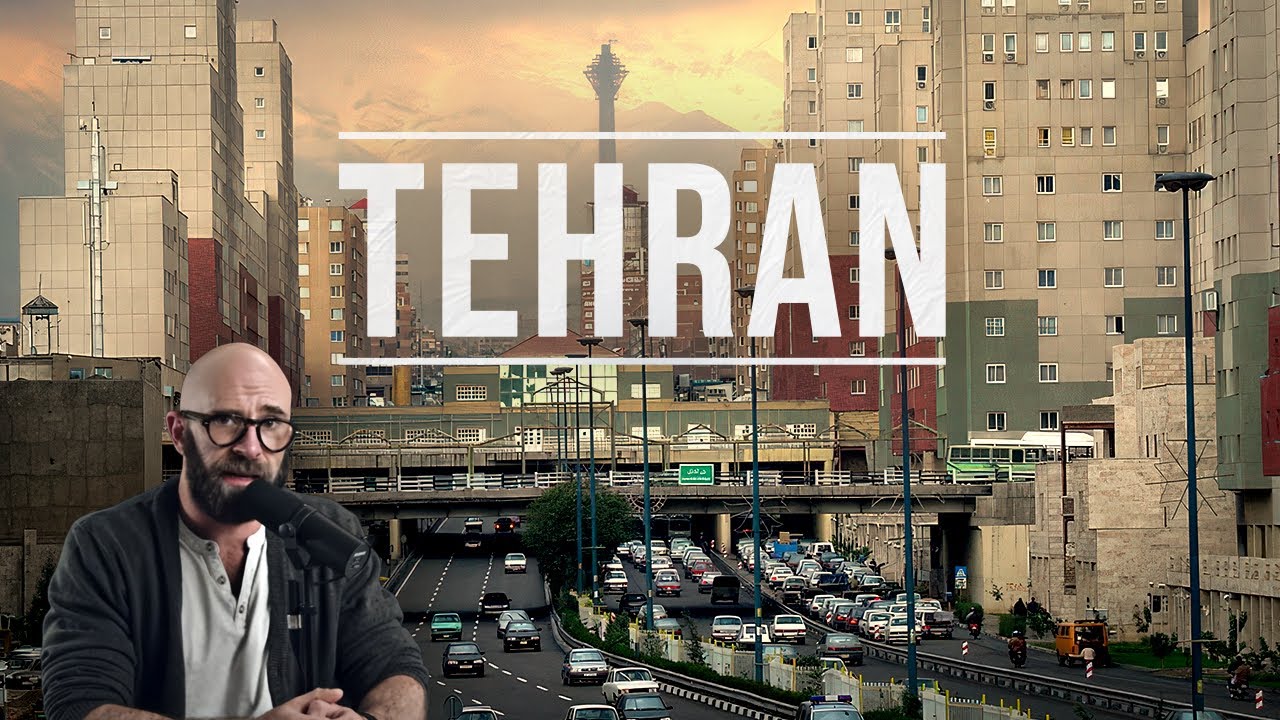
This video explores the decline of Tehran, once known as the "Paris of the Middle East," into a city struggling with infrastructure collapse, pollution, and corruption. It examines Tehran's historical transformation from a small village to a booming capital, the impact of the 1979 revolution, the Iran-Iraq War, and the subsequent challenges of overpopulation, sanctions, and corruption. The video concludes by reflecting on the potential for Tehran's revival, emphasizing the critical role of governance in shaping the city's future.
- Tehran's rapid growth and modernization under the shahs were built on a foundation of fear and disconnected from Persian identity.
- The 1979 revolution brought profound cultural changes, but also isolation, economic hardship, and the Iran-Iraq War.
- Overpopulation, sanctions, and corruption have led to infrastructure collapse, severe pollution, and a decline in the quality of life.
- Corruption has become deeply entrenched, hindering effective governance and siphoning resources away from essential services.
- Despite its challenges, Tehran has the potential for revival with effective governance and a focus on public service.
Introduction
The video introduces Tehran, once known as the "Paris of the Middle East," but now facing severe infrastructure and environmental issues. The city is plagued by water shortages, frequent power outages, and extreme air pollution, leading to school closures and public health crises. The video aims to explain how Tehran transformed from a glamorous metropolis to a city struggling with basic necessities.
The Rise of a Capital
Tehran's historical insignificance is highlighted, contrasting it with other major Persian cities. It was initially a small village near the city of Rey. In 1786, Agha Mohammad Khan of the Qajar dynasty moved his capital to Tehran for its strategic location at the crossroads of trade routes. This decision spurred rapid growth, with the population tripling within a decade. The city underwent significant construction, including new walls and ornate gates. Under Reza Shah Pahlavi, Tehran underwent a massive modernization effort in the 1920s, inspired by European cities. Old walls and gates were demolished to make way for broad boulevards, modern government buildings, and the University of Tehran. The Trans-Iranian Railway connected Tehran to the Persian Gulf and the Caspian Sea, transforming it into a vital hub. His son, Muhammad Reza Shah, oversaw a period of economic boom fueled by oil revenues in the 1960s and 70s, leading to further rapid growth and modernization. The city's population tripled, and it resembled a Western metropolis with modern cars, Western clothing, and international film festivals. However, this transformation was built on a foundation of political repression and fear, with the Savak secret police brutally suppressing dissent.
The Party’s Over
In January 1979, the Shah fled Iran, and Ayatollah Khomeini returned, marking the beginning of a profound cultural transformation. The hijab became mandatory, nightclubs were shut down, and alcohol was banned. The changes were rapid and far-reaching, leading to the closure of international schools and the evacuation of foreign embassies. Tehran developed a split personality, with a public life adhering to strict religious rules and a private life where parties with smuggled alcohol and banned music continued. Satellite dishes became common despite being illegal, and dating went underground. The revolutionary government nationalized banks and industries, seizing assets from wealthy families associated with the Shah. Property values in North Tehran collapsed, and many educated Iranians fled the country, resulting in a significant brain drain. The revolution promised justice and prosperity but delivered neither.
The Slow Decline
The end of the Iran-Iraq War brought a moment of hope, especially with the death of Ayatollah Khomeini. Under Mayor Gholamhossein Karbaschi, Tehran experienced a period of relative renaissance, with increased parks and progress on the metro system. However, two major forces were already at play: a population boom and the imposition of international sanctions. Tehran's population grew from 5 million in 1979 to over 15 million today, straining the city's infrastructure. Rural migrants, Afghan refugees, and provincial students converged on Tehran, seeking opportunity or escape. The city, originally designed for 2 million people, was now overpopulated by seven times, leading to water pipe bursts, sewage backups, and an overtaxed electrical grid. Traffic became apocalyptic, with commutes stretching to three hours. International sanctions, beginning with the kidnapping of American embassy staffers, tightened over time, leading to a currency collapse.
When Everything Stops Working
Tehran's geography, once a strategic asset, has become a death trap, with the city's location in a natural bowl trapping pollution year-round. A dome of hot air prevents pollutants from escaping upward for two-thirds of the year, and temperature inversions trap cooler air below in winter. Air pollution has caused thousands of deaths annually, with schools routinely closing for smog days. The pollution comes from millions of vehicles burning low-quality gasoline, industrial zones burning fossil fuels, and power plants burning toxic mazut. The city has tried various strategies to manage the situation, but the geography and population density pose insurmountable challenges. The water crisis is also severe, with dam levels hitting historic lows and water rationing becoming common. The electricity crisis compounds the problems, with Iran facing a significant megawatt shortfall. Blackouts affect water pumps, elevators, traffic lights, and air conditioners, with temperatures exceeding 50°C during heat waves. Decades of sanctions and corruption have left Tehran's infrastructure in terminal decline.
Corruption
Corruption is a major factor in Tehran's decline, with Iran ranking poorly in Transparency International's corruption perception index. The Islamic Revolutionary Guard Corps (IRGC) controls billions in no-bid contracts through its construction arm, Khatam al-Anbia. The Plasco building collapse in 2017, which killed 20 firefighters, highlighted years of ignored safety violations and political connections. The municipality property scandal in 2016 exposed the transfer of prime municipal land and luxury apartments to insiders at undervalued prices. Leaked audio in 2022 revealed efforts to cover up embezzlement tied to Yas Holdings, with independent analysts estimating the exposure at $2.6 billion. Corruption affects ordinary citizens through the need for bribes to obtain business permits and pass inspections. This corruption has stolen competence, with contracts going to the connected rather than the capable, leading to a city that cannot function.
Twelve Days in June
In June 2025, Israel achieved air superiority over Tehran, exposing the country's vulnerability. The bombing of the IRIB headquarters and Evin prison sent a message of the regime's impotence. The morality police all but vanished from Tehran streets, allowing women to walk freely without headscarves. This led to another exodus from the city, with thousands fleeing military targets. Residents slept in corridors and used metro stations as bomb shelters. By the time the ceasefire took hold, something fundamental had broken in Tehran, with the regime's power centers exposed as defenseless. The video concludes by emphasizing that Tehran's tragedy is not due to its geography but to its governance. Cities with worse geographic positions have thrived through good governance. Tehran's mountains could be an asset with proper management. The city's history shows it has survived unimaginable challenges, and its future depends on whether those with the power to fix it actually want to.

