
Brief Summary
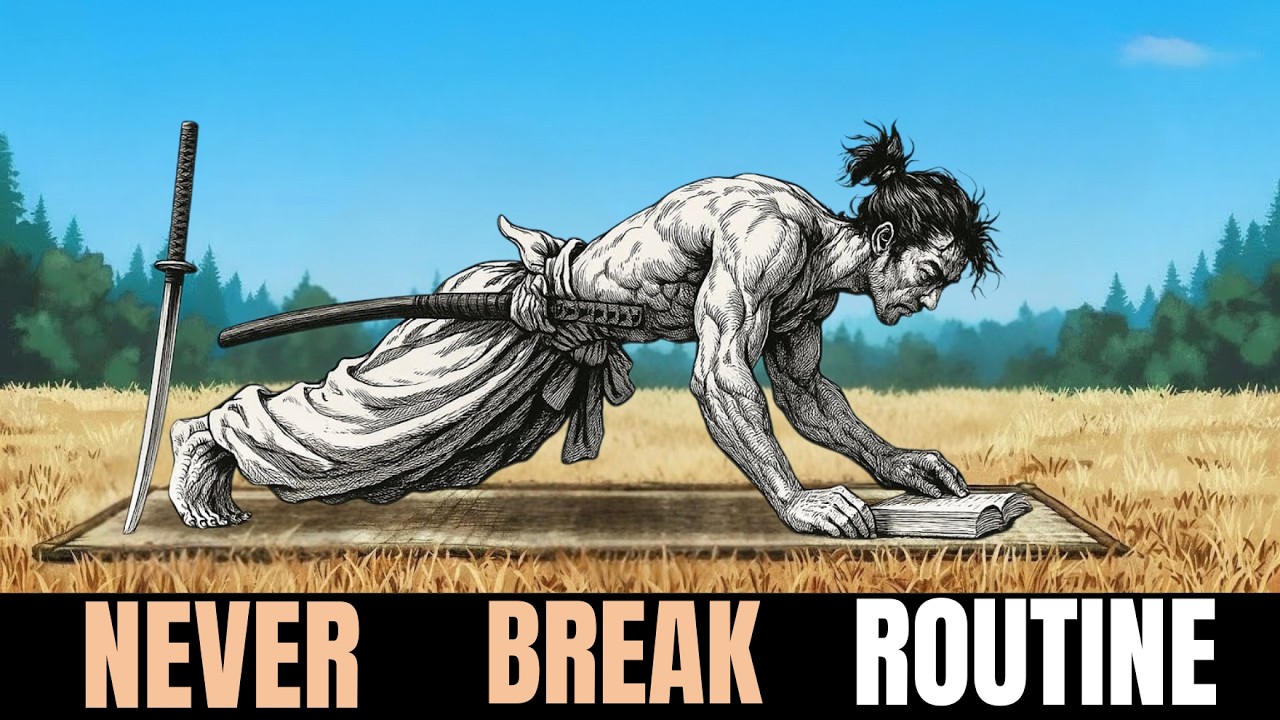
This video explains how to build unbreakable routines using the method of Miyamoto Musashi, a 17th-century samurai. It emphasizes structure over willpower, advocating for simplicity, a strong foundation, continuous practice, adaptability, and present moment focus. The video outlines a step-by-step approach to creating habits that endure by integrating them into one's identity and focusing on the present moment rather than the overwhelming idea of forever.
- Willpower is not the key to consistent routines; proper structure is.
- Simplicity and a strong foundation are crucial for building unbreakable habits.
- Focus on the present moment to avoid feeling overwhelmed by the idea of maintaining a routine forever.
Why Willpower Is the Wrong Starting Point
The video introduces the concept that consistent routines are not a result of willpower, but rather a product of building them correctly. It references Miyamoto Musashi, a samurai who maintained the same daily practice for 32 years without fail, not through willpower, but through a specific method called Renshu noi, or the way of continuous practice. The presenter challenges the common assumption that discipline is the key to maintaining routines, suggesting instead that flawed construction is the primary reason why routines fail.
The Moment You Realize Routines Are Built Wrong
The story of Ryan, a software developer, illustrates the common struggle of failing to maintain routines despite numerous attempts and productivity methods. Ryan's breaking point came when he realized he was repeating a cycle of starting and quitting morning routines. Discovering Miyamoto Musashi's teachings, Ryan learned that routines requiring willpower are destined to fail and that his approach to building routines was fundamentally flawed.
Practice Without Gap: The Rule That Changes Everything
Miyamoto Musashi's principle of "Keo," or practice without gap, is introduced, highlighting his consistent daily routine from age 30 until his death. Musashi's routine included sword practice, walking meditation, strategy study, and art, which he maintained without missing a day, regardless of circumstances. The key is that his routine didn't rely on willpower; it was built on making practice so simple that skipping it becomes nearly impossible. Ryan applied this by starting with just 10 push-ups each morning, making it easier to do them than to find an excuse not to.
Foundation First: Why Most Habits Collapse
The principle of "JI," or foundation, is explained, emphasizing the importance of establishing a solid base before adding complexity to a routine. Ryan's attempt to expand his 10 push-up routine too quickly led to its collapse, reinforcing the idea that each element should only be added after the previous one has become automatic. This sequential habit stacking ensures a higher success rate compared to building multiple habits simultaneously.
Simplicity as Strength, Not Weakness
The principle of "Canton," or simplicity as strength, is introduced, highlighting that complex routines often fail, while simple routines endure. Ryan initially felt inadequate comparing his 10-minute routine to others' elaborate ones, but he realized that simplicity is what made his routine unbreakable. Maintaining simplicity is crucial, and adding complexity should be carefully considered to avoid jeopardizing the routine's sustainability.
The Routine That Survives Chaos
The principle of "Fudo," or immovable practice, is discussed, explaining that a routine must be resilient to external disruptions. Ryan faced his first real test when his father had a heart attack, but he maintained his routine even in the hospital bathroom. This demonstrates that maintaining a routine during a crisis is about identity, reinforcing the idea that one is the kind of person who practices regardless of conditions.
Why Thinking About Forever Breaks Consistency
The principle of "Ichigo Ichi," or this moment only, is introduced, emphasizing the importance of focusing on the present moment rather than the overwhelming idea of maintaining a routine forever. Ryan realized that the weight of infinite future repetition made his routine feel burdensome, so he shifted his focus to practicing each moment with full presence. This psychological key makes routines unbreakable because the present moment is always manageable.
When Routine Becomes Identity
After a year of consistent practice, Ryan's routine had become automatic and effortless, transforming his entire life. The routine wasn't just about the activities; it was about proving to himself every day that he is the kind of person who keeps promises. This identity shift changed everything, leading him to trust himself in ways he never had before.
The Truth About Willpower and Structure
The video emphasizes that willpower is a sign of failure, not success, and that routines requiring willpower are built wrong. Miyamoto Musashi focused on structure, making the right action easier than the wrong action. The routines built on Musashi's principles don't need willpower because they are so simple, foundational, continuous, immovable, and present-focused that they become automatic.
Building the One Routine You’ll Never Quit
The video provides a step-by-step guide to building an unbreakable routine using Musashi's method. It starts with establishing a foundation by choosing one simple behavior and practicing it every day without gaps for 30 days. Then, after 60 days of perfect execution, add one more equally simple element, and continue both for 30 days before considering a third. The video concludes by reiterating the importance of simplicity, foundation, continuity, immovability, and present moment focus in creating routines that endure.

