
Brief Summary
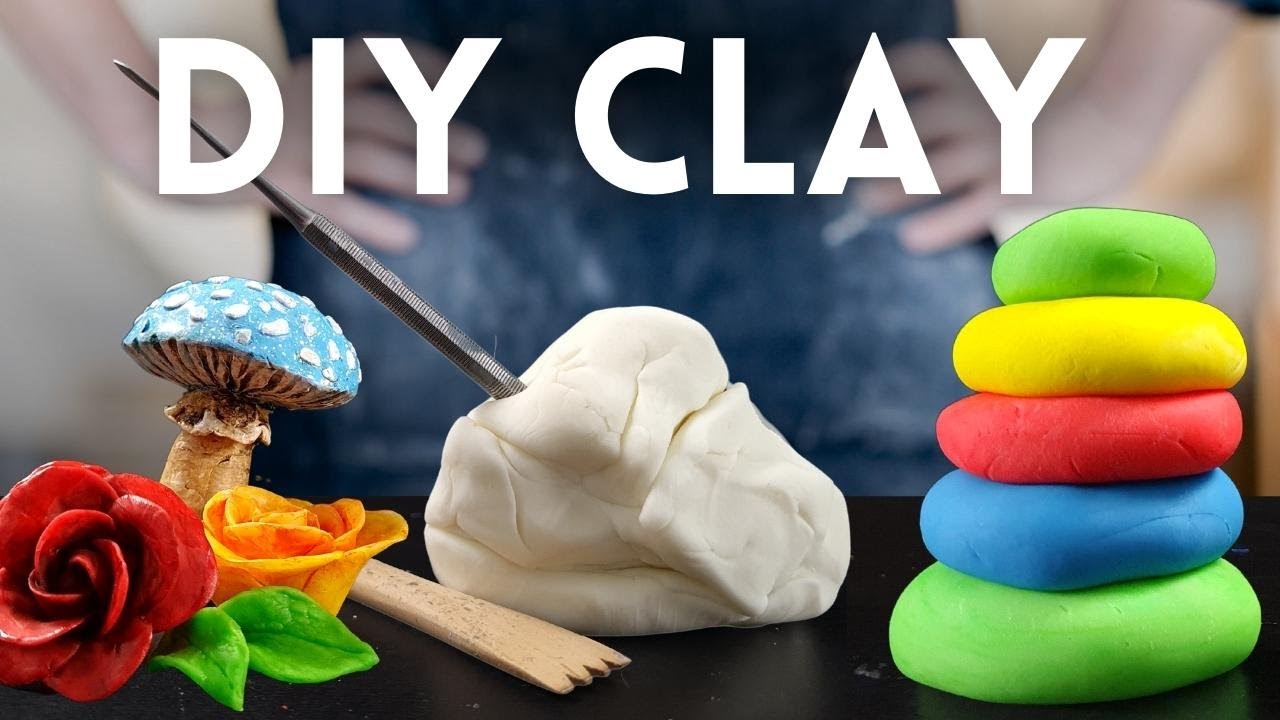
This video provides a comprehensive guide on how to make air dry clay at home using simple, inexpensive ingredients. It covers the mixing process, cooking methods (microwave and frying pan), tinting, sculpting, drying, and storing the clay. Key points include:
- The recipe uses equal volumes of cornstarch and PVA glue, with baby oil and white vinegar added for texture and preservation.
- The clay can be cooked in a microwave or a frying pan until it forms a lumpy mixture, then kneaded until smooth.
- Food coloring or acrylic paint can be used to tint the clay.
- Sculptures will air dry in 12-48 hours, shrinking slightly.
- Leftover clay can be stored in a ziplock bag for about a week.
Ingredients for Homemade Air Dry Clay
To create homemade air dry clay, you will need cornstarch, PVA glue, white vinegar, baby oil, and Vaseline. The recipe uses equal volumes of cornstarch and PVA glue, making it easy to scale up or down. If weighing the ingredients, use twice the amount of PVA glue as cornstarch. Add two tablespoons of baby oil and one teaspoon of white vinegar to the mixture.
How To Mix Your DIY Clay
Combine the cornstarch, PVA glue, baby oil, and white vinegar in a microwave-safe container. The white vinegar acts as a preservative, preventing mold growth during drying or when storing the clay for later use. Mix all the ingredients together until the mixture is smooth and resembles icing.
Vinegar as a Preservative
White vinegar is added to the clay mixture as a preservative. This helps prevent the clay from becoming moldy while it dries or if you intend to store a portion of the clay for future use. The vinegar extends the shelf life of the raw clay, allowing it to be used over a longer period.
How To Cook Your Clay
Microwave the clay mixture for 20 seconds. After the first heating, stir the mixture and then microwave it for another 20 seconds. If the mix is still runny, repeat the heating process for a third time, or extend the heating time to 30 seconds if you're working with a larger portion. The mixture will appear lumpy and strange after microwaving, but this is normal.
How to Knead Your Homemade Clay
Dust your hands with cornstarch and pick up the cooked clay mixture. Knead the clay in your hands until it forms an even dough. Applying a little Vaseline to your work surface will make the clay silky smooth and prevent it from sticking. The clay should be stretchy and take a moment to separate when pulled apart.
Alternative Way To Cook Your Clay (Frying Pan)
If you don't have a microwave, you can heat the clay mixture in a pan on low heat. It's safe to use kitchen tools for this process, as all the components are food-safe and non-toxic. Once the mixture starts to firm up and become lumpy, remove it from the pan and knead it in your hands as before. To clean your tools, let the glue dry and then peel it off before washing.
How to Tint Air Dry Clay
The clay has a natural whitish translucent color, which can be used as is, or you can tint it with food coloring or acrylic paint. The clay will appear a bit lighter than the color you use due to the whiteness of the cornstarch, but it will darken a few shades after it dries.
Sculpting With Homemade Clay
The homemade clay is easy to sculpt with, allowing you to roll it, coil it, combine different colors, and use your normal sculpting tools. Its pliable texture makes it suitable for various sculpting techniques and designs.
How to Dry Your Clay
After finishing your creations, simply leave them to air dry. The clay will harden in 12 to 48 hours, depending on the thickness of your sculpt. It shrinks between 10 to 20 percent by the time it's fully dry, and thin pieces may warp slightly. After drying, you can paint your clay creations with acrylic paint.
How to Store Your Air Dry Clay
If you have any leftover clay after sculpting, you can store it in a ziplock bag for later use. The vinegar helps preserve the raw clay, but because it's made from natural ingredients without artificial preservatives, it will only last for about a week. This tip is only relevant for raw clay that you want to keep for later use, as sculpted pieces won't go off after drying.
More Tips on Sculpting With Air Dry Clay
For more tips on how to sculpt with air dry clay, such as preventing cracking, check out the video provided at the end.

