
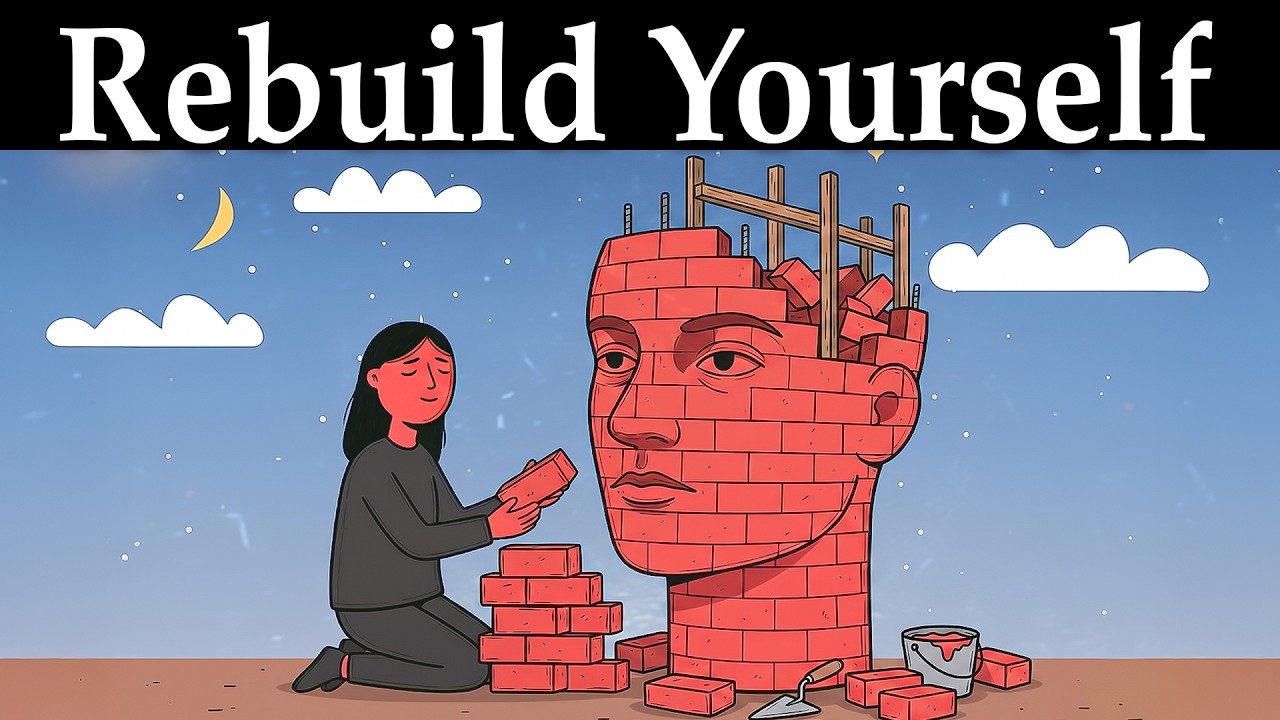
Brief Summary
This video explores the concept of psychological breakdown through the lens of Carl Jung's analytical psychology, reframing it not as a failure, but as a necessary process for personal transformation and self-realization. It provides a structured approach to rebuilding oneself after such a breakdown, emphasizing the importance of understanding the unconscious, confronting inner darkness, and embracing solitude. The video outlines five key steps:
- Allowing the collapse of the persona
- Confronting the darkness within
- Accepting the sacred period of solitude
- Turning inner pain into momentum
- Stepping into your own individuation process
These steps guide individuals toward a more authentic existence, driven by internal clarity rather than external pressures.
Part I. Jung and the perspective on psychological breakdown
Carl Jung viewed psychological breakdowns as structured movements within the psyche rather than random events. Drawing from his own experiences after separating from Sigmund Freud, Jung emphasized the importance of remaining present with inner experiences, recording and interpreting emerging images and dreams, rather than suppressing them. This confrontation with the unconscious allowed for the emergence of new understandings of the human being and laid the foundation for analytical psychology. Jung saw a breakdown as the psyche's response when the current structure no longer fits, compelling the unconscious to remove what is no longer true, thus allowing the journey to truly begin.
Part II. How to rebuild yourself after a psychological breakdown
The video transitions into practical steps for rebuilding oneself after a psychological breakdown, grounding each step in Jungian concepts and offering actionable advice. It stresses that rebuilding is not about returning to a former self, but about moving towards a more authentic understanding of who you are.
Allow the collapse of the persona to unfold
The initial step involves allowing the persona, the image constructed to adapt to society, to collapse without immediate attempts to fix or replace it. This requires stopping the effort to recover quickly and accepting the end of a structure that no longer fits. By ceasing to force answers, present stability, or chase goals for the sake of escaping emptiness, individuals can disconnect from old mechanisms and begin to understand the unconscious scripts driving their lives. Recognizing the feelings of lost motivation and meaning as signs of no longer fitting the old structure is crucial for accepting that you are no longer the person you once were, and progress is measured by the decreasing need to maintain a role.
Confront the darkness within
The second step involves confronting the "shadow," the emotions, reactions, and thoughts that have been suppressed. Instead of trying to eliminate negative reactions, the focus is on understanding their origins. This involves analyzing oneself and asking what within is being touched when strong reactions arise. By bringing these reactions into awareness, they lose their automatic nature, allowing for observation and regulation of behavior. Techniques such as journaling and self-reflection aid in clarifying the internal psychological structure and reducing unconscious influence.
Accept the sacred period of solitude
This step emphasizes the importance of embracing a period of separation and solitude for psychological restructuring. This solitude is not isolation born of injury, but a transitional phase for detaching from external influences and forming an independent inner structure. It involves redefining standards for connection and creating distance from the previous environment to avoid being pulled back into old ways of living. By allowing oneself to remain in the feeling of emptiness, one can understand what needs to change and build a new frame of reference based on direct experience rather than external expectations.
Turn inner pain into the momentum to move forward
The fourth step focuses on transforming pain into a driving force for change by processing the energy it generates. Pain is viewed as information, with each negative emotion tied to specific data about unmet expectations, crossed boundaries, or the lack of meaning in old structures. By analyzing the pain and understanding its cause, individuals can reorient themselves and adjust their behavior accordingly. This involves cognitive reappraisal, restructuring how experiences are interpreted, and using pain as a tool for adjustment rather than trying to eliminate it.
Step into your own individuation process
The final step involves stepping into the individuation process, separating from patterns that have shaped you to live according to a more accurate internal structure. This process unfolds through small, consistent choices in daily life, adjusting what pulls you out of alignment and choosing directions that feel true to your inner state. It involves letting go of the need to be understood immediately, explaining choices to others, and measuring worth by external standards. This shift from external to internal validation allows for decisions based on inner alignment rather than acceptance, leading to a life with less internal conflict and greater stability.
CONCLUSION
The video concludes by reiterating that the goal after a breakdown is not to become a better version of oneself, but a more authentic one. This involves living with greater clarity, less strain, and less dependence on external validation. By embracing the process of rebuilding and integrating the lessons learned from the breakdown, individuals can move forward with a deeper understanding of themselves and a greater capacity for living a fulfilling life.

