
Brief Summary
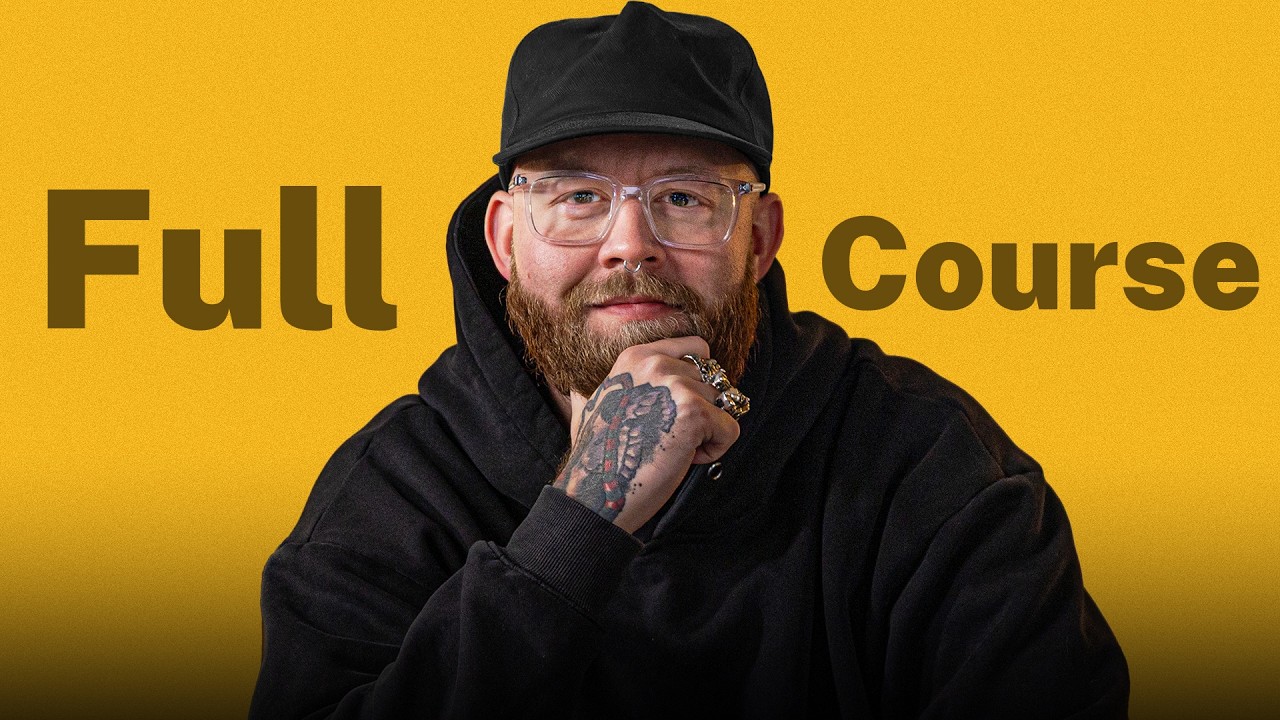
This YouTube video by Caleb Ralston provides a comprehensive guide to building a personal brand that attracts customers, not just followers. It emphasizes establishing brand positioning, creating a content strategy, and understanding the importance of trust and authenticity. The video also includes a month-by-month breakdown of how Ralston built his own personal brand in the first year, along with insights from his content director.
- Building a personal brand to get customers
- Establishing brand positioning
- Building a content strategy that gets real customers
Intro
The video starts by emphasizing the choice between building a personal brand for followers versus customers, advocating for trust-building with the ideal customer over seeking widespread views. It highlights the channel's success in gaining followers, email subscribers, and client applications within the first 10 months. The video promises to guide viewers in establishing brand positioning and creating a content strategy focused on attracting real customers.
Should You Even Build Your Personal Brand?
The author shares a conversation with Gary Vaynerchuk, emphasizing the importance of aligning personal branding efforts with specific goals and desired outcomes. He shares a story about friend in executive protection, where public personal brand can hurt desired outcome. He shares his two main goals: growing his business and helping people build personal brands that positively impact the world. He stresses the need to measure every decision against these outcomes to ensure content supports them.
Brand Journey Framework
Ralston introduces the "Brand Journey Framework," a tool designed to help viewers define their desired outcomes and reverse engineer the steps needed to achieve them. The framework consists of four questions: defining the desired outcome, identifying what one needs to be known for, determining the actions required to develop that reputation, and outlining what one needs to learn to take those actions. He encourages viewers to download the workbook to complete the brand journey framework exercise.
Section 1: Brand Positioning
This section marks the beginning of establishing your brand position.
Why Should Anyone Listen to You?
Ralston divides viewers into two categories: students and experts. He advises students to focus on learning and documenting their journey publicly, while experts should teach based on their experience and achievements. He introduces the concept of building a "credibility bank" (for experts) or an "interest bank" (for students) to establish a foundation for their personal brand. He emphasizes that the more impressive the credibility bank, the better the results in growing a personal brand.
How to Avoid Burnout
The importance of building a brand that excites you to prevent burnout. He advises against building a brand solely based on trending topics or algorithm demands, and instead, focus on what you are proud of and what reflects you as a human. He encourages incorporating personal elements and passions into the content to create a sustainable and authentic brand.
Why Should Your Audience Care?
The author stresses the importance of understanding and addressing the audience's pain points rather than simply copying competitors. He advises identifying the painful problems your ideal customers face and offering unique solutions. Building a brand around solving these problems builds trust and attracts more customers who need those specific solutions.
How Do You Stand Out?
Ralston identifies three levers for standing out: content, delivery, and contrarian belief, highlighting contrarian belief as the most impactful. He distinguishes between contrarian (genuinely held, differing beliefs) and controversial (designed to trigger) beliefs, advocating for the former. He provides examples of impactful contrarian beliefs from leaders like Yvon Chouinard (Patagonia) and Reed Hastings (Netflix) and introduces the "two-column approach" exercise to help viewers identify their own contrarian takes.
How Do You Want to Be Viewed?
Ralston defines branding as the pairing of things, where the brand is the byproduct of that pairing. He emphasizes the importance of consistent pairings to shape desired associations in the audience's mind. He introduces the formula: pairing times consistency equals association. He advises viewers to identify desired associations (what they want to be known for and against) and consistently pair themselves with those elements. He also cautions against brand threats, advising careful consideration of public statements to avoid limiting future options.
Do Your Viewers Know You?
The importance of assuming that your audience knows nothing about you and tailoring your content accordingly. He advises optimizing content for a cold audience to attract new viewers while still nurturing the existing warm audience. He also emphasizes the importance of understanding your brand to effectively communicate it to others.
Communicate Efficiently
The need to craft a clear and concise brand statement that communicates your contrarian belief. He shares his own brand statement as an example and provides a framework for viewers to create their own, which communicates who you serve, how you do it, and what makes you different than your competitors.
Section 2: Content Strategy
This section marks the beginning of building content strategy.
Virality vs Trust
Ralston contrasts optimizing for virality versus building trust, arguing that trust is more valuable for businesses with high-ticket offers and narrow target audiences. He describes how optimizing for virality can dilute the message and alienate existing customers, while building trust through solving painful problems and consistently meeting expectations leads to increased conversions.
Build From the Right Foundation
The need for a sustainable content strategy that fits within the constraints of your business, life, and experience level. He advises answering questions about your capacity for content creation, energy levels, and communication style to build a system that you can stick with long-term.
Choose Your Medium
Ralston advises selecting a content medium (video, audio, written, graphic) that feels most natural and authentic to you. While video offers the most versatility for repurposing content, he emphasizes the importance of choosing a medium that you will realistically stick with.
Choose Your Platform
The author advises against trying to be everywhere at once and instead focusing on one primary and one secondary platform (for solo creators) or three primary platforms (for creators with a team). He introduces the "eye of Sauron" approach, focusing innovation efforts on one platform at a time while maintaining the others. He advises selecting platforms based on your chosen medium and where your ideal customers spend their time.
Finding Your Cadence
The importance of choosing a sustainable content cadence that you can maintain long-term. He advises starting with a doable cadence and gradually increasing it over time.
How Much Should I Post?
Ralston introduces the "accordion method" (expanding and contracting content volume based on audience feedback) and the "70/20/10 framework" (70% proven content, 20% iterations, 10% experiments) to optimize content strategy.
How to Come Up With Ideas
The author advises against simply copying popular content from competitors and instead focusing on your customers' pain points and your unique solutions. He introduces a formula: customer's painful problem plus your unique solution times contextual credibility equals a gift for your audience.
Content Delivery
Ralston emphasizes the importance of authentic delivery, advising viewers to remove anything that prevents them from being themselves on camera. He advises against trying to be someone else or match the energy of other creators and instead focus on clearly communicating your points of view.
Wrapping Paper
The importance of "wrapping paper" (packaging, hook, format) in attracting viewers to your content. He advises building a "wrapping paper library" of inspiring titles, thumbnails, and formats from various sources, including outside your niche. He stresses the need to test which contrarian takes resonate with your audience and double down on those.
Niche vs Wide Content
Ralston advocates for a balance of deep, niche-wide, and personal content, suggesting a rough ratio of 75% deep, 20% niche-wide, and 5% personal. He explains that deep content builds trust, niche-wide content expands reach, and personal content helps you stand out.
Structuring Your Content
The author shares a "four C's framework" for structuring intros: call out, credibility, compass, and core learning. He emphasizes the importance of delivering value quickly and recommends a content structure of introduction, context, principle, story, tactic, example, and link to the next video.
Repurposing Content
Ralston introduces the "waterfall method" for repurposing content, which involves mining golden moments from pillar content and repackaging them in platform-native formats.
Your First 3 Videos
Ralston recommends that your first three videos be: an introduction video (sharing your story and lessons), a positioning deep dive (teaching your core subject through your contrarian belief), and an experimental video (trying something wildly different).
Section 3: How We Built My Personal Brand (Podcast with my Content Director)
This section is a podcast with Ralston and his content director, Trevor Odum, discussing the building of Ralston's personal brand.
January
Ralston and Odum discuss their initial steps in January, including building an AI database of Ralston's existing content, setting up project management systems, and purchasing equipment. Ralston emphasizes the importance of distilling his natural ways of operating into frameworks for the audience.
February
The focus shifts to February and the creation of Ralston's 6.5-hour free course on YouTube. They discuss the decision to film in a unique warehouse location, the challenges of writing and filming the course, and the importance of setting a deadline to avoid procrastination.
March
Ralston and Odum discuss the filming of a video on leading a media team in Joshua Tree. They emphasize the importance of pre-production and the lessons learned from a previous shoot where they were unprepared.
April
The discussion covers the release of the personal brand course and the decision to release a shorter, more experimental video ("If You Struggle With Making Content, Watch This") to avoid setting expectations of only long-form content.
May
Ralston and Odum discuss Ralston's participation in Gary Vaynerchuk's DailyV series and the experience of working with Team Gary. They also note that May was the month when the personal brand course started to gain significant traction.
June
The focus shifts to June, when Ralston hired Kate Padoba as his chief of staff. They discuss the importance of finding the right person to help with operations and the decision to prioritize that over content creation.
July
Ralston and Odum discuss Ralston's first public speaking engagement in Mexico and the development of the "three levers of brand positioning" concept.
August
The discussion covers a video about respecting the audience's time and the importance of building a sustainable system. Ralston and Odum also discuss a content workshop they conducted for a client and the importance of reverse engineering from a desired outcome.
September
Ralston and Odum discuss the filming of a video in London and the challenges of shooting in public.
October
The focus shifts to October, when Ralston and Odum began writing the December video and started being two months ahead on content creation.
November
Ralston and Odum discuss the decision to hire an editor to help with post-production and the process of finding and onboarding Max.
December
The discussion covers the filming of the December video and the importance of injecting personality into the content. Ralston and Odum also reflect on the lessons learned throughout the year and the importance of iteration.
Our Focus In 2026
Ralston and Odum outline their goals for 2026, which include doubling their YouTube output and focusing on another primary platform. Ralston emphasizes the importance of being unbelievably human in the content to stand out amidst the growing amount of AI-generated content.
Personal Brand Operating System
Ralston summarizes the key elements of building a personal brand, including brand positioning, content strategy, and the importance of trust and authenticity. He encourages viewers to download the workbook and take action on what they have learned.

