
Brief Summary
This video explores the complex logistics and crucial role of food service on nuclear submarines. It highlights how food is essential for maintaining morale and operational readiness in the challenging environment of a submerged vessel. The video covers the meticulous planning, chaotic loading process, the compact galley, and the psychological impact of food on the crew, as well as the stringent waste management and hygiene protocols. It also emphasizes the importance of culinary specialists and their contribution to the well-being of the submarine crew.
- Food is a critical morale tool on submarines, affecting the mental state and focus of the crew.
- The food loading process is labor-intensive, involving the entire crew to load provisions through a small hatch.
- Submarine galleys are compact, highly organized spaces where culinary specialists prepare meals under challenging conditions.
- The quality and variety of food directly impact crew morale, mental health, and job performance.
- Culinary specialists on submarines are highly trained, capable of cooking in extreme conditions and contributing to the boat's survival.
Introduction: The Importance of Food on Submarines
The video introduces the unique challenge of feeding a submarine crew of 140 people for three months without resupply. It emphasizes that food is not just nutrition but a critical morale tool. Life on a submarine involves confinement, lack of sunlight, and a monotonous routine, making meals the highlight of the day. The Navy recognizes this by allocating a higher food budget per submariner compared to other branches, viewing it as a strategic investment in the crew's mental state and operational readiness, especially when operating nuclear reactors and carrying ballistic missiles.
The Chaotic Food Loading Process
The food loading process is described as chaotic and labor-intensive, requiring meticulous planning by the supply officer and lead culinary specialist. They plan every meal, including breakfast, lunch, dinner, and mid-rats, calculating exact quantities of ingredients and considering caloric requirements, dietary restrictions, and spoilage rates. On loading day, the entire crew forms a human chain to pass every item through a narrow hatch, with fresh produce loaded last to maintain coldness. Food is stored in every available space, including under deck plates and in torpedo rooms, leading to sailors "walking on groceries" for the first few weeks of deployment.
The Submarine Galley: A Compact Kitchen
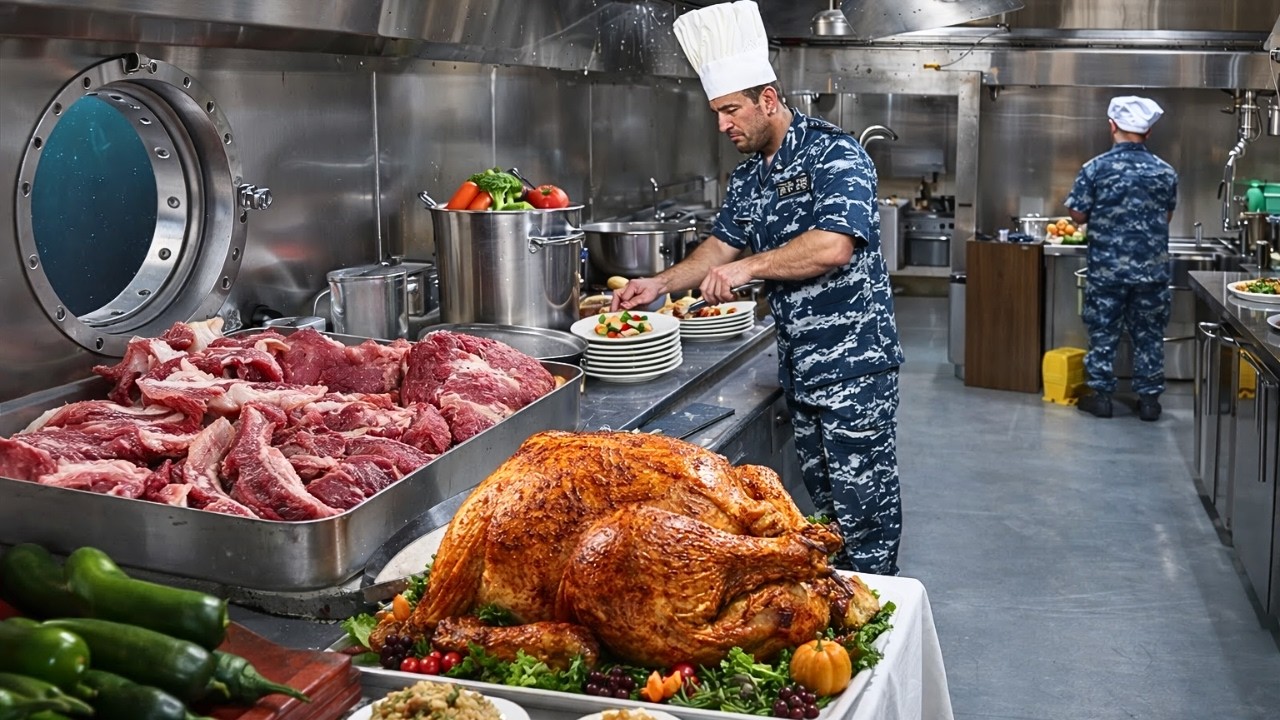
The submarine galley, typically around 200 square feet, is equipped with electric ranges, convection ovens, a griddle, a deep fryer, a steam kettle, a commercial mixer, and a bread proofing cabinet. Everything runs on electricity due to the fire risk, and storage is engineered into every surface with spring-loaded drawers and latched cabinets. Three to four culinary specialists work in shifts, trained at Fort Lee, Virginia, and receiving additional submarine-specific training. They operate on a tight schedule, preparing four meals a day with no downtime, and must be careful about smoke and odors due to the lack of ventilation.
A Typical Day of Eating on a Submarine
A typical day's menu includes a variety of meals. Breakfast features scrambled eggs, bacon, pancakes, and fresh fruit (while it lasts). Lunch might be burgers, grilled chicken sandwiches, or pasta dishes. Dinner is the main event, with steak night, roast chicken, or lasagna, accompanied by sides and desserts. Mid-rats offers leftovers and quick options for the overnight watch. The meals follow a rotating schedule to maintain variety, with culinary specialists putting effort into different cuisines and cooking methods to combat monotony. Fresh bread baked daily is a morale booster, and bakers often start early to have fresh rolls ready for breakfast.
The Disappearing Fresh Food and Creative Cooking
The video describes how the availability of fresh food changes over the course of a deployment. The first two weeks feature fresh produce and real milk, but by weeks three and four, softer items disappear, and hardier produce like apples and carrots are used. Fresh milk transitions to powdered milk, and unwashed eggs, which last longer due to their natural protective coating, are utilized. By weeks five through eight, the galley relies on frozen and canned ingredients, requiring culinary specialists to get creative with sauces and spices. From week nine onward, meals consist of canned meats, dehydrated potatoes, and dried pasta, with fresh bread and desserts becoming critical for morale.
Waste Management and Hygiene
Food waste is minimized through portion control and repurposing leftovers. Non-reusable waste is processed through a garbage disposal and trash compactor system, with biodegradable waste ejected into the ocean in weighted cans designed to sink and biodegrade. Non-biodegradable waste is stored until the sub returns to port. Strict environmental regulations are followed. Cleaning the galley is a daily routine to prevent contamination, with surfaces sanitized constantly and food temperatures monitored obsessively. Water, produced through nuclear-powered desalination, is used carefully for drinking, cooking, cleaning, and reactor cooling.
The Psychological Impact of Food and Special Meals
Food on a submarine serves as therapy, entertainment, and a connection to normal life. Special meals like steak and lobster nights, pizza parties, and themed dinners are strategically planned to give the crew something to look forward to. Holidays are celebrated with traditional spreads, and birthdays and milestones are recognized with special desserts. These food-based celebrations create structure and meaning in an environment where every day can feel identical. Research supports the idea that food variety and quality directly correlate with crew morale, mental health, and job performance.
Culinary Specialists: The Unsung Heroes
Culinary specialists (CS) are highly trained, completing basic culinary training and additional submarine-specific qualifications. They learn boat systems, earn their submarine warfare qualification, and pass tests to operate in the submarine environment. They know how the reactor works, damage control procedures, and how to fight fires and respond to emergencies. The lead cook manages the menu, inventory, budget, and morale impact of meal decisions. Great cooks are revered within the submarine community, and their skills translate well to civilian culinary careers.
Conclusion: Food is Everything
The video concludes by highlighting the challenging conditions under which submarine culinary specialists operate, cooking for 140 people in a small kitchen with limited resources. They bake fresh bread and turn canned vegetables into meals that keep the crew mentally sharp and mission-ready. On a submarine, food is not just food; it's everything.

