
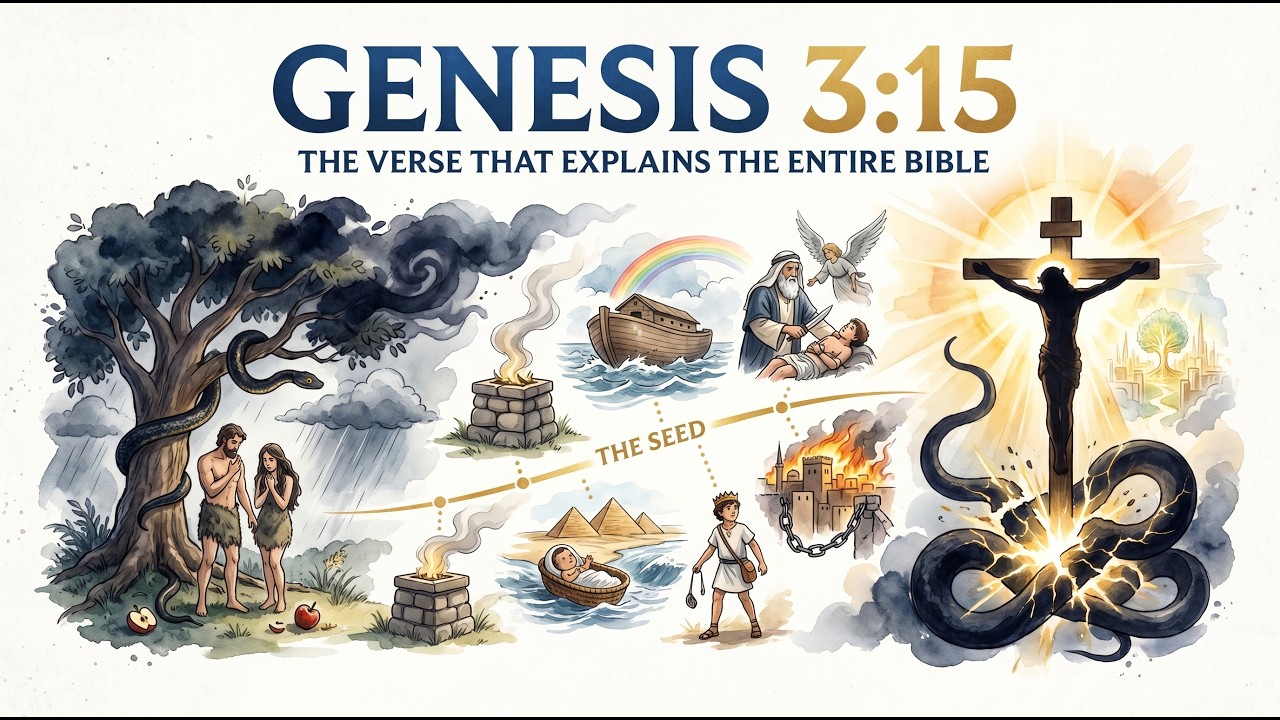
Brief Summary
The video explores the significance of Genesis 3:15, highlighting its impact on the entire biblical narrative. It discusses key moments and figures throughout the Bible, demonstrating how this singular verse serves as a foundational promise connecting the story of humanity's fall to redemption.
- Genesis 3:15 is viewed as the first gospel, proclaiming the conflict between the serpent and humanity.
- The historical narrative reveals a consistent pattern of survival through attacks on the lineage of the promise.
- The conclusion of the biblical story shows the ultimate victory over the serpent, reversing the curse foretold in Genesis.
Introduction to Genesis 3:15
The video begins by introducing a pivotal sentence from Genesis 3:15, which many readers overlook. This passage is not found in the New Testament or Psalms but early in the Bible, marking a significant moment in the story of human failure. Jewish scholars have considered it vital, highlighting its importance in understanding the Bible's overarching narrative. The speaker claims that understanding this verse can unlock deeper insights into the entire biblical text.
Setting the Scene: The Good Creation
Genesis chapters 1 and 2 depict a good world (tov) where God is in direct relationship with humanity. However, chapter 3 introduces a serpent that questions God’s words, sparking human failure. This inquiry leads to shame and fear as humans hide from God, resulting in divine pronouncements of consequence. It is in this context that God speaks Genesis 3:15 to the serpent, initiating a profound conflict.
Understanding Genesis 3:15
Most people interpret Genesis 3:15 as part of the punishment narrative; however, it is characterized as the Protoevangelium or the first announcement of good news. The verse indicates enmity between the serpent and the woman, extending through time to their descendants. The text reveals a declared outcome where the woman’s seed will eventually crush the serpent’s head, a victory that already anticipates suffering.
The Significance of "Offspring"
The Hebrew term “zera” is singular in Genesis 3:15, referring to one seed rather than multiple descendants. This grammatical detail suggests a focus on a specific individual, not just a nation. Paul in Galatians emphasizes this singularity, leading to the belief that the promise ultimately points to one person, whom the Bible later reveals.
Moses and Seed Survival
The story shifts to Moses, where Pharaoh attempts to eliminate the Hebrew male infants to prevent the fulfillment of the promise. Yet, Moses survives by being hidden and ultimately grows up to lead the enslaved Israelites out of Egypt, showcasing the resilience of the promised lineage against oppressive forces.
David and His Offspring
David’s narrative narrows the focus of the promise further. God tells David that his offspring will establish an everlasting kingdom. Despite challenges, including David’s fugitive years, the promise persists, foreshadowing the future fulfillment of the seed’s triumph over adversity.
The Exile and Text Preservation
During the Babylonian exile, Jerusalem is destroyed, seemingly ending the lineage of the promise. However, the exiled people preserve their texts and traditions, ensuring the survival of the promise. They gather and continue to uphold their identity through written records.
Prophecies of the Coming Servant
Prophets like Isaiah and Zechariah present a coming figure who will be crushed yet produce offspring. Isaiah's depiction of this servant as wounded and successful challenges expectations of a military leader, pointing instead to one who embodies both suffering and redemption.
The Silent Years
Following Malachi, a period of 400 years occurs without prophetic voice. Various empires rise and fall, but it is during this silence that the groundwork for fulfillment is laid, leading to the eventual announcement of the Messiah.
The Arrival of Jesus
The narrative reaches its climax with the arrival of Jesus, who embodies the fulfillment of Genesis 3:15. Despite apparent defeat through his crucifixion, the resurrection reveals the true victory of the seed crushing the serpent’s head.
A Pattern of Victory through Suffering
The video highlights a consistent pattern of survival through suffering across biblical narratives. Each attack on the seed leads to its growth and eventual victory, culminating in the cross as the definitive moment where death leads to life.
Revelation: The Fulfillment of the Promise
In Revelation, the cosmic scale of the battle between the woman and the dragon mirrors Genesis 3:15. The ultimate resolution comes when the serpent is thrown into the lake of fire, marking the end of the curse and the restoration of the garden.
Conclusion: The Bible as a Unified Story
The video concludes by emphasizing that the Bible narrates one cohesive story from Genesis to Revelation. Understanding Genesis 3:15 as the spine of biblical literature changes how one approaches the text, revealing an interconnected narrative of promise, conflict, and resolution.

