
Brief Summary
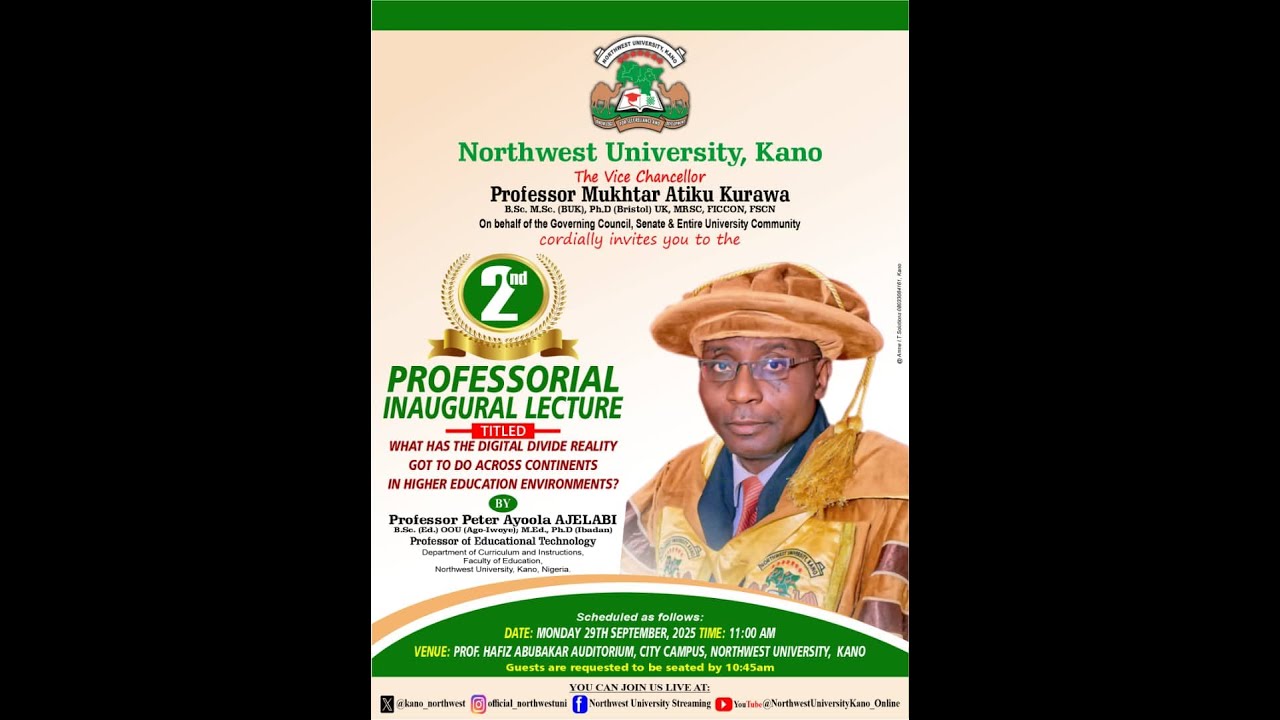
This video captures a professional lecture centered on the impact and challenges of the digital divide in higher education across continents, particularly focusing on the disparities between developed and developing nations. It addresses misconceptions about educational technology, explores gaps in access and effective utilization of technology in education, and proposes strategies for bridging these divides to ensure equitable and quality education for all.
- The lecture highlights the importance of quality assurance, resources, and engagement in education.
- It also emphasizes the need for adapting teaching methods and assessment strategies to accommodate diverse learning styles and technological access.
- The speaker shares personal experiences and research findings, advocating for the integration of technology to enhance learning outcomes and bridge educational gaps.
Opening Remarks and Introductions
The video starts with introductory music and visuals, followed by the commencement of a professional lecture at a university. Various university officials and distinguished guests are introduced and welcomed to the podium. The lecture focuses on the relevant topic of the digital divide and its impact on higher education across continents. The speaker emphasizes the importance of addressing gaps in access, equity, and quality in higher education, which affects academics, policymakers, students, and society at large.
Welcome Address by University Official
A university official delivers a welcome address, highlighting the significance of the lecture as the second of its kind at the university. The lecture provides an opportunity for a newly appointed professor to present an intellectual paper within their chosen specialization. The official mentions several achievements of the university since 2020, including doubling the number of faculty, funding additional academic programs, securing full accreditation for the MBA program, and establishing new directorates and centers to enhance the university's operations and academic excellence.
Introduction of Professor Peter
Dr. Si Tindo introduces Professor Peter, providing a detailed citation of his academic and professional background. Professor Peter was born on November 13, 1966, in Elia State, Nigeria. He has a rich educational background, including a Ph.D. in educational technology specializing in computer-assisted instruction. He has held various academic positions, including lecturer at federal college of education, lecturer at the University of DEA, and lecturer at le college leaves United Kingdom. He has also served in numerous committees and has supervised many dissertations and theses.
Lecture by Professor Peter - Introduction and Personal Journey
Professor Peter begins his lecture by expressing gratitude to the university and attendees. He introduces the topic: "What are the divides brought about by reality in higher education environment across countries?" He shares his personal journey and experiences, including his initial challenges and eventual success in the field of educational technology. He recounts his experiences teaching in the United Kingdom and his observations about the differences in educational technology adoption between African countries and Western countries.
Addressing Misconceptions About Educational Technology
Professor Peter addresses common misconceptions about educational technology, emphasizing that it is not merely about computers or e-learning but a broader concept encompassing the use of devices, equipment, and materials to enhance learning. He shares a personal anecdote from 1995 when he was asked to lecture on computer literacy despite being an expert in educational technology. He also points out the omission of educational technology in the NC benchmark, highlighting the need for greater recognition and understanding of the field.
The Digital Divide: Concepts and Issues
Professor Peter discusses the concept of the digital divide, highlighting the gap between those with access to ICT and those without. He explains that this divide exists between regions, nations, and demographics, including differences based on gender, wealth, and age. He notes that while younger people often have higher levels of technological literacy, women and older individuals may face barriers to access and effective use. He emphasizes the importance of addressing these gaps to ensure equitable access to learning opportunities.
Experiences with Technology in Education
Professor Peter shares his experiences with technology in education, contrasting the use of smartboards in Western countries with their underutilization in Nigeria. He recounts an incident where he struggled to use a smartboard in the UK due to his lack of familiarity, highlighting the need for training and support. He also discusses the challenges of power supply and internet connectivity in Nigeria, which hinder the effective use of technology in education.
Learning Methods and Challenges in Online Education
Professor Peter discusses various learning methods used in the Western world, including practical work, seminars, and lectures. He contrasts this with the situation in Nigeria, where lecturing is often the primary method of instruction. He also addresses the challenges of online education, particularly during the COVID-19 pandemic, noting that many students in Nigeria lacked access to devices and reliable internet connectivity. He emphasizes the importance of engaging students in online learning and ensuring their active participation.
Challenges Faced by International Students
Professor Peter shares research findings on the challenges faced by international students from developing countries studying in the UK. These challenges include unfamiliarity with virtual learning environments, difficulties with plagiarism checks, and issues with assignment submissions. He notes that students from developing countries often struggle with the transition to online learning platforms and may face cultural and academic adjustments.
Assessment and Feedback in Education
Professor Peter discusses the importance of timely and constructive feedback in education. He notes that students in developing countries may not receive adequate feedback on their assignments, hindering their learning and development. He also addresses the issue of attendance, noting that traditional methods of attendance tracking can be inefficient and prone to errors. He suggests the adoption of automated attendance systems to improve accuracy and efficiency.
Quality Assurance and Resources in Education
Professor Peter emphasizes the importance of quality assurance in education, including the qualifications of teaching staff and the availability of resources. He notes that teaching staff must be highly qualified and proficient in their subject matter. He also highlights the need for adequate resources, both physical and digital, to support effective teaching and learning. He points out that many institutions in Nigeria do not comply with NC standards regarding class sizes, which affects the quality of education.
Internationalization of Education and Staff-Student Ratios
Professor Peter discusses the internationalization of education, noting the increasing number of students traveling from around the world to study in the UK. He contrasts this with the situation in Nigeria, where there are fewer international students and staff. He highlights the importance of attracting international talent to enhance the quality of education. He also discusses the staff-student ratio, noting that lower ratios in Western countries contribute to better learning outcomes.
Technology Utilization and Assessment Challenges
Professor Peter contrasts the effective utilization of technology in Western classrooms with the challenges faced in Nigeria, where many teachers lack the necessary skills and resources. He also addresses assessment challenges, noting that high student-teacher ratios in Nigeria can lead to cheating and unfair assessment practices. He suggests the adoption of computer-based testing and CCTV cameras to improve the integrity of assessments.
Plagiarism and Administrative Processes
Professor Peter discusses the issue of plagiarism, noting that many students in developing countries engage in copying and pasting content from the internet. He emphasizes the importance of using plagiarism detection software and training students on academic integrity. He also addresses inefficiencies in administrative processes, such as manual record-keeping and registration, and suggests the adoption of online systems to streamline these processes.
Recommendations and Conclusion
Professor Peter provides several recommendations for bridging the digital divide and improving education in developing countries. These include adopting innovative teaching methods, providing adequate resources, and streamlining administrative processes. He concludes by emphasizing the importance of continuous learning and adaptation to technology.
Acknowledgements and Closing Remarks
Professor Peter expresses gratitude to various individuals and institutions that have supported his career and this lecture. He thanks his mentors, colleagues, family, and friends for their contributions. He also acknowledges the support of the university and the attendees.
Presentation of Award and Closing Remarks
The university presents Professor Peter with an award in recognition of his successful lecture. The head of the department delivers a vote of thanks, expressing gratitude to all those who contributed to the event. The gathering concludes with a closing prayer, the national anthem, and a group photograph.

