
Brief Summary
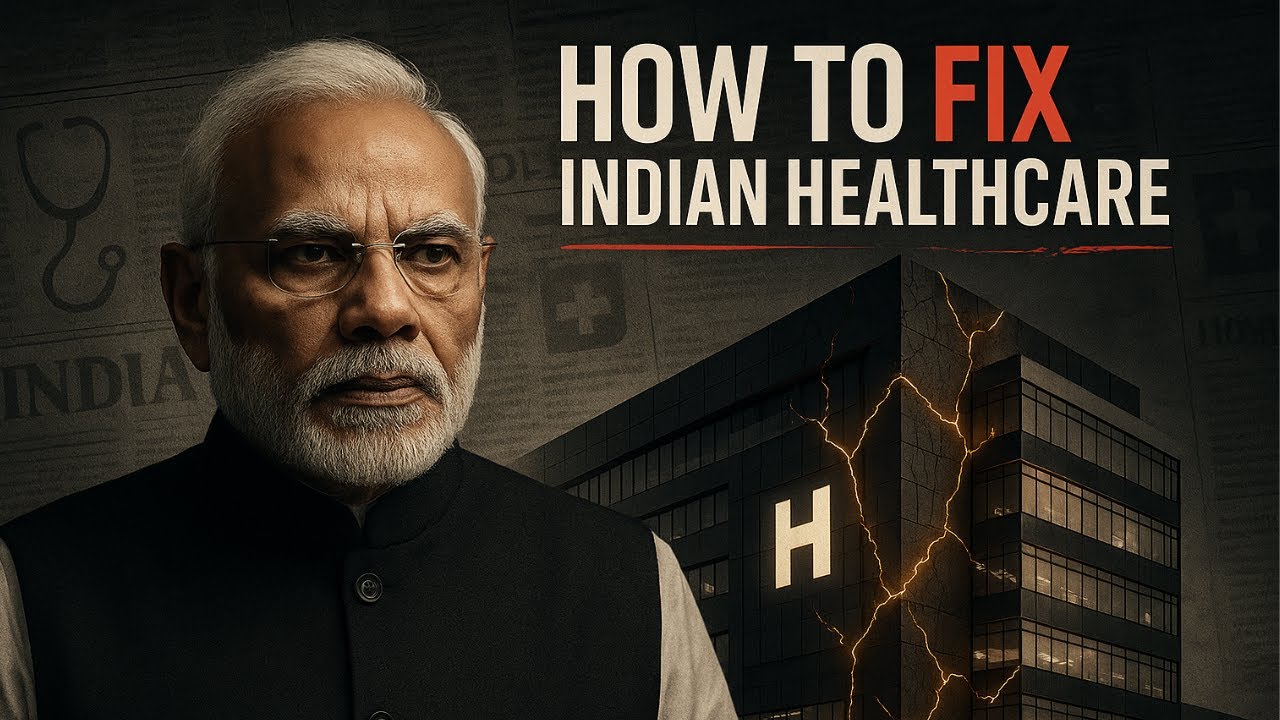
This YouTube video by Think School features a discussion about the flaws in India's healthcare system and introduces Superhealth, a company aiming to disrupt the industry with a new ethical and efficient business model. The conversation covers the dark secrets of Indian hospitals, how they make money, and how Superhealth differs by prioritizing patient care over profits.
- High Capex and Debt
- Doctor's Dilemma and Commission Structures
- Differential Pricing and Lack of Transparency
- Superhealth's Innovative Approach
Introduction
The video starts by highlighting the paradox of India's healthcare system: despite expanding infrastructure and efforts to provide affordable care, fundamental flaws persist. These flaws lead to compromised patient health and ethics in the pursuit of profit optimization. The discussion aims to uncover these dark secrets, explore how hospitals make money (both ethically and unethically), and understand how Superhealth aims to offer a different approach.
What you’ll learn today
The episode promises to reveal the dark secrets of Indian hospitals, detailing how they generate revenue through both ethical and unethical means. It will also explain how Superhealth hospitals are different and explore opportunities for building ethical businesses within India's healthcare system.
The Hospital business model
Building a hospital in India costs approximately ₹2 crores per bed, with expenses divided among land, construction, equipment, medicines, and personnel. Hospitals often rely on debt financing from the start. A significant issue is the lack of differentiation among hospitals, leading patients to choose based on doctor reputation. This dynamic incentivizes hospitals to recruit doctors with established patient bases, offering commissions (around 20-23%) on generated revenue. Doctors are often given a minimum guarantee (MG) for a period of 6-9 months to ensure they don't take a pay cut when switching hospitals. Hospitals closely track "MG recovery," which is how much revenue a doctor generates compared to their minimum guarantee.
Doctors’ moral dilemma
Doctors often enter the profession with a genuine desire to help patients, but the system's incentives can corrupt this. When hospitals pressure doctors to increase their outpatient to inpatient (OPIP) conversion rates, doctors face a moral dilemma. They must decide whether to recommend more surgeries to meet revenue targets, even if it's not in the patient's best interest. Doctors who resist may be subtly pushed out by hiring additional doctors in the same department and redirecting patients to them. The sales team, not the medical team, often acts as the gatekeeper for hiring doctors, prioritizing revenue generation over clinical skills.
Doctor payments structures
There are three main payment models for doctors: MG recovery, fee for service (FFS), and full-time salary. MG recovery is used when the hospital is confident in the doctor's ability to generate revenue. FFS involves paying doctors a commission for each patient they bring in, without any upfront guarantee. The ideal model, according to the speaker, is a full-time salary, which removes the incentive for doctors to prioritize revenue over patient care.
Differential pricing and patient Bills
Hospitals often provide inaccurate estimates for procedures, with the final bill significantly higher than initially quoted. This is because billing departments assess patients' ability to pay and adjust prices accordingly. Hospitals have tie-ups with insurance companies for both package rates and open billing. Open billing allows them to charge rack rates for procedures if they find unexpected anomalies, leading to inflated bills.
Do your looks affect your bill?
Billing departments assess a patient's financial status based on their appearance (watch, shoes, clothes) to determine how much they can be charged. Cash patients (those paying out of pocket) often face higher rates than insured patients, and there is significant room for negotiation. The lack of transparency and wildly different bills for the same treatment are major issues.
Prioritising profits over patients?
Hospitals often prioritize profits over patient well-being, driven by the need to repay debts and generate revenue. Many hospital staff would not choose their own hospital for their family's care, indicating a lack of trust in the system. The problem is not necessarily bad people but a flawed system that incentivizes bad behavior.
Are Hospitals medically under-equipped?
Despite significant investment in health tech, the on-ground experience for patients and doctors has not materially improved. This is because the core problem is the business model, not technology. The high capital expenditure (capex) required to build hospitals drives the need for revenue maximization, often at the expense of patient care.
Disastrous hospital layouts
Hospital designs are often poorly thought out, prioritizing space fitting over patient convenience. Architects focus on maximizing the number of beds to recover costs, leading to scattered facilities and long distances for patients to travel. Billing is often centralized, requiring patients to visit multiple locations for tests and payments.
Medicine Pricing in India
India has done a commendable job regulating medicine prices, ensuring affordability and access. The government's policies and landmark cases have prevented pharmaceutical companies from exploiting patients with expensive drugs. This has fostered a strong local manufacturing base and widespread availability of medicines.
What makes Superhealth unique?
Superhealth aims to disrupt the healthcare space by addressing the fundamental model issues. It focuses on hyper-local hospitals, serving a 3-5 km radius, with a fixed bed count of 50. The goal is to have a high patient throughput with a length of stay of 1.2 to 1.3 days. Superhealth only offers private rooms to reduce infection risk and improve patient comfort.
Construction of a Superhealth hospital?
Superhealth leases existing buildings and renovates them, significantly reducing construction time and costs. The company uses new-age technology like BIM (Building Information Management) to streamline the construction process. This allows them to build a hospital in approximately 120 days, compared to the 3-5 years typically required.
Cost structure of a Superhealth hospital?
Superhealth's model significantly reduces land and construction costs, allowing them to build a hospital for around ₹70 lakhs per bed, compared to the industry standard of ₹2 crores. They also prioritize people costs by offering doctors full-time salaries and ESOPs, removing the incentive for revenue generation. Superhealth caps OPD visits to ensure doctors can spend adequate time with each patient. They also have a post-counseling center where patients can complete all necessary transactions in one place, eliminating the need to roam around the hospital.
Superhealth ‘VIP’ Pass
Superhealth offers a VIP pass for ₹999 per year, covering a family of four. This pass provides unlimited consultations with doctors and free tests prescribed by Superhealth doctors. The goal is to make healthcare accessible and transparent, with no hidden costs or surprises.
Varun’s honest reflection on Superhealth
Varun reflects on the mission of Superhealth, emphasizing the importance of building a healthcare system that is thoughtful, caring, and honest. He hopes to create a place where people feel safe and cared for, and where doctors can focus on patient well-being.
Episode summary
The episode concludes with a summary of the key points discussed, highlighting the problems with the current healthcare system and Superhealth's innovative solutions. The goal is to create a healthcare system that is uniquely tailored for India, does right by patients and doctors, and allows doctors to be doctors.

