
Brief Summary
This video explains chemical reactions using the example of hydrogen and oxygen combining to form water. It illustrates how molecules break apart and reform with new bonds when ignited by a flame, leading to the creation of new substances. The video also covers signs of chemical reactions, such as color changes, gas formation, and temperature changes (exothermic and endothermic reactions).
- Molecules like hydrogen (H2) and oxygen (O2) are stable due to their bonds.
- A flame provides energy to break these bonds, allowing atoms to rearrange and form new molecules like water (H2O).
- Chemical reactions involve the rearrangement of atoms and the formation of new substances.
- Signs of chemical reactions include color change, precipitate formation, gas production, new smells, dissolving solids, and changes in energy (heat, light, noise).
Formation of Hydrogen and Oxygen Molecules
When hydrogen atoms collide, they form H2 molecules, establishing a bond between them. Similarly, oxygen atoms form O2 molecules with a double bond. These molecules are stable unless external factors intervene.
Collision of Hydrogen and Oxygen Molecules
When hydrogen and oxygen molecules are mixed in a box, they collide and bounce off each other without reacting, because all their bonds are already in use.
Igniting the Gases: The Chemical Reaction
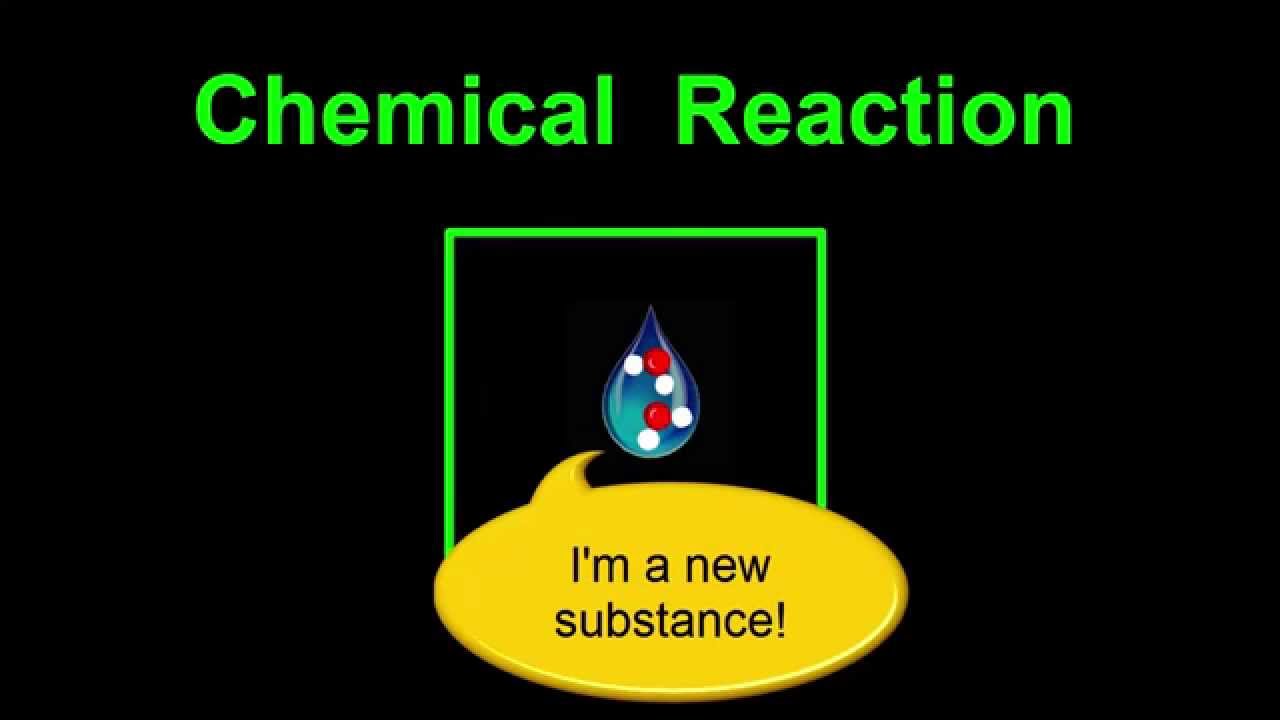
Introducing a flame causes the hydrogen and oxygen molecules to break apart into individual atoms. These atoms then recombine to form water (H2O) molecules. The flame provides the energy needed to break the existing bonds and initiate the formation of new bonds.
Balancing the Reaction with Additional Hydrogen
To ensure all oxygen atoms bond with hydrogen, an extra H2 molecule is added. This results in the formation of two H2O molecules, demonstrating the creation of a new substance through a chemical reaction.
Reactants and Products in a Chemical Reaction
The initial substances (H2 and O2) are called reactants. The flame breaks these molecules apart into individual atoms, which then rearrange to form new molecules (H2O), known as the products of the reaction.
Structural Formulas and Bond Changes
Structural formulas illustrate how bonds break in the reactant molecules (H2 and O2) and new bonds form in the product molecules (H2O). This rearrangement signifies a chemical reaction where old substances are replaced by a new one.
Signs of a Chemical Reaction
Evidence of a chemical reaction includes the formation of a new substance or the disappearance of an old one. Telltale signs are color changes, precipitate formation, gas bubbles, new smells, and solids dissolving.
Energy Changes: Exothermic and Endothermic Reactions
The breaking and forming of bonds alter the energy within molecules. Exothermic reactions release energy, heating the surroundings, while endothermic reactions absorb energy, cooling the surroundings.
Chemical Reactions in Everyday Life
Chemical reactions are constantly occurring, including within the human body, where molecules are broken down and reformed to sustain life.

