
Brief Summary
This video explores the complex relationship between American Jews and Israel, examining how Jewish education, summer camps, and youth programs instill a deep connection to Israel from a young age. It also investigates the experiences of American Jews who have served in the Israeli army and the impact of the Israeli-Palestinian conflict on their identities. The video further discusses the growing divide within the American Jewish community regarding Israel, with some questioning the Israeli government's policies and expressing solidarity with Palestinians.
- Jewish education and youth programs instill a strong connection to Israel.
- Some American Jews are questioning Israeli policies and expressing solidarity with Palestinians.
- The video explores the experiences of American Jews who have served in the Israeli army.
Introduction
The video opens with scenes from a Birthright Israel mega-event, highlighting the strong connection many American Jews feel towards Israel. The speaker emphasizes the importance of Israel as the eternal capital of the Jewish people. Personal stories from American Jews who have participated in Birthright and even joined the Israeli army are shared, illustrating the profound impact these experiences have on their Jewish identity and their commitment to Israel.
Early Indoctrination
The video explores how Jewish identity is intertwined with Israel from a young age through Hebrew school, Jewish youth groups, and summer camps. Jewish educators describe teaching about Israel's food, music, culture, history, and geography, fostering a deep connection to the land. Activities like drawing the Israeli flag and celebrating Israeli holidays reinforce this bond. For many, separating Judaism from Israel is impossible, as Israel is seen as a core part of their identity.
Israel as an Insurance Policy
The video shifts to discussing Israel as a safe haven for Jews, particularly in light of the Holocaust. Interviewees share stories of family members who escaped persecution and found refuge in Israel. Israel is viewed as an "insurance policy," ensuring that Jews always have a place to go in times of crisis. A Holocaust survivor recounts his personal connection to Israel, emphasizing its significance in his life despite the distance.
Military Indoctrination
The video shows how Jewish summer camps and youth trips incorporate Israeli culture and even military training to connect American Jews to Israel. Activities like wearing army uniforms, learning Israeli military commands, and simulating basic training instill a sense of importance and encourage support for the Jewish people, with joining the army or becoming an Israel advocate presented as ways to contribute.
Pro-Israel Advocacy
The video discusses the role of organizations like AIPAC in advocating for Israel in the United States. High school delegations are sent to AIPAC conferences to learn how to influence Congress on legislation affecting Israel. Jewish education is seen as a priority for strengthening the relationship between American Jews and Israel, with trips to Israel being made available to young Jewish people through programs like Birthright.
Birthright Israel
The video emphasizes the role of Birthright in shaping young Jews into "soldiers abroad," armed with love, knowledge, and conviction to sway public opinion in Israel's favor. Participants are taught to defend Israel against perceived lies and to present the "truth" about Israel. Hillel, a Jewish campus organization, is portrayed as a central address for Jewish life, where pro-Israel advocacy is a key component of engaging young Jewish people.
Joining the IDF
The video explores the phenomenon of American Jews joining the Israeli Defense Forces (IDF). Hillel staff share stories of students who have enlisted, viewing it as a meaningful and fulfilling experience. Some individuals express feeling more connected to Israeli society than to American society and a desire to defend what they see as their country.
IDF Service in the West Bank
The video details the experiences of American Jews serving in the IDF, including deployment to the West Bank. Missions include patrolling villages, conducting checkpoints, and asserting a military presence. One former soldier describes training for urban warfare in simulated Arab housing and the goal of making Palestinians feel constantly watched.
The Absence of the Palestinian Narrative
The video highlights the lack of discussion about Palestinians in Jewish education, with Israel often presented as an empty wasteland before the arrival of Jews. Palestinians are portrayed as wanting to kill Jews and destroy Israel. This absence of the Palestinian narrative leaves many American Jews with little understanding of Palestinian experiences or perspectives.
A Palestinian Perspective
The video introduces a Palestinian perspective, with a resident of Bethlehem describing life under occupation. Growing up with constant warnings from parents about soldiers and settlers, experiencing house invasions, and witnessing the fear instilled by the military are common experiences. The speaker questions why young Americans would sacrifice their lives for a land they claim as theirs, highlighting the disparity in rights between foreigners and the indigenous population.
The Nakba
The video explains the Nakba, the catastrophe that befell Palestinians in 1948, including the ethnic cleansing and displacement of hundreds of thousands of people. Personal stories are shared of families expelled from their homes and villages, never allowed to return. The narrative of Israel as "a land without a people for a people without a land" is challenged, emphasizing the erasure of Palestinian history and rights.
Occupation and Settlements
The video discusses the ongoing Israeli occupation of the West Bank and the expansion of settlements. The intention of Israeli control is described as complete colonization, with homes being built for Jewish families while Palestinian homes are demolished. The video highlights the unequal application of law, with Israeli settlers subject to civil law while Palestinians live under military law.
Life Under Occupation
The video portrays the daily life of Palestinians living under occupation, characterized by a lack of freedom and constant control by the Israeli military. A former Israeli soldier recounts missions involving taking over Palestinian homes and the violence and shame he experienced during his service. The video also describes the arbitrary detention of Palestinians and the use of security as a justification for oppressive measures.
Apartheid
The video explores the argument that the situation in the West Bank constitutes apartheid, with Palestinians living under a different legal system than Israeli settlers. The stark contrast between crossing the checkpoint into Bethlehem and the restrictions placed on Palestinians are highlighted. The video also touches on the battle happening on college campuses, where pro-Israel advocates are fighting against anti-Israel sentiment.
Confronting the Narrative
The video discusses the challenges faced by Jewish students who question the pro-Israel narrative on college campuses. They encounter accusations of anti-Semitism and are often unable to get satisfactory answers to their questions about the occupation and the settlements. This leads some to seek out alternative perspectives and to confront the realities on the ground in Palestine.
Seeing Palestine
The video follows a group of American Jews as they travel to Palestine and witness the realities of the occupation firsthand. They hear stories from Palestinians about displacement, violence, and the destruction of their livelihoods. The experience challenges their preconceived notions and leads them to question the narrative they have been taught.
Challenging the Community
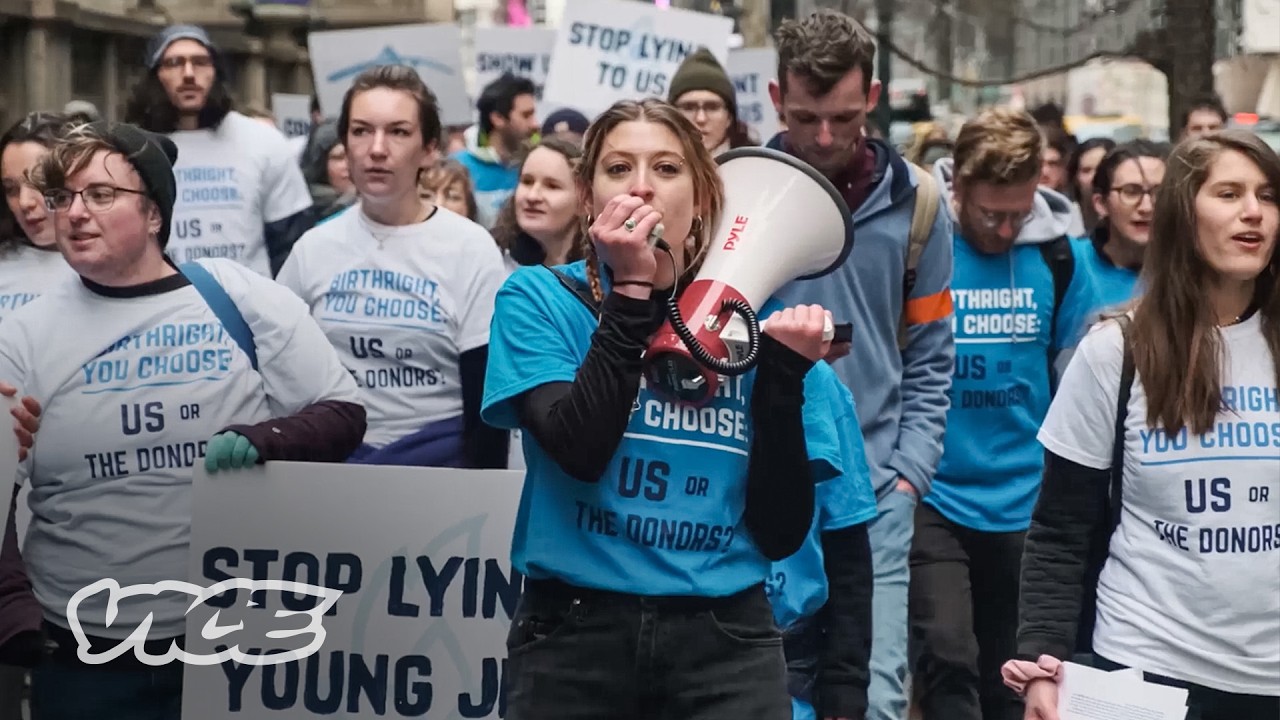
The video explores the personal and communal challenges faced by American Jews who speak out against the occupation. They often face criticism, ostracism, and accusations of being "self-hating Jews." However, they also find support in a growing movement of young Jews who are questioning the traditional pro-Israel stance of the American Jewish establishment.
Breaking the Silence
The video highlights the work of organizations that are bringing the crisis of American Jewish support for Israel to the forefront. These groups aim to force a conversation within the Jewish community about the occupation and the complicity of American Jewish institutions. They are met with resistance and accusations of anti-Semitism, but they persist in their efforts to challenge the status quo.
A Moral Awakening
The video suggests that a moral and spiritual awakening is occurring among young Jews, who are deeply concerned about the suffering of Palestinians. They are challenging the traditional pro-Israel narrative and seeking to create an alternative vision of justice and peace. The video also touches on the use of anti-Semitism as a tool to silence criticism of Israel.
The Cost of Speaking Out
The video illustrates the personal and professional consequences of speaking out against Israeli policies. The story of Simone Zimmerman, who was hired and then quickly suspended from the Bernie Sanders campaign due to her criticism of Israel, is shared. The video also highlights the attacks and accusations faced by those who challenge the pro-Israel narrative.
Anti-Semitism and Israel
The video examines the complex relationship between anti-Semitism and criticism of Israel. Some argue that criticizing Israel fuels anti-Semitism, while others contend that the focus on defending Israel has led to a neglect of actual threats to the Jewish community. The video also discusses the rise of white nationalism and the ways in which support for Israel has been used to justify morally questionable alliances.
A Tipping Point
The video suggests that the American Jewish community is at a tipping point, with a growing recognition of the need to address the suffering of Palestinians. The video emphasizes the importance of solidarity and the potential for the American Jewish community to influence Israeli policy. The video concludes with a call to action, urging viewers to break the silence and to work towards a future of peace and justice for all.
Breaking the Silence: Personal Stories
The video presents personal stories from individuals who decided to "break the silence" and speak out against the occupation. They share their experiences in the Israeli army and the challenges they faced in confronting the realities on the ground. They also discuss the importance of recognizing the Palestinian narrative and the need for action to end the ongoing displacement and colonization.
A Tradition of Liberation
The video concludes with a rabbi emphasizing that standing up for Palestinian rights is not a betrayal of Jewish identity but rather a continuation of a long tradition of justice and liberation. The video calls for envisioning a world where all people are safe and free and for never stopping the fight for that world. The video ends with a message of hope and a call to action, urging viewers to get to work and to create a better future for all.
Music and Reflection
The video transitions into a musical interlude, with lyrics emphasizing the return of light even in the darkest of times. The music serves as a moment of reflection on the themes explored in the video and a reminder of the power of hope and resilience.
Final Thoughts
The video concludes with final thoughts from interviewees, emphasizing the need to end the occupation and to create a more just and equitable future for both Israelis and Palestinians. The video challenges viewers to confront their own complicity and to take action to support freedom and dignity for all.

