
Brief Summary
This video tells the story of Mannu and his mother, Chhavi, who face hardship after Mannu's father is accused of stealing money from their village. They are ostracized and forced to leave, eventually finding help from a tribal community who teach them unique cooking skills. They start a food stall, which becomes successful, but their journey takes a turn when they hear about a flood in their village. The video highlights themes of betrayal, resilience, community, and redemption, showing how helping others can lead to unexpected revelations and healing.
- Mannu and Chhavi are ostracized after Mannu's father is accused of theft.
- They find help from a tribal community and start a successful food stall.
- They return to their flood-stricken village to help, leading to the revelation of the truth about Mannu's father.
Accusation and Ostracism
Mannu is seen placing flowers on his father's photo when Chhavi stops him, reminding him that his father is no more. A village official arrives, informing them that the village council has ordered their eviction because Mannu's father allegedly stole money meant for a solar panel project. The villagers demand the money back, threatening to banish them if they can't repay the debt. Despite Chhavi's belief in her husband's innocence, they are forced to leave the village, facing the shame and distrust of their community.
Homeless and Hungry
Chhavi expresses her unwavering faith in her husband, asserting that he would never betray their family or the village. However, she is unable to explain his disappearance. As they wander in search of a new home, they find themselves in a forest, hungry and with night approaching. They decide to search for food in the forest, hoping to find something to eat.
Help from the Veda Tribe
While searching for food, Mannu and Chhavi encounter two members of the Veda tribe, who are initially wary but offer them food and shelter upon learning of their hunger. The Veda people explain that feeding the hungry is a core principle of their tribe. They invite Mannu and Chhavi to their home, where they are served a unique and delicious meal made with special spices and traditional recipes.
Sharing Their Story
Timba asks Mannu and Chhavi about their situation and where they come from. Chhavi recounts how her husband, Rakesh Kumar, a teacher, proposed a solar panel project to the village council to solve their irrigation problems. The villagers trusted him and gave him ₹1 lakh, but he disappeared with the money. The villagers assumed he had run away, and Chhavi and Mannu were blamed and evicted.
A New Beginning: The Food Stall Idea
Mannu and Chhavi discuss their future, determined to repay the village's debt and restore their lost honor. Mannu suggests starting a food stall, inspired by the delicious and unique food they had with the Veda tribe. Despite their lack of resources, Mannu envisions selling the tribal cuisine, cooked in traditional clay pots and served from a mobile cart, to people in different villages. Chhavi is hesitant but agrees to support the idea.
Preparation and Launch
Timba offers to help them build a food cart. He emphasizes the Veda tribe's tradition of helping others and providing for those in need. With Timba's help, they prepare to launch their food stall, hopeful that their unique dishes will attract customers.
Success and Recognition
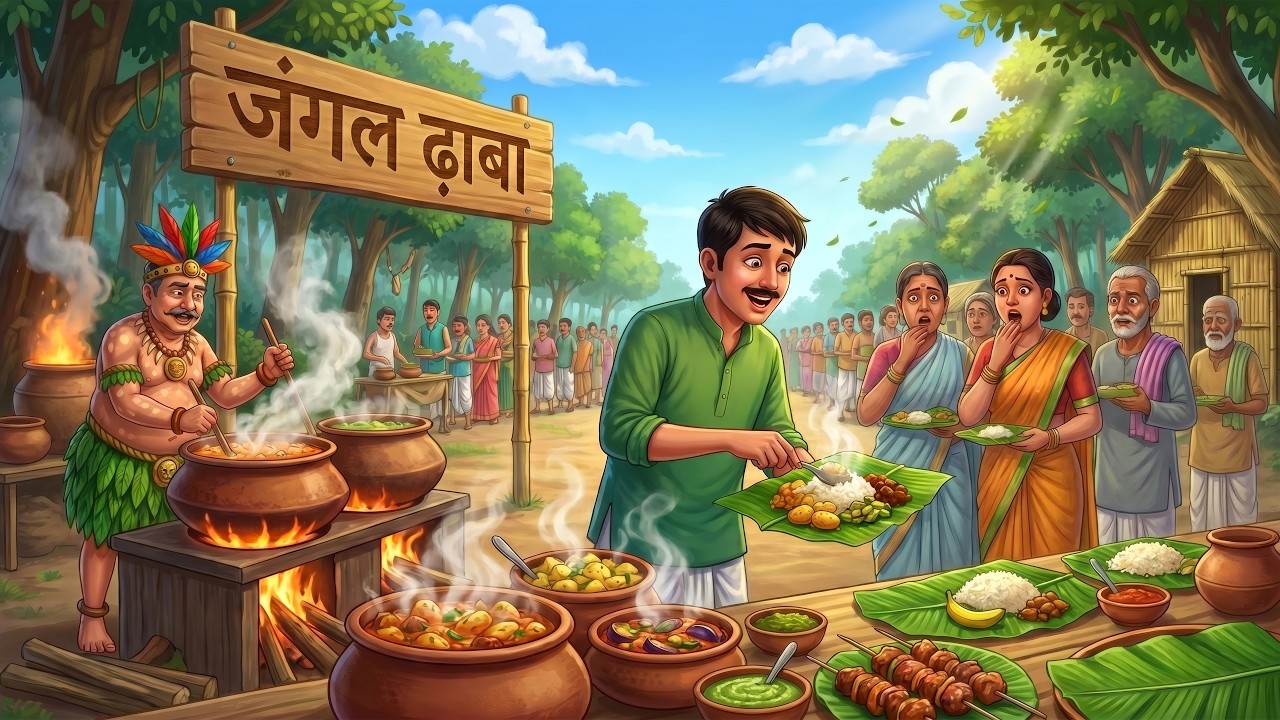
Mannu and Chhavi set up their food stall in a nearby village, offering dishes like banana vegetable, potato rice (aloo bhat), and eggplant-tomato chutney. Initially, people are curious and hesitant, but once they taste the food, they are amazed by the flavors. The food becomes a hit, and soon, many villagers are buying their dishes, praising the natural and delicious taste.
Growing Popularity and Opening a Dhaba
The food stall becomes increasingly popular, with people eagerly awaiting Mannu and Chhavi's arrival. The unique flavors and the story behind the food attract a large following. Eventually, their success allows them to open a proper "dhaba" (roadside restaurant). Chhavi is emotional as she cuts the ribbon, feeling they have regained their lost respect. However, Mannu reminds her that they still need to repay the village's debt.
News of the Flood
Their success is interrupted when Mannu overhears news of a devastating flood in his village, Rosapur. He learns that many homes and fields have been destroyed. Concerned for the well-being of his former community, Mannu feels compelled to help, despite the villagers' past treatment of him and his mother.
Returning to Rosapur to Help
Mannu tells his mother about the flood and insists on helping the villagers. Chhavi is reluctant, reminding him of their harsh treatment. However, Mannu points out that Timba helped them when they were in need, and it is their duty to assist others. He also acknowledges that the villagers' anger was justified since his father had taken their money. Chhavi eventually agrees, and they return to their village.
Offering Food and Shelter
Mannu and Chhavi arrive in Rosapur and are shocked by the devastation. They find the villagers gathered at the चौपाल (community gathering place). Despite the सरपंच's hostility, Mannu offers to help, acknowledging his father's betrayal but pleading for a chance to assist. He invites the villagers to his dhaba, where they provide free meals and shelter to those who have lost their homes.
The Dhaba's Struggle and a Revelation
After two months of providing free food and shelter, Mannu and Chhavi's dhaba is on the verge of closing due to lack of funds. As they discuss their next steps, a police inspector arrives, revealing the truth about Rakesh Kumar. The inspector explains that Rakesh did not run away with the money but was trying to track down the fraudster who had taken it. He had informed the police, but was killed by the fraudsters before they could reach him. The police recovered the money, which they return to Mannu.
Reconciliation and Remembrance
The inspector shares the truth with the villagers, who are deeply moved and remorseful for their treatment of Mannu and Chhavi. They apologize and offer the recovered money back to Mannu to rebuild his dhaba. Mannu accepts their apology and uses the money to reopen the dhaba in his village, naming it "Rakesh Dhaba" in honor of his father.

