
Brief Summary
This YouTube video by Aqqis Academy features a discussion on 40 Hadiths about the Quran, taken from the book "Al-Arba'un Al-Qur'aniyyah" by Sheikh Ahmad Ibn Abdur Razzaq Al-Anqari. The discussion emphasizes the importance of the Quran, its virtues, manners, and related laws, especially as the month of Ramadan approaches. It also covers the proper way to memorize Hadiths, starting with Basmalah and the Hadith of Umar Bin Khattab about intentions.
- Importance of the Quran and its virtues.
- Proper manners and laws related to the Quran.
- How to memorize Hadiths effectively.
Introduction
The session begins with an introduction, expressing gratitude to Allah and sending blessings to Prophet Muhammad. The speaker introduces the book "Al-Arba'un Al-Qur'aniyyah," a compilation of 40 Hadiths about the Quran by Sheikh Ahmad Ibn Abdur Razzaq Al-Anqari. The book covers the virtues, manners, and laws related to the Quran and has been reviewed by scholars like Sheikh Abdullah Ibin Abdurrahman Assa'ad and Sheikh Mahir Ibin Yasin Alfahl. The speaker mentions having heard these Hadiths directly from the author.
Methodology and Memorization Techniques
The speaker explains Sheikh Ahmad's methodology in writing the book, which involves organizing Hadiths by their respective topics. He also shares the Sheikh's advice on memorizing Hadiths: read a Hadith, repeat it three times, then up to ten times, and then try to recite it from memory without looking at the text. This can be done while sitting, standing, or even walking, such as on the way to the mosque or while driving.
Khutbatul Kitab: Starting with Basmalah and the Hadith on Intentions
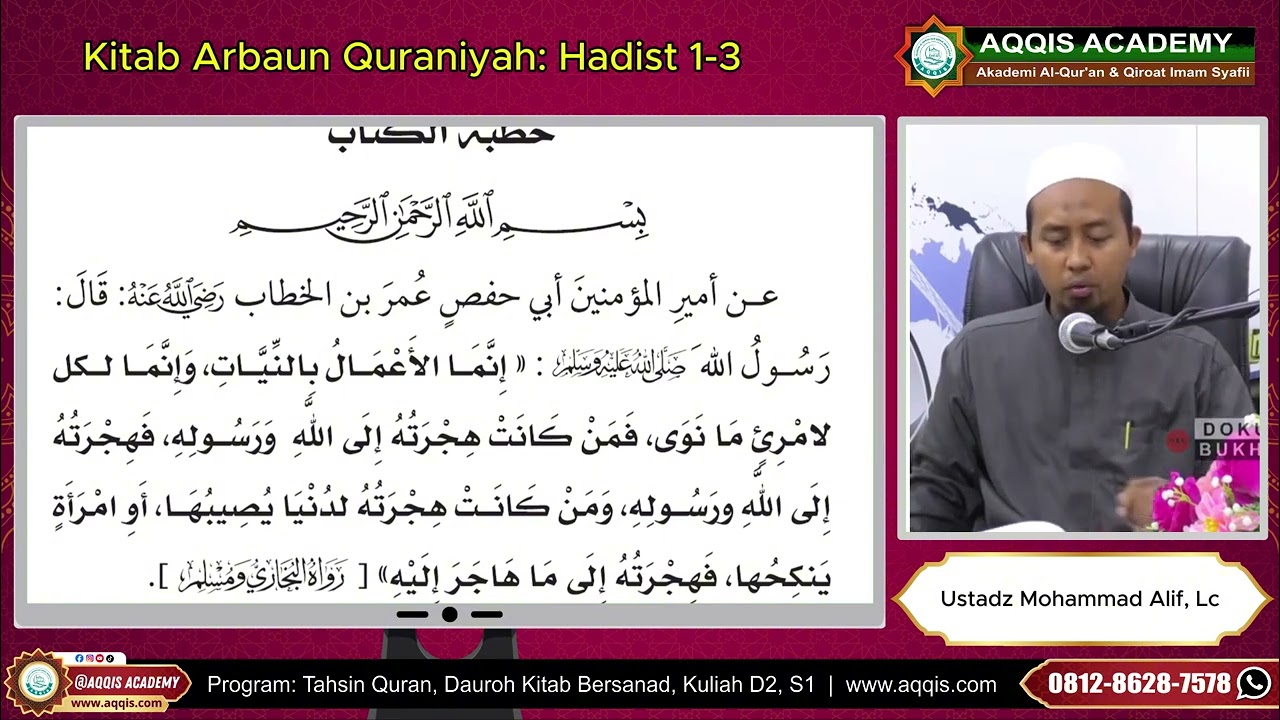
The author starts the book with "Bismillahirrahmanirrahim," following the tradition of scholars and the example of Prophet Muhammad in his letters to rulers. He then includes the Hadith of Umar Bin Khattab about intentions (Innamal a'malu binniyat), emphasizing the importance of having a sincere intention in all actions. Actions are judged according to intentions, and rewards are based on those intentions. Hijrah (migration) done for Allah and His Messenger will be rewarded accordingly, while hijrah done for worldly gains will only yield those gains. The author includes this Hadith to follow the example of scholars like Imam Bukhari and Imam Nawawi, who also started their works with this Hadith to remind readers of the importance of intention.
Chapter 1: Virtues of Reading and Studying the Quran
This chapter focuses on the virtues of reading and studying the Quran. The first Hadith, narrated by Abu Hurairah, states that when people gather in a house of Allah (mosque) to recite and study the Quran, tranquility descends upon them, they are covered with mercy, surrounded by angels, and Allah mentions them to those near Him. The Sheikh clarifies that this virtue is not limited to group gatherings but also applies to individuals who read and study the Quran alone in the mosque. The benefits include tranquility, mercy, and being mentioned by Allah.
Benefits of Gathering to Study Quran and Importance of Learning from a Teacher
The speaker explains the benefits of gathering in mosques to study, memorize, and teach the Quran. He clarifies that while teaching beginners, a teacher may recite verses and have students repeat them in unison, but reciting the Quran in unison for those already proficient is considered an innovation (bid'ah). He also emphasizes the importance of building schools and centers for Quran memorization. The speaker stresses that knowledge, especially of the Quran, must be acquired from a teacher (talaqi) and not through self-study (otodidak). He quotes scholars who warn against relying solely on books without guidance from knowledgeable teachers, as it can lead to errors and misinterpretations.
Reward Based on Deeds and Importance of Manners in Seeking Knowledge
The discussion highlights that rewards are based on deeds, not lineage. The speaker emphasizes the importance of understanding and adhering to the proper etiquette of attending gatherings of knowledge. He recommends books such as "At-Tibyan Fi Adabi Hamalatil Quran" by Imam An-Nawawi and "Al-Jami' liakhlaqir Rawi wa Adabis Sami" by Al-Imam Al-Khatib Al-Baghdadi. The speaker encourages the revival of mosques through Quranic activities, which brings tranquility to those who practice it.
The Reward for Reading Each Letter of the Quran
The speaker transitions to the second Hadith, which emphasizes the immense reward for reading the Quran. Narrated by Abdullah bin Mas'ud, the Prophet Muhammad stated that whoever reads a letter from the Book of Allah will have a reward, and each reward is multiplied tenfold. The Prophet clarified that Alif Lam Mim is not one letter but three separate letters, each earning ten rewards, totaling thirty rewards. This Hadith highlights the immense reward for a simple act.
Benefits of Quran Reading and Erasing Sins
The speaker explains that reading the Quran brings immense rewards for minimal effort. He references a verse from Surah Hud (11:14), stating that good deeds erase bad deeds, and connects it to the Hadith about following bad deeds with good ones to erase them. He quotes Ibn Uthaymeen, who encourages increased dedication to reading the Quran day and night to increase faith, knowledge, and tranquility.
The Quran's Intercession on the Day of Judgment
The third Hadith discusses the Quran's intercession for its readers on the Day of Judgment. Narrated by Abu Umama Al-Bahili, the Prophet Muhammad said, "Read the Quran, for it will come as an intercessor for its companions on the Day of Resurrection." The speaker emphasizes that this Hadith confirms the belief in intercession for those who sincerely believe in and act upon the Quran.
Conditions for Intercession and the Quran as the Word of Allah
The speaker clarifies that intercession is only for those who truly believe in the oneness of Allah (Tawhid). Those who associate partners with Allah (Shirk) will not receive intercession, regardless of how much Quran they have memorized or how beautifully they recite it. He emphasizes the importance of understanding the Quran's message of worshipping Allah alone and avoiding Shirk. The speaker also affirms that the Quran is the word of Allah, not a creation, and that it came from Allah and will return to Him.
The Quran's Reward as Intercession and the Prophet's Enthusiasm for His Ummah
The speaker explains that on the Day of Judgment, Allah will transform the reward for reading the Quran into something that will intercede for its reciters with Allah's permission. He highlights the Prophet's enthusiasm in guiding his followers to all forms of goodness, including reading the Quran and earning its intercession. The speaker also emphasizes the belief in the Day of Resurrection and Judgment, where people will be resurrected and judged according to their deeds.
Refutation of Khawarij and Mu'tazilah and Conclusion
The speaker notes that the Hadith refutes the Khawarij and Mu'tazilah sects, which deny intercession. He reiterates that intercession is granted to those who are pleasing to Allah, who have Tawhid, and who read the Quran. The session concludes with the hope that these Hadiths will inspire listeners to increase their dedication to reading the Quran and that the rewards earned will benefit them in the Hereafter.

