
Brief Summary
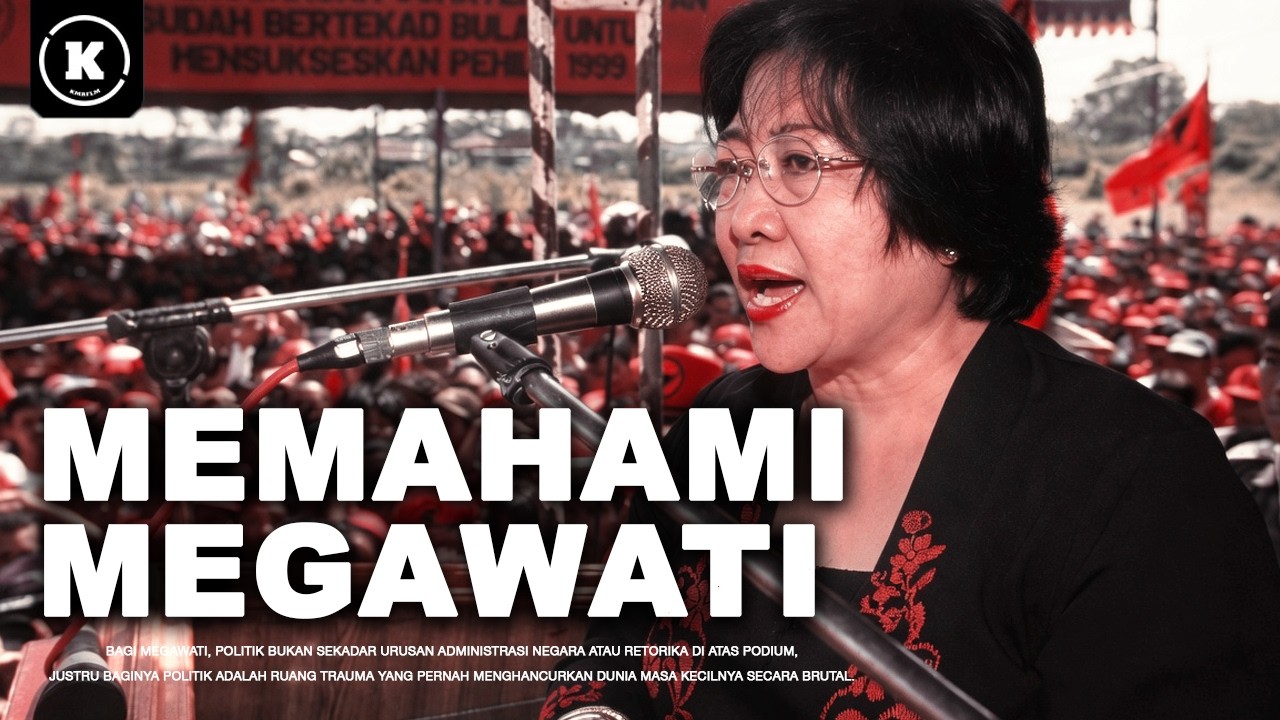
This video examines the political journey of Megawati Soekarno Putri, Indonesia's first female president, highlighting her rise, struggles, and controversial decisions. It reveals her complex relationship with her father's legacy and discusses how her past shaped her political maneuvers.
- Megawati transformed family trauma into political strength.
- Her leadership style remains centralistic, and her tenure proved crucial for Indonesia's democratic foundations.
Introduction to Megawati Soekarno Putri
Megawati Soekarno Putri, known for her lineage as the daughter of Indonesia's founding president, faced significant political adversities. Despite being celebrated as a symbol of democracy and progress, she often employed a centralistic approach within her party. The narrative questions whether Megawati is a true democrat or if she remains overshadowed by her father's legacy.
Understanding Megawati’s Political Maneuvers
Megawati's political journey is deeply intertwined with her traumatic childhood experiences during Indonesia's turbulent transition in the 1960s. Watching her father’s downfall and the subsequent oppression under the New Order regime instilled in her a defensive mentality, forming a leader who cultivated loyalty and trust within a very closed circle. This environment fueled her centralistic leadership style as she protected her party, the PDIP, from internal strife and betrayal.
Rise of the PDIP and Megawati's Leadership
In the late 1980s, Megawati joined the PDI, a political party created by the New Order regime. Her entry was both strategic and risky, aimed at reviving nationalistic sentiments. After becoming party chair in 1993, Megawati’s leadership faced violent opposition from the regime, but the tragedy of July 27, 1996, crystallized her status as a national figure of resistance. The end of Suharto's regime in 1998 allowed her to establish the PDIP as a major political force.
Megawati's Presidency: 2001-2004
During her presidency, Megawati navigated a country in crisis. Her administration focused on stabilizing the economy and re-establishing democratic institutions, notably creating the Corruption Eradication Commission (KPK) and the Constitutional Court. Her leadership witnessed the transition to direct presidential elections in 2004, reinforcing democratic practices in Indonesia. Despite challenges, she displayed political integrity by transferring power peacefully after losing the election.
The Pragmatic Approach to Economics
Megawati's presidency highlighted a complex relationship with market-oriented reforms. While maintaining a pro-people stance rooted in marhaenism, some of her economic policies, particularly privatizations, elicited heavy criticism. With Indonesia grappling with significant debt and economic instability, she opted for pragmatic solutions that, while controversial, aimed to ensure economic recovery.
The Legacy and Challenges of Megawati
Despite her achievements, Megawati's leadership faced long-standing critiques, particularly her reliance on her father's legacy, which frequently overshadowed her individual accomplishments. The centralization within the PDIP has created a rigid structure, inhibiting new leadership potential. Even post-presidency, her influence remains substantial, raising questions about the balance of individual versus institutional power in Indonesia's evolving democracy.

