
Brief Summary
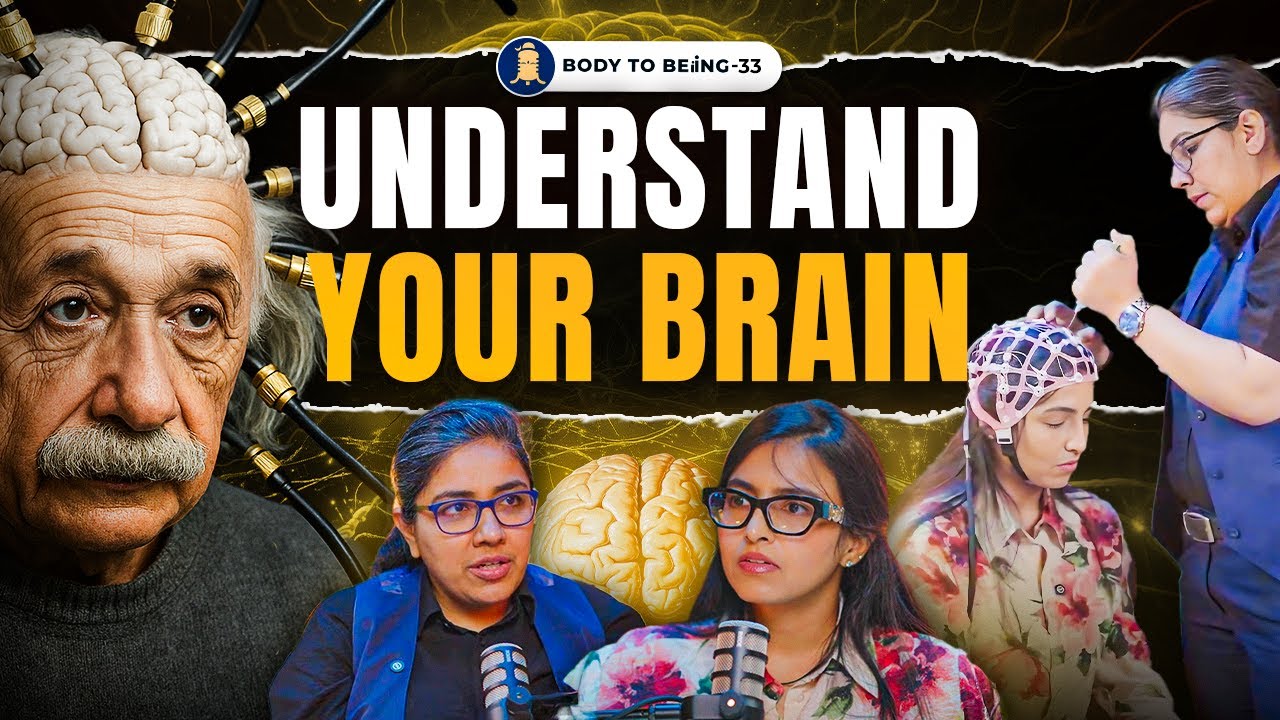
This YouTube video features Dr. Sweta Adatia, a neurologist, discussing brain health, function, and optimization. She shares insights on unconventional brains, brain-boosting foods, the importance of sleep, and techniques to reverse brain aging. Key takeaways include:
- The brain's immense memory capacity and the importance of maintaining brain fitness.
- The impact of lifestyle choices, such as diet and sleep, on brain health.
- Practical techniques like meditation, exercise, and social connection to improve brain function and reverse aging.
- The significance of understanding brain waves and managing stress for optimal cognitive performance.
Introduction
The host introduces Dr. Sweta Adatia, a neurologist and author, highlighting her work in brain mapping and peak performance. Dr. Adatia has examined the brains of peak performers to understand the secrets behind their success. The podcast aims to explore brain health, success manifestation, memory enhancement, and reversing brain aging.
Unconventional Brains
Dr. Adatia shares her experiences examining the brains of peak performers, including meditators, athletes, and a parachute jumper with 29,000 jumps. She recalls Nicole, who stood on Burj Khalifa after recovering from severe accidental trauma, and Dr. Kallayerian, who has Ashtavadhan and Shatavadan, remembering and reproducing hundreds of things at once. These examples illustrate the brain's resilience and capacity for extraordinary feats.
Brain Foods to Enhance Brain Health
Dr. Adatia discusses foods that enhance and harm brain health. Refined sugar, processed foods, and chemicals like monosodium glutamate (MSG) are detrimental. She emphasizes the importance of cognitive padding, or building a reserve of brain cells, to counteract the natural 5% brain loss every 10 years. Good fats, iron, and vitamins are essential for brain cell function.
B.R.A.I.N. Acronym for Brain Food
Dr. Adatia introduces the acronym B.R.A.I.N. to simplify brain food choices:
- B is for Berries (gooseberries, blueberries) for mental sharpness.
- R is for Rich omega-3 sources (walnuts, flax seeds).
- A is for Avocados and eggs (vitamin B12).
- I is for Iron-rich foods (beetroot, dates, jaggery).
- N is for Nuts (almonds, walnuts, raisins) for good cholesterol. She also references the Cosmos Mind study, which found that multivitamins can help recover 2.5 years of brain age.
Supplements and Ayurvedic Perspective
Dr. Adatia addresses the Ayurvedic perspective on supplements, suggesting drug holidays (2 months on, 1 month off) to prevent the body's production capacity from becoming lazy. She recommends multivitamins after age 65 to combat oxidative stress. Omega-3, found in fish oils, is crucial, and ghee is beneficial for layering and regeneration.
Cow Dung and Brain Influence
Dr. Adatia shares her experience with cow dung experiments, noting that meditating with dried cow dung on the feet increases alpha waves, promoting relaxation. Cow dung also shields against electromagnetic radiation. She mentions a radiation-free meditation room made entirely of cow dung. Ash gourd is highlighted as a positive pranic food that can expand thinking capabilities by 100% with daily consumption.
IQ vs. Intuitive Quotient
Dr. Adatia contrasts IQ with intuitive quotient, emphasizing the importance of intuitive knowledge gained through meditation. She discusses the concept of doing multiple activities simultaneously, referencing ancient literature and individuals capable of performing hundreds of tasks at once.
Brain Functionality and the Limbic System
Dr. Adatia explains that everyone is born with the same brain structure, but peak performers effectively use their frontal cortex, the seat of human consciousness. The limbic system, responsible for emotions and threat avoidance, often competes with the frontal cortex. People living in fear and anxiety have an overactive limbic system, hindering frontal cortex function.
Brain Waves and Their Significance
Dr. Adatia discusses the four fundamental brain waves: beta (fastest, for activity), alpha (slower, for relaxation), theta (trance state, creativity), and delta (slowest, for sleep). Peak performers have a strong peak alpha, indicating trained relaxation. Beta should be in the front, while alpha should be at the back. Imbalances in alpha can indicate anxiety or lethargy.
Prefrontal Cortex and Emotional Regulation
The prefrontal cortex regulates the emotional system, controlling the amygdala's response to anger. The amygdala takes only 13 seconds to fire, so distracting oneself during that time can prevent irrational decisions. The prefrontal cortex enables response rather than reaction, preventing burnout.
Mind vs. Brain
Dr. Adatia differentiates between the mind and the brain, stating that the brain is hardware while the mind is software. The mind lacks a geographical location and cannot be mapped, unlike the brain. She explains that overthinking is connected to rapid, shallow breathing, and slowing the breath can calm the mind.
Breath and Lifespan
Dr. Adatia emphasizes that breath span, not just health span or lifespan, is crucial. Longer, slower breaths correlate with longer lifespans. She suggests a simple experiment to measure breath flow and recommends diaphragmatic breathing (4-7-8 technique) to stimulate the vagus nerve and parasympathetic system.
Sympathetic vs. Parasympathetic Nervous System
Dr. Adatia explains the sympathetic (fight or flight) and parasympathetic (rest and digest) nervous systems. Most people live predominantly in the sympathetic state, leading to stress and burnout. Training the parasympathetic system through vagal mastery is essential for balance.
Fun Facts About the Brain
Dr. Adatia shares that the brain's memory capacity is 2.5 petabytes, requiring a stack of Burj Khalifas to represent. She highlights the importance of brain fitness and shares a brain fitness score available on her website. She also discusses the sleep patterns of ancient yogis and the importance of sleep for modern individuals.
Sleep Debt and Melatonin
Dr. Adatia notes that the world is in a sleep debt due to irregular sleep patterns. Melatonin, the sleep hormone, peaks between 11:15 PM and 12:00 AM, but screen use disrupts its production. She stresses the importance of 8 hours of sleep, including non-REM and REM cycles, for rest and repair.
Conscious vs. Unconscious Mind
Dr. Adatia explains the layers of the mind: conscious (10%), subconscious (90%), and unconscious. Turya is the deepest state, connecting to one's core. She reiterates the need for 8 hours of sleep and warns against night shifts, which disrupt the circadian rhythm.
Chronotypes and Sleep
Dr. Adatia discusses four chronotypes: lions (early risers), bears (mid-morning peak), wolves (late-day peak), and dolphins (erratic). She suggests companies should align work schedules with employees' chronotypes for optimal performance. She recommends avoiding gadgets before sleep, maintaining a cooler room temperature (18-20°C), and grounding through sunlight and touching the earth.
Grounding and Mud Therapy
Dr. Adatia explains that grounding connects the body to the Earth's Schumann resonance, which equals the brain's alpha frequency, promoting relaxation. She advocates for mud therapy and gardening to activate the earth element and improve digestive issues. She also notes the discovery of 40,000 new brain cells in the heart.
Gut Health and Microbiome
Dr. Adatia emphasizes the gut as the second brain, with 90% of serotonin produced there. She highlights the importance of a diverse gut microbiome, recommending 60-80 varieties of food per week, including fermented foods. She warns against refined foods and preservatives, which kill beneficial bacteria.
Reversing Brain Age and Mingur's Example
Dr. Adatia acknowledges that Alzheimer's and dementia are expected to increase significantly. She references Mingur, a Buddhist monk whose brain age was frozen due to extensive meditation. She introduces the acronym M.E.M.O.R.Y. for reversing brain age.
M.E.M.O.R.Y. Acronym for Reversing Brain Age
Dr. Adatia introduces the acronym M.E.M.O.R.Y. for reversing brain age:
- M is for Meditation, which increases theta brain waves and reduces stress.
- E is for Exercise, including cardio, strength, balance, and coordination.
- M is for Mental Stimulation, involving neurobics and sensory experiences.
- O is for Optimum Nutrition, including supplements and a balanced diet.
- R is for Rest and Sleep, essential for memory consolidation.
- Y is for Your Social Connections, emphasizing the importance of positive influences.
Meditation and Exercise
Dr. Adatia discusses different types of meditation and recommends neuromeditation tailored to individual needs. She stresses that meditation takes time and consistent practice (66 days to change circuits). Exercise should be rhythmic and include balance, coordination, and cross-lateral training.
Mental Stimulation and Neurobics
Dr. Adatia explains neurobics, which involves performing familiar tasks in unfamiliar ways (e.g., brushing teeth with the non-dominant hand). She highlights the benefits of sensory stimulation, such as burning incense and grocery shopping. She advises against relying solely on puzzles and recommends learning new skills.
Optimum Nutrition, Rest, and Social Connections
Dr. Adatia stresses the importance of optimum nutrition, including supplements and regular testing for nutrient deficiencies. She emphasizes rest and sleep for memory consolidation and highlights the five steps in memory: attention, storage, coding, recall, and practice. She also discusses the pandemic of loneliness and the impact of social connections on brain function.
Social Connections and Mirror Neurons
Dr. Adatia explains that social connections influence brain function, citing Dunbar's number (150) as the maximum number of meaningful connections one can maintain. She discusses mirror neurons and how watching live performances can stimulate brain changes.
Brain Hacks for Success and Stress
Dr. Adatia shares a brain hack for success: the humming technique (Bhramari pranayama) to produce gamma brain waves. For stress, she recommends diaphragmatic breathing (1:2 ratio of inhalation to exhalation), splashing cold water, and stimulating the vagus nerve.
Brain Examination and Conclusion
Dr. Adatia describes the process of examining the brain using electroencephalography (EEG) and highlights the key parameters assessed, such as brain wave strength and symmetry. She shares her findings from examining Shloka's brain, noting her ability to produce theta waves and maintain symmetry. She concludes by emphasizing the importance of innovation and helping humanity evolve for a happy and healthy life.

