
Brief Summary
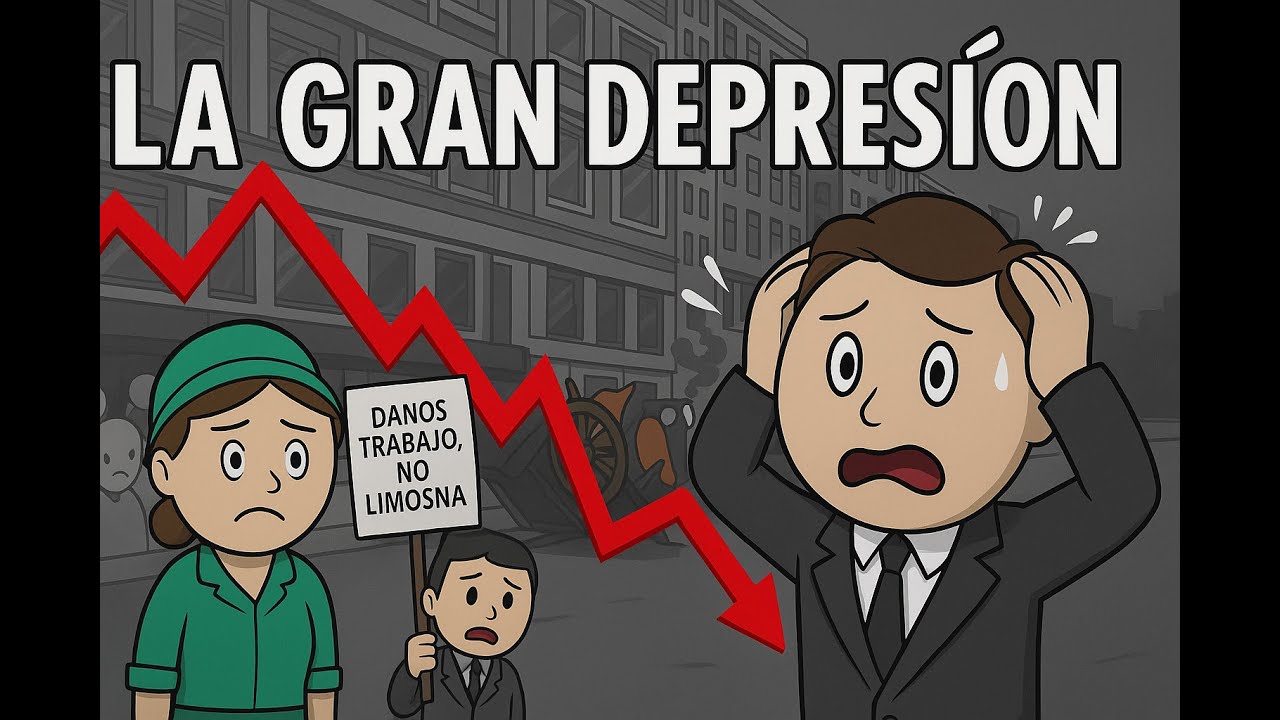
This video explains the Great Depression, the worst economic crisis of the 20th century, detailing its causes and consequences. Key points include:
- The rapid transition from prosperity in the 1920s to widespread poverty and unemployment.
- The role of stock market speculation and banking failures in the economic collapse.
- The government response, particularly Franklin D. Roosevelt's New Deal, aimed at economic recovery.
The Great Depression: The Worst Crisis
The Great Depression began as a period of prosperity in the 1920s, following World War I. During this time, the U.S. economy thrived, with industries booming and the growing middle class enjoying modern conveniences such as radios and cars. Many people financed their purchases through bank loans, even entering the stock market to invest. This environment led to a speculative bubble, as individuals underestimated the risks involved in their investments.
The Stock Market Crash of 1929
In October 1929, the stock market crashed dramatically. Investors rushed to sell their shares, leading to plummeting prices and significant financial losses. Many individuals, who had purchased stocks with borrowed money, found themselves in debt without any assets, prompting a wave of panic. People flocked to banks to withdraw their savings, only to discover that banks were also in a precarious position due to significant investments in the stock market.
Global Impact and Social Consequences
The economic downturn extended beyond the United States, affecting countries that relied on American funds for recovery. Unemployment soared, with one in four people losing their jobs. Many lived in makeshift shantytowns, struggling for food provided by charitable organizations. Agricultural difficulties compounded the crisis, with severe droughts ruining crops and forcing families to abandon their homes in search of work, especially towards California.
The New Deal and Economic Recovery
In 1933, President Franklin D. Roosevelt introduced the New Deal to combat the effects of the Great Depression. This plan created millions of public jobs and infrastructure projects, restored hope, and improved living conditions. It also led to the establishment of social security and regulatory policies aimed at protecting people's savings and monitoring the stock market, fostering gradual economic recovery, which continued into World War II.
Lessons from History
The Great Depression taught critical lessons about financial responsibility and the dangers of excessive debt. While current regulations and financial tools exist to prevent similar crises, parallel issues persist today, with risky investments and inflated asset prices. Understanding this historical context is essential to avoid repeating past mistakes, emphasizing the importance of economic awareness.

