
Brief Summary
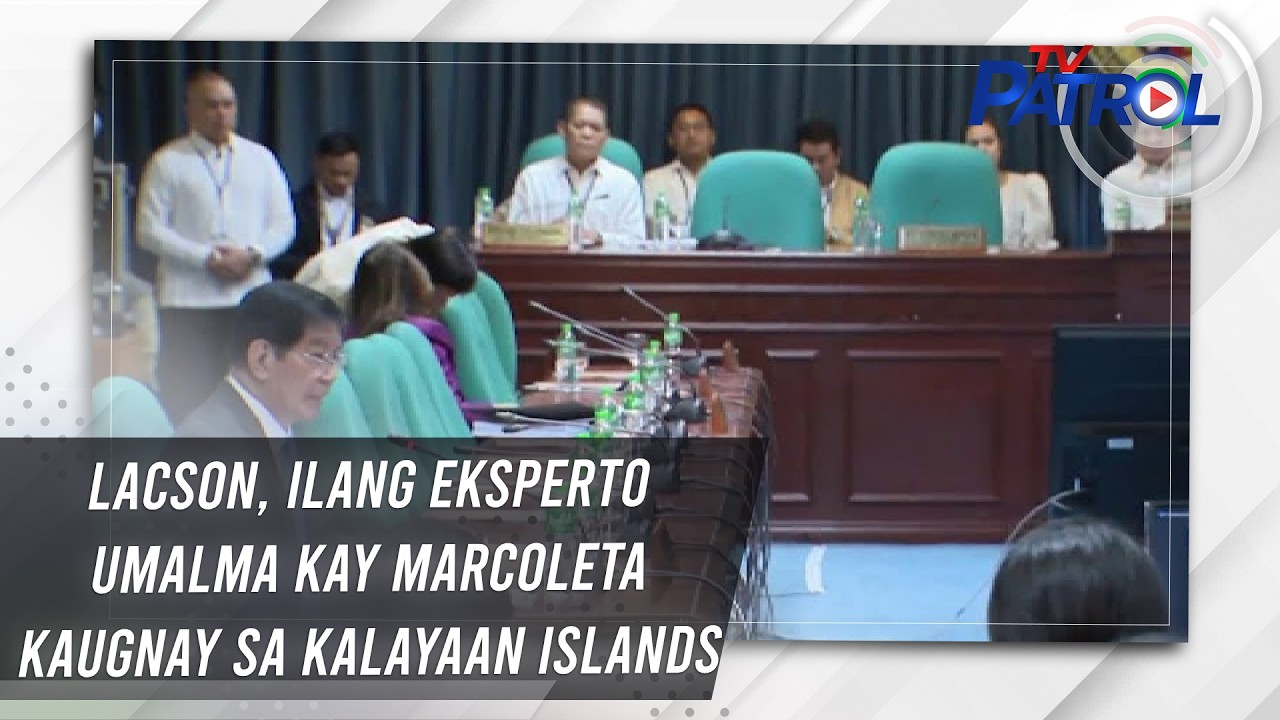
The video discusses the controversy surrounding Senator Rodante Marcoleta's statement suggesting the Philippines should "give up" the Kalayaan Island Group (KIG) to ease coordination in the West Philippine Sea. This statement has drawn criticism from fellow senators, legal experts, and local officials, who argue it undermines the Philippines' position in the territorial dispute with China. Marcoleta claims his statement was taken out of context, while analysts emphasize the importance of clearly defined coordinates for the West Philippine Sea to assert the Philippines' claims. Despite the debate, Malacañang maintains a firm stance on protecting the country's interests in the region through diplomacy.
- Senator Marcoleta's suggestion to "give up" KIG sparks controversy.
- Critics argue the statement weakens the Philippines' territorial claims.
- Marcoleta defends his statement, claiming it was misinterpreted.
- Experts highlight the need for clear coordinates for the West Philippine Sea.
- Malacañang reaffirms its commitment to protecting Philippine interests through diplomacy.
Marcoleta's Controversial Statement on Kalayaan Island Group
Senator Rodante Marcoleta's statement suggesting the Philippines should "give up" the Kalayaan Island Group (KIG) to facilitate coordination in the West Philippine Sea has ignited controversy. Critics argue that this statement could be interpreted as surrendering Philippine territory. Senator Ping Lacson likened it to surrendering Luzon or the entire country, emphasizing the importance of the legal principle of "res nullius" or "terra nullius," which recognizes ownership based on discovery and occupation.
Criticism from Legal Experts
Maritime law expert Attorney Jay Batong Bakal strongly criticized Marcoleta's statement, citing a lack of understanding of international law, particularly maritime zones. He argues that such statements undermine the Philippines' position and strengthen the claims of other parties, especially China. Batong Bakal stresses the need for diplomacy and high-level decision-making, with the support of the Filipino people, on matters of national territory.
Marcoleta's Defense and Explanation
Marcoleta defends his statement, claiming it was taken out of context. He argues that the arbitral award does not allow the Philippines and China to treat the Spratlys as an island group or archipelago for Exclusive Economic Zone purposes. He also points out that these features are in the high seas and marking their coordinates would violate UNCLOS. Marcoleta questions how the Kalayaan Island Group can be included in the map of the West Philippine Sea.
Importance of Defined Coordinates and Security Analysis
Security analyst Dr. Chester Cabalza emphasizes that the coordinates of the West Philippine Sea within the Philippines' jurisdiction are clear and legally based, unlike China's nine-dash line. He suggests that the National Mapping and Resource Information Authority (NAMRIA) may release a new map with these coordinates. Cabalza notes that this official map, reinforced by the Archipelagic Baseline Act and the Camari-Temps Act, would provide concrete coordinates, unlike the unsubstantiated nine-dash line.
Government's Stance and Local Reactions
Malacañang maintains that the government's position on the West Philippine Sea and KIG remains firm. They state that debates in the Senate are part of their mandate in a democratic country. The President's stance is to defend and protect Philippine interests through strong but diplomatic negotiations. Kalayaan Vice Mayor Maurice Philippe Alexis Albaida expresses dismay and insult from the officials of Kalayaan, Palawan, regarding Marcoleta's statement, and they plan to formally request the removal of his statements from the Senate's official records.

