
Brief Summary
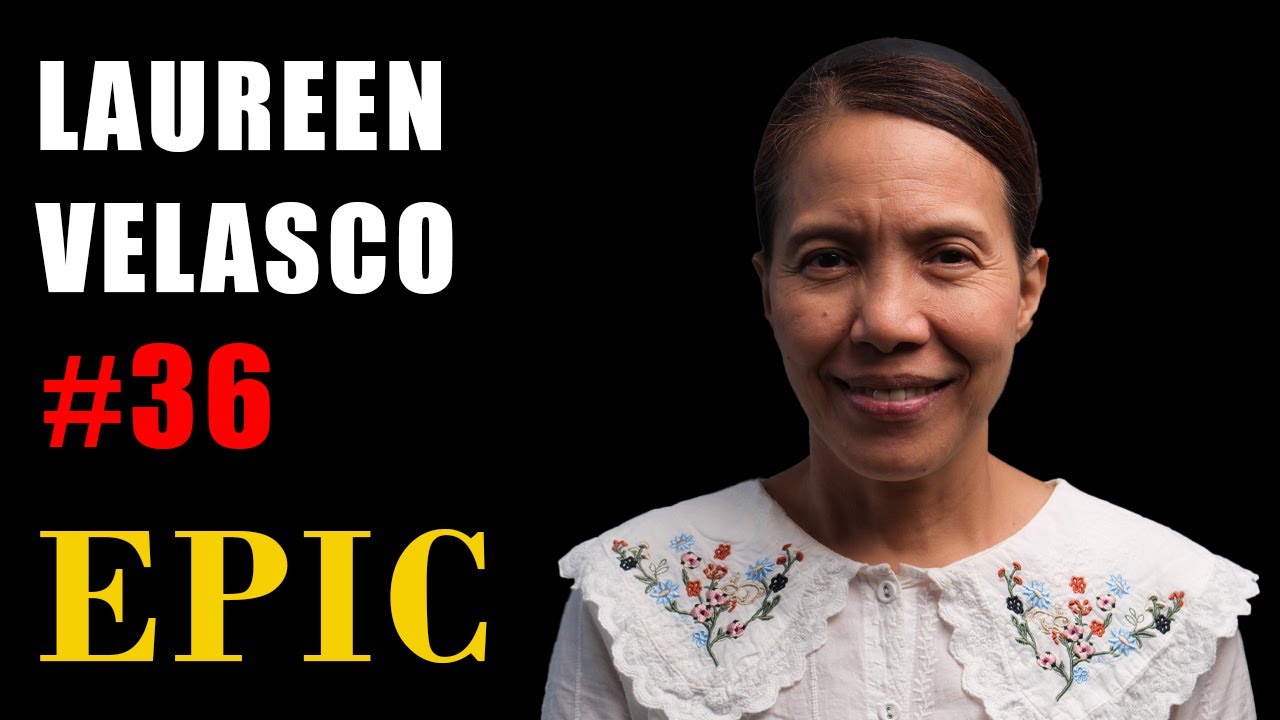
This podcast episode features a conversation with philosophy professor Dr. Lorine Velasco, discussing the meaning of life, love, Eastern and Western philosophies, intuition, the concept of the Divine, the existence of evil, freedom, suffering, and the importance of self-awareness and living in the present. Velasco shares her personal experiences and insights, emphasizing the importance of inner reflection, responding to life's opportunities, and finding joy in one's actions.
- The meaning of life is being present and doing things without expecting specific results.
- Love should be unconditional and extend beyond romantic relationships.
- Eastern philosophy complements Western philosophy by incorporating intuition and different kinds of consciousness.
- Intuition is a source of knowledge coming from the universe.
- The Divine is an energy that connects everything, and religions are limited interpretations of it.
- Evil and ego come from within humans, and individuals must take responsibility for their actions.
- Freedom exists, and individuals have the power to make choices and face the consequences.
- Suffering can be a catalyst for change and self-awareness.
- Self-love involves acceptance and a willingness to change what one dislikes about oneself.
- Philosophy is essential for critical thinking and questioning societal norms.
Introduction
Baste introduces Dr. Lorine Velasco, his former philosophy professor, emphasizing her significant impact on his life, particularly during a difficult period in high school when he was dealing with bullying, family issues, and depression. He credits her teachings, specifically a discussion on suicide and the concept of choosing to continue living despite life's challenges, with helping him change his perspective and overcome suicidal thoughts. Baste expresses his excitement and gratitude for her presence on the podcast, hoping her insights will positively influence the audience.
Meaning of Life and Love
Dr. Velasco defines the meaning of life by quoting Joseph Campbell, stating that it is about being present and engaged in the moment. She emphasizes that actions should not be driven by the need to achieve specific outcomes but by the intrinsic value of doing them. She also discusses love, explaining that it is sufficient unto itself, regardless of whether it is reciprocated. Velasco broadens the definition of love to include compassion for all beings, particularly animals, highlighting her involvement in animal advocacy. She views love as a path to self-discovery and encourages everyone to embrace opportunities for soulful experiences.
Choosing Teaching and Philosophy
Dr. Velasco explains that she did not initially choose teaching as a profession but was invited to teach and subsequently fell in love with it. She had initially wanted to be a filmmaker but found production work unsatisfying. After resigning from her production job, she received a call from De La Salle University (DLSU) offering her a teaching position, which she happily accepted. She enjoys teaching philosophy because it allows her to challenge boundaries and question established norms. She incorporates more Eastern perspectives into her ethics course, finding Eastern philosophy more complete as it integrates rather than denies Western thought.
Western vs. Eastern Philosophy
Dr. Velasco elaborates on the differences between Western and Eastern philosophy. Western philosophy and science are primarily based on reason, while Eastern philosophy also taps into intuition. She explains that science relies on empirical data, which can be both a strength and a limitation. Eastern philosophy goes beyond empirical data, making it more complete by including intuitive understanding.
Intuition and the Divine
Dr. Velasco describes intuition as a source of knowledge coming from the universe, accessible when one is "plugged into it." She likens it to tuning into different channels on a radio, suggesting that rational and instinctive frequencies are not the only available sources of understanding. She defines the Divine as a presence or energy that, when approached through reason, can be limited by definitions and dogmas. She suggests that belief comes from the mind, while life is an experience that doesn't require belief. She views everything as sacred and divine, emphasizing the importance of being alive and plugged into this energy.
Beauty, Predestination, and the Source of Evil
Dr. Velasco discusses beauty as subjective, influenced by experiences and value judgments, but also capable of transcending definitions. She rejects the concept of predestination, arguing that it conflicts with freedom and personal responsibility. She believes that humans introduce ugliness and cruelty into the universe through their choices and actions. Greed, she notes, originates in the mind, not the body.
The Nature of Evil and the Role of Money
Dr. Velasco asserts that evil and ego originate within humans, not from external sources. She emphasizes that people are responsible for their actions and cannot blame external entities like demons. She uses the example of war to illustrate that humans must take responsibility for their destructive tendencies. She identifies greed as a primary evil, leading to corruption, stealing, and deception. She argues that money is not inherently evil but can be a great servant when used for good purposes like funding schools and hospitals. The problem arises when people misunderstand why they want money, leading to suffering.
Human Responsibility and Freedom
Dr. Velasco emphasizes that humans are responsible for their actions and the imbalances they introduce into the world. She questions why people sacrifice their health for work and money, causing imbalance. She affirms the existence of freedom, citing her choice to participate in the podcast as an example. She elaborates that freedom brings the possibility of bad choices and suffering, which are necessary for understanding and change.
Avoiding and Freeing Oneself from Suffering
Dr. Velasco suggests that to free oneself from suffering, one must first experience it deeply to understand its undesirability. She uses the example of societal problems in the Philippines, arguing that change requires individual action and facing uncomfortable truths. She emphasizes that dreams must be translated into action. She believes that freeing oneself from suffering involves changing one's internal perspective rather than external circumstances. She advises against resisting negative feelings, suggesting instead to watch them, understand their source, and experience them fully, recognizing their impermanence.
Inner Peace and Zen Buddhism
Dr. Velasco addresses the struggle with overthinking and finding inner peace. She advises facing fears directly rather than avoiding them. She emphasizes that nothing is truly owned, including one's body, which is a gift from the universe. She encourages holding on to things until one realizes why they are holding on. She explains that love, at its deepest level, is not concerned with reciprocation. She shares that she doesn't fight anxiety but watches it to understand its source, embracing the human experience. She specializes in Zen Buddhism, which she loves because it transcends doctrines and dogmas, bringing one back to daily affairs and emphasizing interconnectedness.
Enlightenment and Love
Dr. Velasco emphasizes the importance of awareness over thinking, advocating for meditation to watch the energy arising within oneself and the community. She believes that love does not find itself in a dilemma, but the ego does. She defines enlightenment as understanding everything about the universe, including the role of positive and negative aspects. She notes that love transcends social constructs like race, religion, and gender.
Personal Life and Purpose
Dr. Velasco shares personal aspects of her life, including her experiences with love and her decision not to marry or have biological children. She emphasizes that these choices were never part of her plan but happened organically. She finds fulfillment in teaching and animal advocacy, particularly through her work with DLSU Pusa, an organization that cares for cats on the DLSU campus. She does not focus on having a specific purpose in life but acts in accordance with the love that moves her soul. She finds joy in her work, which includes "corrupting the minds of the youth" by encouraging critical thinking and questioning societal norms.
Unconditional Love and Evolutionary Perspective
Dr. Velasco discusses the unconditional love she receives from animals, noting that it doesn't matter that they cannot reciprocate in a rational way. She acknowledges that the ego can find fulfillment in various ways but that there is a deeper joy in experiences that transcend personal gain. She shares how caring for cats has led her to change her lifestyle and priorities, finding greater happiness in their well-being than in material possessions.
Compassion and Animal Advocacy
Dr. Velasco explains her preference for cats over dogs, citing their rapid reproduction rate and the need for population management through spaying and neutering. She acknowledges the limitations of shelters and individual rescuers but emphasizes the importance of pushing boundaries to help as many animals as possible. She shares her decision-making process for rescuing animals, balancing her capacity with her compassion. She recalls her first experience falling in love with a cat and how encountering information on animal cruelty motivated her to start helping animals. She praises DLSU for being a cat-friendly university with compassionate policy makers.
Speciesism and the Value of All Life
Dr. Velasco addresses the concept of speciesism, acknowledging that while she doesn't have insect pets, she tries to avoid killing even cockroaches. She recounts an experience where she saw the fear in a cockroach's eyes and decided not to kill it. She emphasizes the importance of cleanliness to prevent infestations and avoid the need to harm other creatures.
Impactful Teaching and Personal Growth
Dr. Velasco reflects on her role as a professor, acknowledging that her high standards and challenging grading can be stressful for students. She appreciates students who ask thought-provoking questions, as they help her develop new perspectives. She shares an anecdote about a student asking if they could use bad words in class, leading to a discussion about social constructs and the power of perception. She emphasizes the importance of self-acceptance and not being swayed by external opinions.
Mentors and the Importance of Life's Lessons
Dr. Velasco states that life has been her greatest teacher, with wonderful people coming into her life but no single impactful mentor. She values the friendships and love she has experienced. She shares a story about a former professor, Dr. Kito, who realized the limitations of academic achievement and the acceptance of "perishing." Velasco embraces the idea of going into oblivion after retirement, finding peace in stillness and recognizing that every day is special.
Views on Death and the Afterlife
Dr. Velasco expresses her lack of interest in the afterlife, stating that it is not her motivation. She is comfortable with the idea of staying dead and resting in peace. She suggests that the belief in eternal life can be a defense mechanism against death. She is not interested in fame or power in a future life but would return if an animal needed help. She emphasizes that happiness does not depend on wealth, education, or degrees.
Rejection of Titles and the Definition of a Good Man
Dr. Velasco explains why she is not interested in pursuing a doctorate, stating that she never worked for promotion and does not study for degrees. She values reading for the joy of it, not as a requirement. She defines a good man as anyone who comes from love, regardless of moral standards, which she sees as culturally based. She analyzes the song "Santa Claus Is Coming to Town," criticizing its manipulative message and emphasizing the importance of unconditional goodness.
Ethical Scenarios and the Nature of Evil
Dr. Velasco discusses a thought experiment about a father stealing to save his child's life, arguing that the situation cannot be isolated from its context. She questions whether bringing children into the world without being able to provide for them comes from love. She shares her personal belief that she would rather starve than steal from others. She also shares her views on violence, stating that there is no need to kill. She shares her views on Hitler and the Holocaust, stating that she would not kill baby Hitler because she does not blame Hitler alone for the Holocaust.
The Importance of Philosophy and a Final Message
Dr. Velasco emphasizes the importance of philosophy for critical thinking and questioning societal norms. She encourages people to test ideas and not blindly accept formulas for happiness. She values open-mindedness and the ability to change one's mind in light of new information. She defines philosophy as questioning everything, coming up with possible answers, and remaining open to new perspectives. She believes that consciousness is inherent in the universe and that humans have the unique ability to access instinctive, rational, and intuitive consciousness. She advises against focusing on the outside world and encourages inner reflection, staying open to life's challenges and invitations, and responding with love. She hopes to be remembered as an ordinary person who, through openness to life and love, achieved extraordinary things, encouraging others to do the same without copying her life.

