
Brief Summary
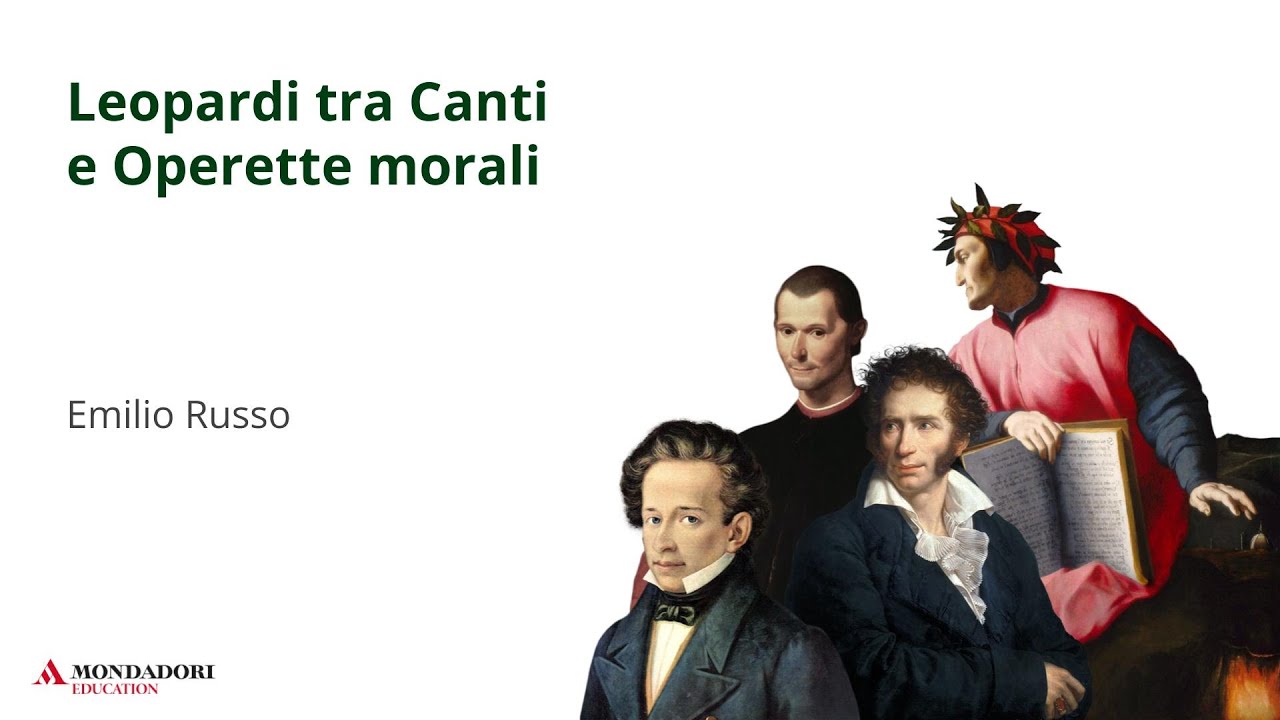
This video presents a lecture on the works of Italian poet Giacomo Leopardi, focusing on his two major texts: "Canti" and "Operette Morali." The session outlines their historical context, thematic connections, and stylistic elements, emphasizing Leopardi's reflections on human condition and infelicity. Additionally, the discussion touches on strategies for engaging with Leopardi's literature in educational settings and the importance of understanding his philosophical inquiries and artistic choices.
- Giacomo Leopardi's main works analyzed are "Canti" and "Operette Morali."
- The lessons focus on Leopardi's exploration of human emotions through poetry and prose.
Introduction to the Lecture
The lecture begins with the host welcoming attendees and providing logistical information about the session, including details about obtaining a participation certificate, the availability of lecture materials online, and the opportunity for participants to ask questions during the event. The host introduces today's speaker, Professor Emilio Russo, who will discuss Leopardi's contributions to literature.
The Speaker and His Work
Professor Emilio Russo, a leading authority in Italian literature from Sapienza University, is introduced. He outlines his focus on Leopardi's significant works: "Canti" and "Operette Morali." Russo intends to explore the interconnections between these texts and highlight the philosophical nuances present in Leopardi's thought. He emphasizes that despite the differing formats, both works converge on themes around human experience.
Contextual Overview of Leopardi's Works
Professor Russo provides a historical timeline of when Leopardi's significant works were published. He discusses the progression from "Canti" to "Operette Morali," emphasizing the simultaneous development of these texts during Leopardi's life. The discussion indicates that alongside literary milestones, Leopardi's philosophical evolution is reflected in both works.
Themes in "Canti" and "Operette Morali"
Russo articulates the prominent themes found in Leopardi’s works. He examines the emotional depth and complexity of "Canti," showcasing its lyrical beauty and existential musings. In contrast, "Operette Morali" is analyzed for its satirical and philosophical dialogues, which address issues of rationality and the human condition. The relationship between these two forms and themes showcases Leopardi's literary versatility.
Philosophical Connections
A significant portion of the lecture revolves around explaining the philosophical underpinnings of Leopardi's work, particularly his views on pessimism and human suffering. Russo argues that Leopardi’s exploration of pity and empathy forms a critical response to societal conditions of his time, encouraging readers to reflect on personal and collective human experiences.
Literary Style and Technique
Russo highlights Leopardi's unique use of language and style, illustrating how he meticulously crafts his prose and poetry. The professor offers examples to show how Leopardi adapts his writing style to suit the thematic demands of each work, thereby enriching the reader’s engagement with his texts. The discussion includes insights into possible transitions in style between "Canti" and "Operette Morali."
Engagement in Education
The lecture concludes with practical suggestions for educators on how to introduce Leopardi's works to students effectively. Russo emphasizes the importance of fostering dialogues about Leopardi’s themes relating to modern contexts, alongside encouraging students to engage critically with his writing. The session wraps up with a Q&A aimed at expanding on the topics discussed, enriching the participants' understanding of Leopardi's literary significance.

