
Brief Summary
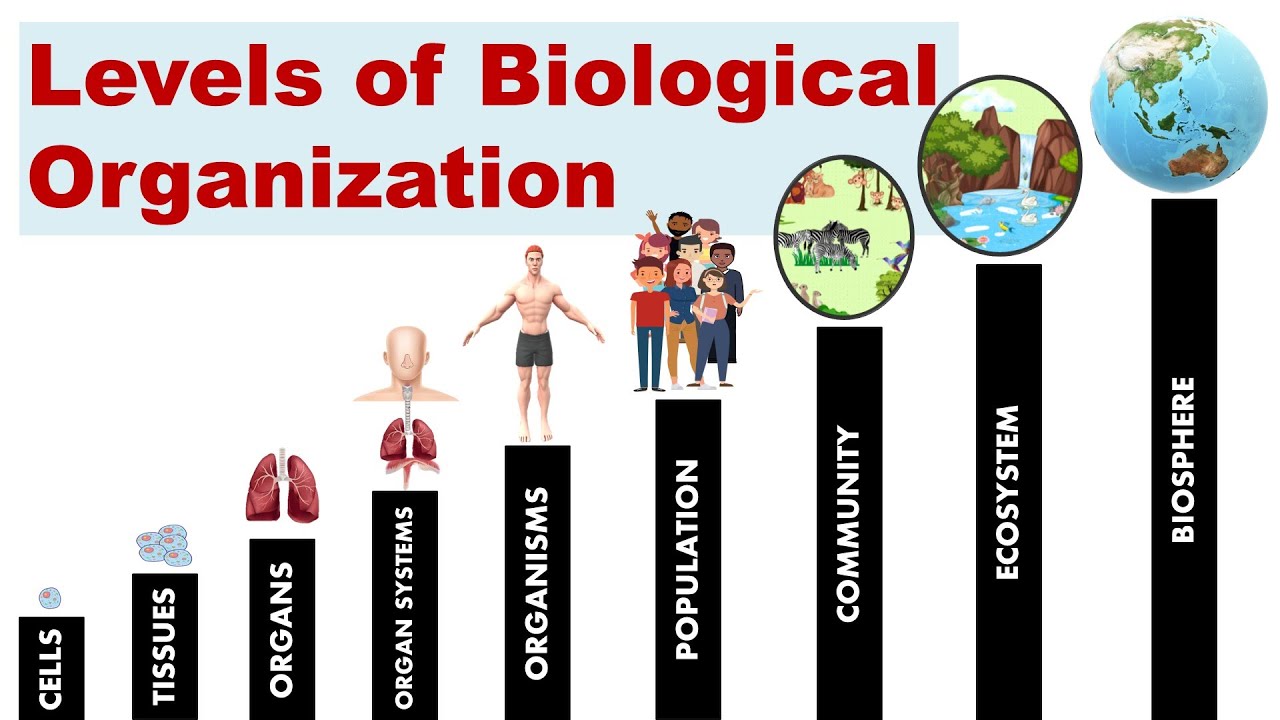
This video explains the levels of biological organization, starting from the simplest to the most complex. It covers cells, tissues, organs, organ systems, organisms, populations, communities, ecosystems, and the biosphere, providing examples for each level. The hierarchy illustrates how each level builds upon the previous one, and how changes at lower levels can affect higher levels.
- Cells are the basic unit of life.
- Tissues are groups of similar cells performing a specific function.
- Organs are structures composed of different tissues working together.
- Organ systems consist of multiple organs coordinating to perform complex functions.
- Organisms are individual living beings composed of organ systems.
- Populations are groups of the same species living in the same area.
- Communities are groups of different species living together.
- Ecosystems include communities interacting with their physical environment.
- The biosphere encompasses all ecosystems on Earth.
Introduction to Biological Organization
The levels of biological organization represent a hierarchy of biological structures and systems, arranged from the smallest to the largest scale. This hierarchy begins with the most basic unit of life and extends to encompass the entire planet. The levels include cells, tissues, organs, organ systems, organisms, populations, communities, ecosystems, and the biosphere.
Cells: The Basic Units of Life
Cells are the smallest structural and functional units of living organisms. They can be either eukaryotic, containing a nucleus (like animal, plant, red blood, sperm, and egg cells), or prokaryotic, lacking a nucleus (like bacterial cells). The cell is the foundational level of biological organization.
Tissues: Groups of Similar Cells
Tissues are formed when groups of similar cells join together to perform a specific function. Examples of tissues include muscle tissue (for movement), connective tissue (for connecting tissues), epithelial tissue (covering body surfaces), and nervous tissue (for sending signals to the brain). Tissues represent the second level of biological organization.
Organs: Structures of Different Tissues
Organs are composed of different tissues that work together to perform a similar function. Examples of organs include the heart, brain, lungs, and eyes in animals, and leaves, stems, and roots in plants. Organs are more complex than tissues, representing a higher level of organization.
Organ Systems: Groups of Organs Working Together
Organ systems consist of multiple organs that work together to perform one or more functions. Examples include the respiratory system (for breathing), digestive system (for digesting food), nervous system (for controlling body functions), and urinary system (for eliminating waste). Plant organ systems include the shoot system (leaves and stems) and the root system.
Organisms: Individual Living Things
An organism is an individual living thing made up of one or more organ systems. Examples of organisms include humans, horses, insects, fish, and banana plants. Organisms represent a complete, individual unit of life.
Populations: Groups of the Same Species
A population is a group of organisms of the same species that live in the same area at the same time. Examples of populations include human populations, lion populations, dolphin populations, coconut populations, and butterfly populations. Populations are a step above individual organisms in the hierarchy.
Communities: Groups of Different Species
A community is a group of populations of different species living in the same place at the same time. Examples of communities include forest communities, aquarium communities, desert communities, and tundra communities. Communities involve interactions between different species.
Ecosystems: Communities Interacting with the Environment
An ecosystem includes all the communities that interact with their physical environment, including non-living things like sunlight, soil, water, and temperature. Examples of ecosystems include forest ecosystems, marine ecosystems, grassland ecosystems, and desert ecosystems. Ecosystems encompass both living and non-living components.
Biosphere: The Sphere of Life
The biosphere is the sum of all ecosystems on Earth where life exists. It is the highest level of biological organization and represents the sphere of life. The biosphere includes all living organisms and their environments on the planet.
Review of Biological Organization Levels
The levels of biological organization, from lowest to highest, are cells, tissues, organs, organ systems, organisms, populations, communities, ecosystems, and the biosphere. Changes at any level can affect the levels above it, highlighting the interconnectedness of biological systems.

