
Brief Summary
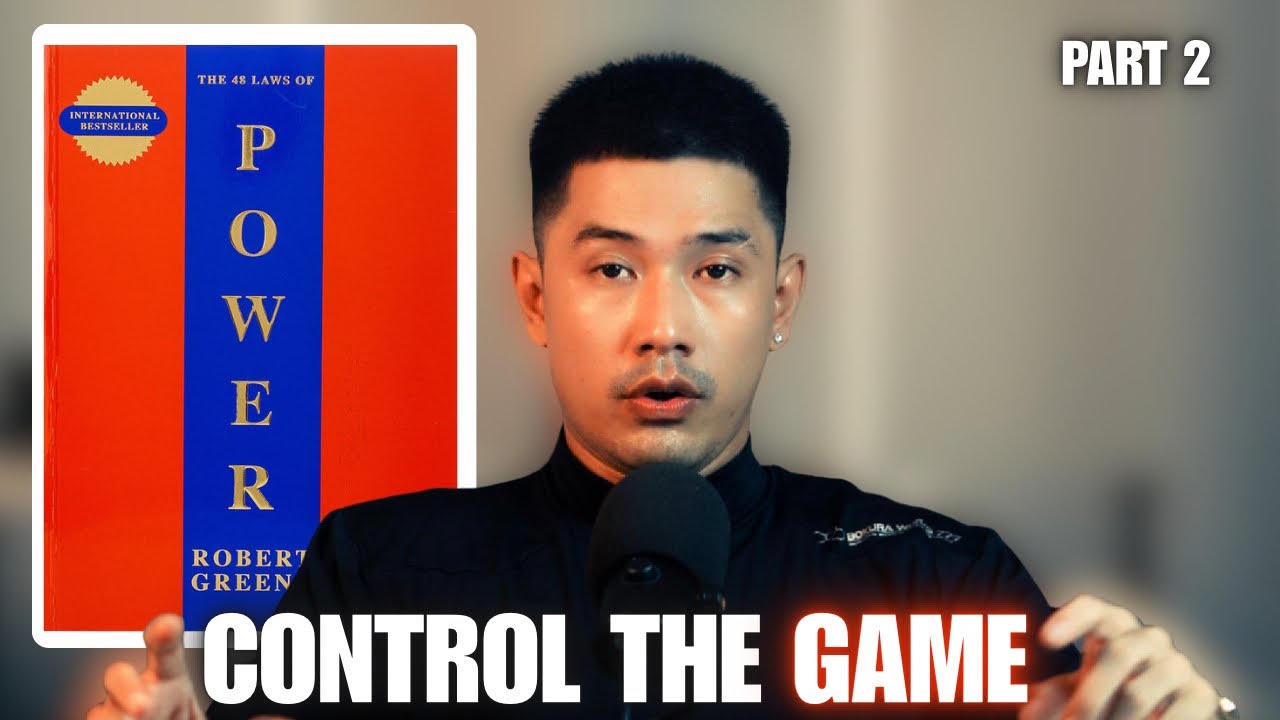
This video provides a detailed breakdown of several laws from Robert Greene's "The 48 Laws of Power," offering insights and interpretations relevant to real-life situations. It emphasizes the importance of understanding these laws for self-protection, personal improvement, and navigating social dynamics. The video uses historical examples, personal anecdotes, and references to popular culture to illustrate each law, making the content accessible and engaging for viewers.
- Understanding and applying the laws of power can help individuals protect themselves from manipulation and improve their work.
- Being adaptable and strategic in social interactions is crucial for success.
- Self-awareness and emotional control are essential for navigating complex situations.
Intro
The video introduces Robert Greene's "The 48 Laws of Power," highlighting its psychological insights and practical applications. It suggests that understanding these laws is crucial for both good and bad people, as it allows individuals to protect themselves from manipulation and improve their work. The video aims to break down these laws in an accessible manner, using real-life examples and stories.
Law 19
Law 19 advises viewers to know who they are dealing with and avoid underestimating their opponents. The chapter uses the example of Stalin and Bukharin to illustrate how underestimating an opponent can lead to downfall. It also shares a personal anecdote about a soccer game to emphasize the importance of assessing an opponent's capabilities before engaging. The chapter lists five types of people to avoid messing with: arrogant people, those with deep-seated sadness, insecure individuals, overly suspicious people, and those who have nothing to lose.
Law 20
Law 20 suggests not committing to any side, using the example of a king who avoided aligning with powerful European countries to maintain independence. It advises viewers to remain neutral to avoid making enemies and to maintain flexibility. However, it also acknowledges that there are times when taking a side is necessary, and one should carefully consider the benefits and harms before deciding. The chapter introduces the concept of a "Ko ex strategy," which involves having an exit plan in case things go wrong.
Law 21
Law 21 advises playing a sucker to catch a sucker, using the example of Otto von Bismarck, who hid his intentions by acting like a scoundrel to deceive his opponents. It shares a personal anecdote about pretending to be drunk to lower expectations and gain an advantage. The chapter emphasizes that underestimation can create opportunities and allow for unexpected attacks. It also notes three situations where one cannot be a good person: when promoting oneself, when facing difficulties, and when building one's name.
Law 22
Law 22 discusses the importance of surrendering to turn weakness into strength, using the example of the Chinese Civil War. It advises viewers to give up and retreat when necessary to regain strength and win at an unexpected time. However, it also cautions that this strategy is not always appropriate, especially when the enemy does not allow for recovery. The chapter emphasizes the importance of correctly deciding when to give up and admitting mistakes to make amends and come back stronger.
Law 23
Law 23 advises concentrating one's forces, using the example of Jordy Y, who focused on transportation and distribution to dominate the oil company market. It emphasizes the importance of focusing all energy and resources on one thing to achieve success. The chapter shares a personal anecdote about someone who tried to do too many things at once and failed. It encourages viewers to focus on one goal at a time to reach their desired destination.
Law 24
Law 24 discusses the importance of playing the perfect courtier, drawing from the writings of Barry Canni. It outlines 16 things to remember to be a good courtier, including pleasing people, following rules without losing self-worth, never letting superiors feel insecure, training people to be masters, and maintaining a pure and clean appearance. The chapter emphasizes the importance of mastering manipulation techniques and being a source of happiness to gain influence within an organization.
Law 25
Law 25 advises recreating oneself, using Napoleon as an example of someone who rose from humble beginnings to build an empire. It emphasizes the importance of knowing what one wants to be and gradually creating and changing oneself to achieve that goal. The chapter encourages viewers to adapt and overcome difficulties, focusing on what they can change and control. It stresses that the most important thing is to master oneself and know what one wants to do.
Law 26
Law 26 advises keeping one's hands clean, using the example of Henry and Thomas Black to illustrate how to avoid direct responsibility for negative actions. It encourages viewers to hire others to do the dirty work and avoid giving direct orders that could implicate them. The chapter also references Caesar, who hired people to commit atrocities to maintain his reputation. It emphasizes the importance of leading from the top and not getting involved in the details to maintain a clean image.
Law 27
Law 27 advises playing on people's need to believe to create a following, using the example of Charleston, who created a trap by telling people the end of the world was coming. It emphasizes the importance of controlling emotions and understanding what people want to believe. The chapter encourages viewers to play on people's trust by telling them what they want to hear and offering them illusions and fantasies.
Law 28
Law 28 advises entering action with boldness, using a personal anecdote about overcoming fear by doing something daring. It emphasizes that boldness can eliminate fear and make others fear you. The chapter encourages viewers to do things bravely and not be afraid to take risks.
Law 29
Law 29 advises planning all the way to the end, emphasizing the importance of thinking about the final outcome before starting a task. It uses the example of wars that were lost due to a lack of planning for the end. The chapter also shares a story about painting a floor to illustrate the importance of knowing how a task will end before starting it.
Law 30
Law 30 advises making accomplishments seem effortless, using the example of a magician who hides the hard work and practice behind his tricks. It emphasizes the importance of keeping the parts one struggles with hidden and only letting people see the easy and calm parts. The chapter encourages viewers to keep their struggles to themselves and only show their successes to impress others.
Law 31
Law 31 advises controlling the options, using the example of a king who left his country to force his people to choose him. It emphasizes the importance of creating situations where people need to be in control and can choose to be whatever they want to be. The chapter also shares a personal anecdote about having options in life and how it affects one's attitude and confidence.
Law 32
Law 32 advises playing to people's fantasies, using the example of a general who motivates his soldiers by promising them rewards and honors. It emphasizes the importance of appealing to people's desires and creating fantasies that they want to believe in. The chapter also discusses how employers can motivate workers by offering them money, bonuses, and promotions.
Law 33
Law 33 advises discovering each man's thumbscrew, emphasizing the importance of knowing people's weaknesses to control them. It encourages viewers to find out where people walk, where they trade, and what they do to mold them to their liking. The chapter cautions that while this can be useful, it should be done carefully to avoid negative consequences.
Law 34
Law 34 advises being royal in your own fashion, emphasizing the importance of having a style and living like a king to be treated like one. It uses the example of Julius Caesar, who acted like a king before he was even born. The chapter encourages viewers to improve themselves and not be like the world, but to dominate it with their mind.
Law 35
Law 35 advises mastering the art of timing, using the example of Jerry Roger, who made successful decisions by being timely. It emphasizes the importance of facing difficulties and responding strategically. The chapter encourages viewers to think carefully and make sure they have time to do whatever they're doing.
Law 36
Law 36 advises disdaining things you cannot have, emphasizing the importance of rejecting things that one does not want or cannot have. It uses the example of Diogenes, who rejected material possessions and lived on the street. The chapter encourages viewers to reject things that don't apply to them and to be free from the control of others.
Law 37
Law 37 advises creating compelling spectacles, using the example of a king who moved his palace to control his enemies. It emphasizes the importance of being able to talk about even small things and make them big. The chapter also shares a story about a singer who added emotion to his performance to make it more compelling.
Law 38
Law 38 advises thinking as you like but behaving like others, emphasizing the importance of blending in with others to avoid being targeted. It shares a story about a drunkard who was killed for not conforming to the norms of a party. The chapter encourages viewers to approach things gradually and teach others new methods to gain acceptance and success.
Law 39
Law 39 advises stirring up water to catch fish, emphasizing the importance of making others unstable to gain an advantage. It uses the example of Napoleon Bonaparte, who destabilized his enemies before attacking them. The chapter encourages viewers to keep their mind in check and deal with emotions calmly.
Law 40
Law 40 advises despising the free lunch, emphasizing the importance of not taking anything that is given for free. It uses the example of a king who made his family dependent on him for money to control them. The chapter encourages viewers to be careful when others give them something, as it may come with strings attached.
Law 41
Law 41 advises avoiding stepping into a great man's shoes, emphasizing the importance of not trying to copy those who have become great before you. It encourages viewers to learn lessons from others but never walk in their shoes.
Law 42
Law 42 advises striking the shepherd and the sheep will scatter, emphasizing the importance of knowing what to attack and what to harvest. It encourages viewers to focus on the main target to achieve their goals.
Law 43
Law 43 advises working on the hearts and minds of others, using the example of Napoleon Bonaparte, who gave honors and medals to his soldiers to motivate them. It emphasizes the importance of playing on people's emotions and desires to achieve success.
Law 44
Law 44 advises disarming and infuriating with the mirror effect, emphasizing the importance of following your opponent and doing what they do. It encourages viewers to compete without having to actually face off.
Law 45
Law 45 advises preaching the need for change but never reforming too much at once, emphasizing the importance of changing gradually and gradually. It encourages viewers to change step by step to avoid resistance.
Law 46
Law 46 advises never appearing too perfect, emphasizing the importance of not boasting or showing off wealth. It encourages viewers to be careful about bragging, as it can invite danger.
Law 47
Law 47 advises not going past the mark you aimed for; in victory, learn when to stop, using the example of Napoleon, who didn't stop even after conquering almost the entire Europe. It emphasizes that when you are winning, you tend to lose your mind.
Law 48
Law 48 advises assuming a formlessness, emphasizing the importance of not defining yourself in a certain way. It uses the example of Bruce Lee, who said to be like water. The chapter encourages viewers to be willing to change and adapt to overcome difficulties and obstacles.

