
Brief Summary
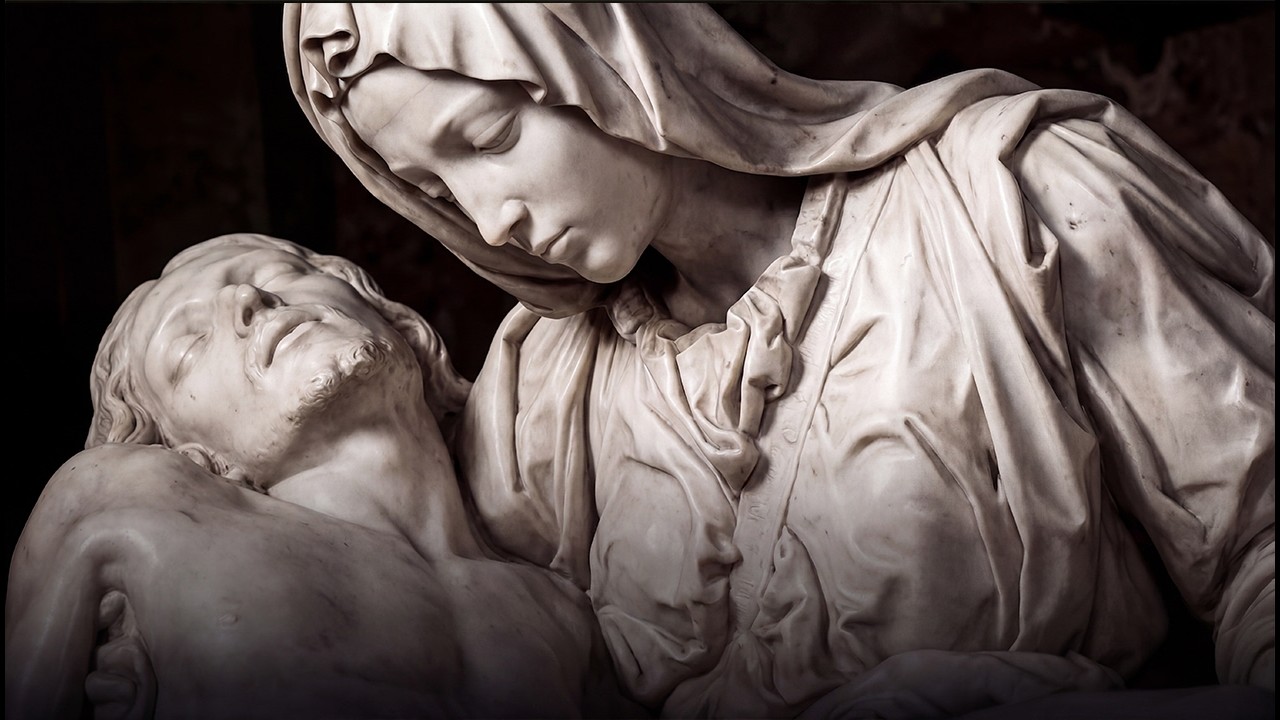
The video explores Michelangelo's creation of the Pietà, a remarkable marble sculpture of the Virgin Mary holding Christ. Commissioned in 1498, this masterpiece reflects Michelangelo's innovative approach and artistry despite his young age. It discusses the challenges Michelangelo faced, his techniques in selecting and working with marble, and the philosophical implications of his signature on the artwork.
- Michelangelo, at 24, created the Pietà, commissioned by Yakapo Gi.
- The sculpture is known for its serenity, beauty, and clever use of proportions.
- Michelangelo's signature reflects a blend of pride and humility in his work.
Michelangelo's Commission
In the summer of 1498, Yakapo Gi, a banker, signed a contract promising that the sculpture commissioned from a young Michelangelo would surpass all others in beauty. Michelangelo was only 24 years old, tasked with creating the Pietà, depicting Mary with the dead Christ. This ambitious undertaking came after a failed previous commission and set the stage for one of the most acclaimed works of art in history.
Michelangelo's Journey to the Quarry
Before starting the sculpture, Michelangelo embarked on a journey from Rome to the Carrara marble quarries in the Apuan Alps, a distance of over 250 miles. Unlike most sculptors, he hand-picked his marble, becoming familiar with its qualities by carefully examining the blocks and ensuring he selected the best. The marble he chose, which arrived in Rome nine months later, was deemed by him to be the most perfect he had ever worked with.
Innovative Sculpting Techniques
When working on the Pietà, Michelangelo faced the challenge of depicting a life-size adult male body draped across a woman's lap without it appearing absurd. He solved this by enlarging Mary's proportions, effectively masking the distortion with expertly crafted drapery, which directed viewers' attention away from anatomical inaccuracies. This resulted in a graceful and powerful composition that defied traditional representations.
Mary’s Portrayal and Signature
Initially, some criticized Mary for appearing too youthful to be the mother of a 33-year-old Christ. Michelangelo defended his choice, suggesting it was a reflection of the purity of being chaste. He polished the sculpture meticulously, damaging his own hands in the process. In a notable act of pride, he carved his name on a sash across Mary's chest, a signature that some argue shows his intention to convey that art is always a work in progress, blending humility with self-acknowledgment of his genius.
The Enduring Impact of the Pietà
Michelangelo would go on to live for another 65 years, creating other significant works, yet he never completed another Pietà after this. The Pietà in St. Peter's Basilica remains both the most finished piece he created and, according to his own inscription, a testament to the idea that art is never truly finished but always a reflection of the artist's struggle between achievement and the pursuit of perfection.

