
Brief Summary
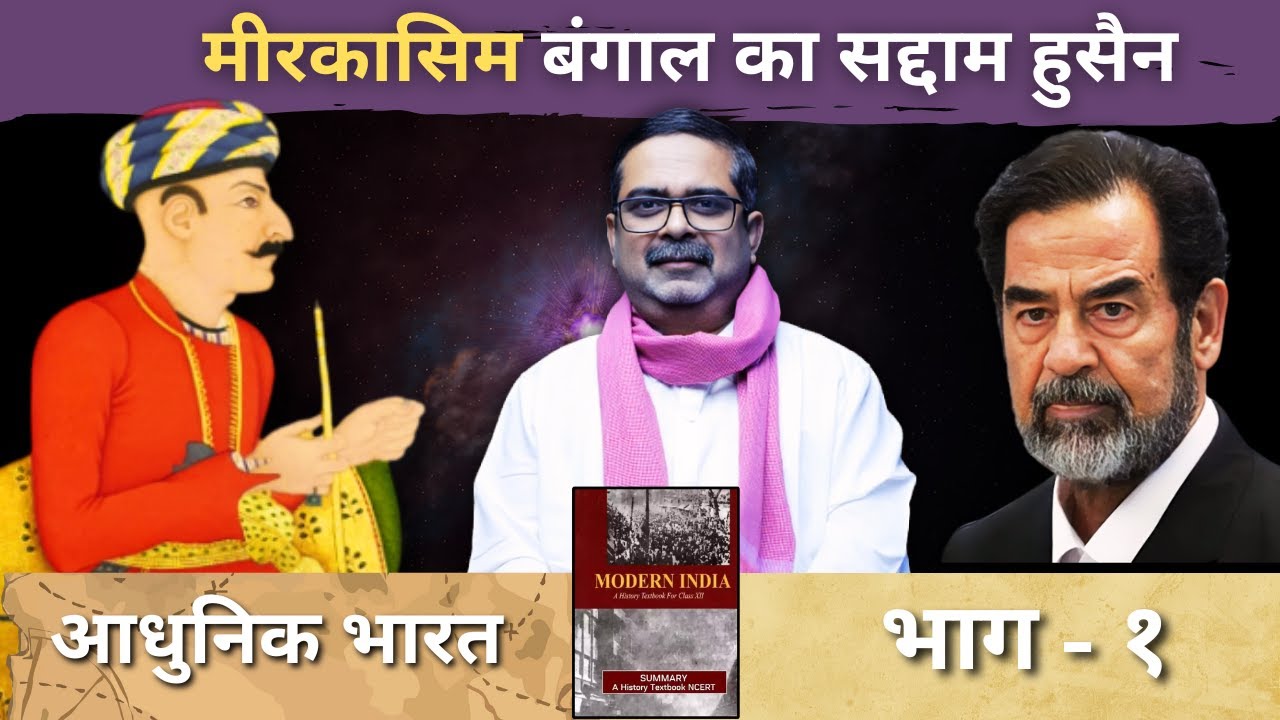
This video discusses the conflict between Mir Qasim and the East India Company, focusing on Mir Qasim's attempts to assert his sovereignty through economic, administrative, and military reforms. It explains how these reforms led to tensions, which escalated into conflict due to the Ellis Episode and the subsequent abolition of inland duties. The video also covers the Battle of Buxar and its significance in consolidating British power in India.
- Mir Qasim's reforms aimed to strengthen his position but were perceived as a threat by the East India Company.
- The Ellis Episode, involving a raid on Monger Fort, heightened tensions between Mir Qasim and the Company.
- The Battle of Buxar solidified British dominance and highlighted the weakness of Indian powers.
Introduction: Congress of Bengal and Key Personalities
The discussion begins with the Congress of Bengal under the East India Company, highlighting Robert Clive as a key player. The importance of focusing on personality alongside percentage is emphasized, with a mention of Mir Jafar. Mir Qasim is compared to Saddam Hussein, who was initially supported by the United States but later became independent. The video stresses that being a puppet leads to exploitation, while acting like a king can lead to conflict.
Economic Reforms: The Foundation of Empire
The chapter focuses on Mir Qasim's economic reforms, emphasizing that a strong economy is essential for building an empire. Examples from history, such as Britain in the 19th century and America in the 20th century, are used to illustrate this point. Mir Qasim's initial steps included recovering arrears, imposing heavy fines, increasing crown rent, and re-collecting the "Khajri Jama" tax. These economic reforms aimed to strengthen the state and enable political reforms.
Administrative Reforms: Transfer of Capital and Punishment
The discussion shifts to Mir Qasim's administrative reforms, starting with the transfer of the capital from Murshidabad to Munger. This move was intended to convey his sovereignty and distance himself from the East India Company's conspiracies. Other reforms included punishing refractory zamindars, such as Ram Narayan, and emphasizing law and order. Discipline in administration was also a key focus.
Military Reforms: European Style Army and Canon Factory
Mir Qasim implemented military reforms, including establishing a European-style army and a canon factory in Munger. The canon factory alarmed the British, who saw it as a threat to their dominance. The video draws a parallel to Iran's nuclear ambitions and the United States' reaction. The establishment of a canon factory was a sign of strength, making Mir Qasim harder to exploit.
The Rift: Reforms and Tensions with the East India Company
The reforms initiated by Mir Qasim led to increasing tensions with the East India Company. The video uses the analogy of relationships to explain how care can turn into an affair and eventually marriage, depending on profit and loss. Similarly, tensions can escalate through stages of rift, struggle, and blast. Mir Qasim's attempts to assert his authority were seen as a challenge to the Company's control.
The Ellis Episode: Escalation to Struggle
The "Ellis Episode" marked the escalation of tensions into open conflict. Ellis, a Company agent in Patna, raided Munger Fort without Mir Qasim's permission. This act challenged Mir Qasim's sovereignty and respect. The raid was motivated by suspicion that Mir Qasim was buying saltpeter from Armenian merchants, bypassing the East India Company's monopoly.
Munger Convention: A Failed Attempt at Resolution
Following the Ellis Episode, Mir Qasim complained to Vansittart, the Governor of Fort William. This led to the Munger Convention, where three decisions were made: the Nawab would be the sole authority to resolve disputes, the Company would pay 9% tax on trade in Bengal and the right to issue dastaks would rest solely with the Nawab. However, the Calcutta Council rejected these agreements, leading to further conflict.
Abolition of Inland Duties: The Final Blast
In response to the Calcutta Council's rejection, Mir Qasim abolished inland duties, leading to a final break with the East India Company. The Company saw this as an unacceptable challenge to their authority. Mir Qasim's actions forced a decision on who was the real ruler of Bengal.
Escape to Awadh and the Battle of Buxar
Facing the might of the East India Company, Mir Qasim fled to Awadh and sought refuge with Nawab Shuja-ud-Daula. This led to the formation of a tripartite alliance with Shuja-ud-Daula and Mughal Emperor Shah Alam II. However, they were defeated by the East India Company in the Battle of Buxar in 1764. The victory at Buxar consolidated the achievements of Plassey, establishing British dominance in India.
Aftermath of Buxar: British Dominance
The Battle of Buxar resulted in Bengal falling under the Company's control, Awadh becoming helpless, and the Mughal Emperor becoming a slave. The video emphasizes the importance of visualizing this scenario to understand the extent of British dominance. Robert Clive was called back to Bengal and appointed as the Governor.
Dual Government and Conclusion
In 1765, Robert Clive returned to Bengal as Governor and implemented the Dual Government system. The video concludes by encouraging viewers to study modern Indian history and understand the rise of British power in India.

