
Brief Summary
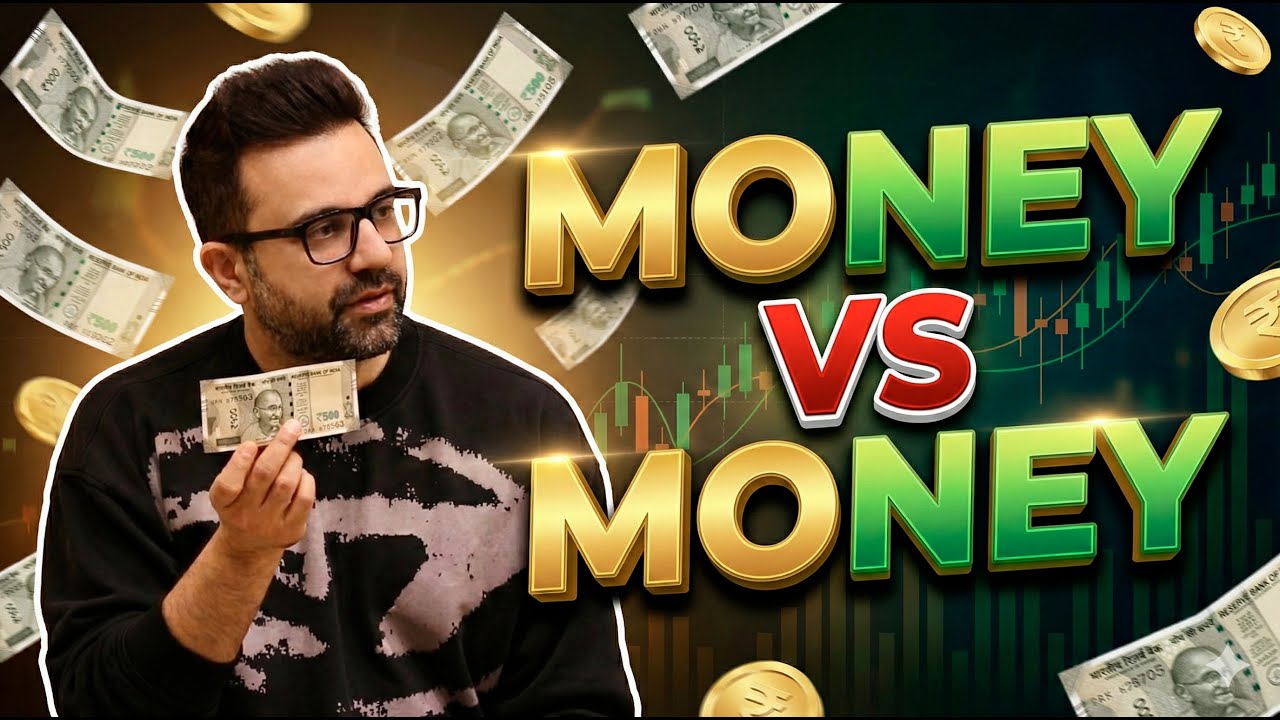
This YouTube video by Sandeep Maheshwari discusses investment strategies and the importance of understanding the underlying facts before making any decisions. It covers topics such as the value of currency, the stock market, real estate, and precious metals like gold and silver. The video emphasizes the need for thorough research and critical thinking, rather than blindly following popular narratives or seeking quick solutions.
- Currency value is decreasing due to increasing debt and expenses.
- The Indian stock market may be overvalued due to consumer debt and business sentiment.
- Real estate in major cities is also overvalued.
- Gold and silver are presented as potential stores of value, but viewers are urged to do their own research.
Silver Demand and Price Speculation
The video begins with a question about the rising price of silver and its impact on industries like electric vehicles (EVs). Sandeep clarifies that he has never predicted specific price increases or decreases for silver. He emphasizes that any discussion about price must be relative to a specific currency, such as the Indian Rupee. He addresses the concern that higher silver prices would negatively impact the EV industry by stating that the demand for silver is inelastic, meaning that demand won't be affected by the price.
Solid State Batteries and Market Madness
Sandeep introduces the concept of solid-state batteries, which are being developed by companies like Samsung. These batteries promise faster charging times (9 minutes) and longer ranges (800-900 km) compared to lithium batteries. Solid-state batteries may require significantly more silver (1 kg) than current EV batteries (50 grams). He cautions against making investment decisions based on speculation and highlights the volatility of the gold and silver ETF markets. He advises viewers to avoid being swayed by rumors and to develop their own informed perspectives.
Understanding the Nature of Money
Sandeep discusses the nature of money, distinguishing between its historical definition and its current reality. Historically, money served as both a medium of exchange and a store of value. However, modern currency is essentially a "paper promise" issued by the government, subject to counterparty risk. He explains that the value of currency can be affected by government decisions, such as demonetization, and that its value is not guaranteed.
Risks Associated with Banks
Sandeep explains that keeping money in a bank carries more risk than holding it directly, as banks can fail. He points out that banks operate on the assumption that only a small percentage of depositors will withdraw their money at any given time. He emphasizes that the current financial system relies on the assumption that only a small fraction of depositors will seek to withdraw their funds simultaneously. If a larger number attempts to do so, the bank may not have sufficient funds available.
Government Finances and Currency Value
Sandeep explains that the value of a country's currency is tied to the performance of its government, similar to how a company's stock price reflects its financial health. He notes that improving a country's balance sheet requires increasing revenue, decreasing expenditure, and reducing debt. He argues that governments often struggle to achieve this due to political pressures and the desire to provide short-term benefits to the public.
The Downward Trend of Currency Value
Sandeep asserts that the value of fiat currency is likely to decline over time due to increasing debt and expenses. He notes that governments often resort to printing more money or taking on more debt, which further erodes the value of the currency. He also discusses the global factors that can impact currency value, such as crude oil prices and trade imbalances.
Real Money vs. Fiat Currency
Sandeep contrasts fiat currency with "real money," which he defines as something that serves as both a medium of exchange and a store of value. He argues that gold meets this definition, as it is universally recognized and retains its value over time. He explains that foreign investors consider currency depreciation when investing in India, requiring higher returns to compensate for the declining value of the Rupee.
Gold as a Store of Value
Sandeep explains why gold is considered a store of value. He notes that while the value of currency erodes over time, the value of gold tends to hold steady or increase. He points out that even governments, the issuers of fiat currency, are buying gold. He compares the returns of gold to those of the stock market since the year 2000, noting that gold has significantly outperformed the stock market.
Challenging Conventional Financial Advice
Sandeep challenges the conventional financial advice to allocate a small percentage of investments to gold as a hedge. He questions the logic behind this approach and presents data showing that gold has historically provided better returns than the stock market. He emphasizes that he is not providing financial advice and urges viewers to do their own research and consult with financial advisors.
The Importance of Critical Thinking
Sandeep stresses the importance of critical thinking and avoiding the trap of seeking quick solutions. He encourages viewers to question everything and to develop their own informed perspectives. He emphasizes that his role is to present facts, not to provide financial advice. He urges viewers to focus on understanding the underlying trends rather than trying to predict short-term market movements.
The Indian Stock Market
Sandeep explains why he is not very bullish on the Indian stock market. He suggests that the market may be overvalued and that consumer sentiment is not as optimistic as it appears. He encourages viewers to assess their own financial situations and to consider the broader economic trends. He connects the stock market's performance to the financial health of Indian consumers.
Consumer Sentiment and Business Investment
Sandeep explains that consumer sentiment and business investment are key indicators of future economic performance. He notes that if consumers are over-leveraged and businesses are hesitant to invest, the stock market may be at risk. He highlights the interconnectedness of the economy, noting that consumer spending drives business growth, which in turn impacts the overall health of the country.
Real Estate and Alternative Investments
Sandeep discusses real estate, noting that prices in major cities may be overvalued relative to people's purchasing power. He acknowledges that gold and silver are also expensive, leaving viewers with a sense of uncertainty about where to invest. He states that his intention is to challenge viewers' assumptions and to encourage them to think for themselves.
The Art of Research
Sandeep explains how to conduct research, emphasizing the importance of questioning everything and relying on credible sources. He cautions against blindly trusting AI-based systems like ChatGPT, as they are based on biased data. He stresses the need to critically evaluate information and to identify potential biases.
Research as a Process of Negation
Sandeep describes his research process as a "process of negation," where he systematically eliminates possibilities until he arrives at the truth. He emphasizes the importance of identifying what is not true before trying to determine what is true. He explains that this approach leads to greater clarity and confidence in decision-making.
The Power of Understanding
Sandeep emphasizes that understanding is key to making sound decisions. He argues that even if the outcome of a well-informed decision is negative, it is still valuable because it provides an opportunity to learn and improve. He contrasts this with making decisions based on incomplete information or external influences, which can lead to blame and resentment.
The Importance of Non-Action
Sandeep emphasizes the importance of knowing what not to do. He suggests that sometimes the best course of action is to do nothing. He argues that in life, it is more important to understand what to avoid than to actively seek out what to do. He concludes by reiterating the importance of understanding and patience, suggesting that when one truly understands a situation, the right course of action will become clear.
Applying Understanding to Investment Decisions
Sandeep applies the concept of understanding to investment decisions. He suggests that if one understands the limitations of fiat currency, the potential risks of the stock market, and the overvaluation of real estate, the best course of action may be to do nothing until a better option presents itself. He concludes by emphasizing that understanding is the key to making sound decisions and that when one truly understands a situation, the right course of action will become clear.

