
Brief Summary
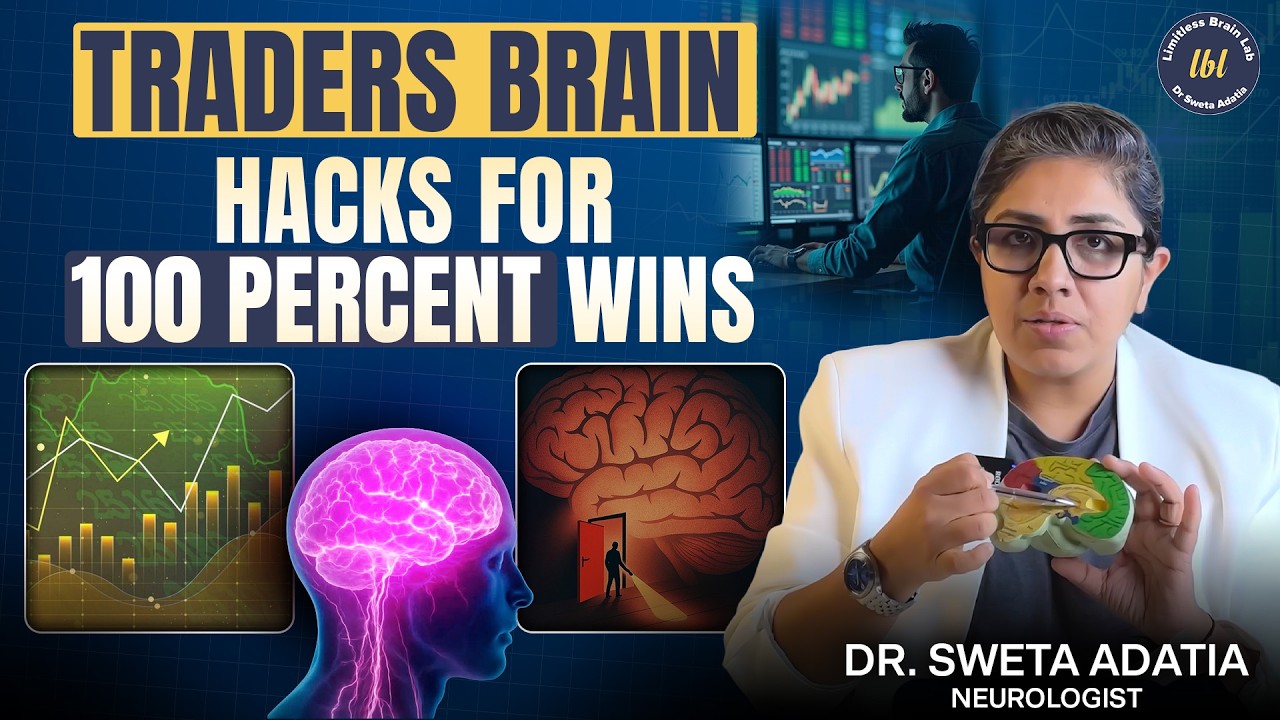
This video discusses the neuroscience behind trading, emphasizing that trading is more about emotional and mental management (70%) than just skill (30%). It addresses how fear and greed, the brain's fundamental emotions, can lead to a "trader's trap." The video provides practical steps to avoid this trap by managing the prefrontal cortex (PFC), which is crucial for patience and impulse control. Additionally, it highlights the importance of understanding the dos and don'ts of "neurotrading" to manage the trader's brain effectively.
- Trading is 30% skill and 70% emotional/mental.
- Fear and greed are the primary emotions influencing trading decisions.
- Managing the prefrontal cortex (PFC) is crucial for impulse control and patience.
- Avoiding daily trades and planning trades are important strategies.
About the video
Dr. Sweta Adatia from the Limitless Brain Lab introduces a discussion focused on the neuroscience of trading. She notes that many individuals experience stress related to trading losses and highlights the addictive nature of quick money and trading itself. The discussion aims to explore the dopamine motivation behind earning and how individuals cope with losses, framing it as a story about the trader's brain rather than just trading. The goal is to understand and avoid the "trader's trap" by understanding the brain's foundations.
Fundamental with which the brain works
The brain operates primarily on two fundamental emotions: fear and greed. Fear manifests as the anxiety of losing a trade, while greed arises from winning, driving a desire for more. These emotions are rooted in our reptilian brain, linked to basic survival instincts and the desire for comfort, power, and control. The challenge in trading is to transition from fear to fearlessness and from greed to contentment.
The game of trading
Trading is only 30% skill, with the remaining 70% being emotional and mental. When the market opens, emotional impulses kick in, potentially overriding well-developed strategies. This is where the prefrontal cortex (PFC), responsible for emotional regulation and impulsivity control, often fails. The desire to recover losses can lead to further losses, creating a negative loop.
Prefrontal cortex
The prefrontal cortex (PFC) is essential for patience, judging progress, and taking breaks. The brain consists of three parts: the brain stem (for basic functions like breathing), the limbic system (for emotions like fear and greed), and the PFC (for rational thought). Individuals with a less effective PFC are more prone to impulsivity, deeper losses, lack of patience, and going against market trends.
Things to avoid traders trap
To avoid the trader's trap, three key steps are recommended. First, spend five minutes each day practicing deep breathing to reduce impulsivity, fear, and greed, which promotes better decision-making. Second, write down a detailed trading plan and have an accountability partner to ensure adherence to the plan, providing checks and balances against impulsivity. Third, avoid daily trades unless you are a seasoned trader, as a healthy PFC is not consistently maintained, and losses can create emotional memories that negatively impact future trading.
Do's and don'ts of the trading
Before trading, understand the dos and don'ts of "neurotrading." Skills are important, so learn from top experts with experience. However, any teacher who doesn't address the brain's role is incomplete, as managing the trader's mind is 60-70% of success. Consistently practice the three steps mentioned earlier to avoid the trader's trap.
End of the video
The video encourages viewers to share and save the video, emphasizing that practicing the discussed neurological and neuroscientific principles can save money. It advises those experiencing depression, anxiety, or PTSD to seek professional help, including customized protocols involving breathing, meditation, supplements, and psychological therapy, for better brain health.

