
Brief Summary
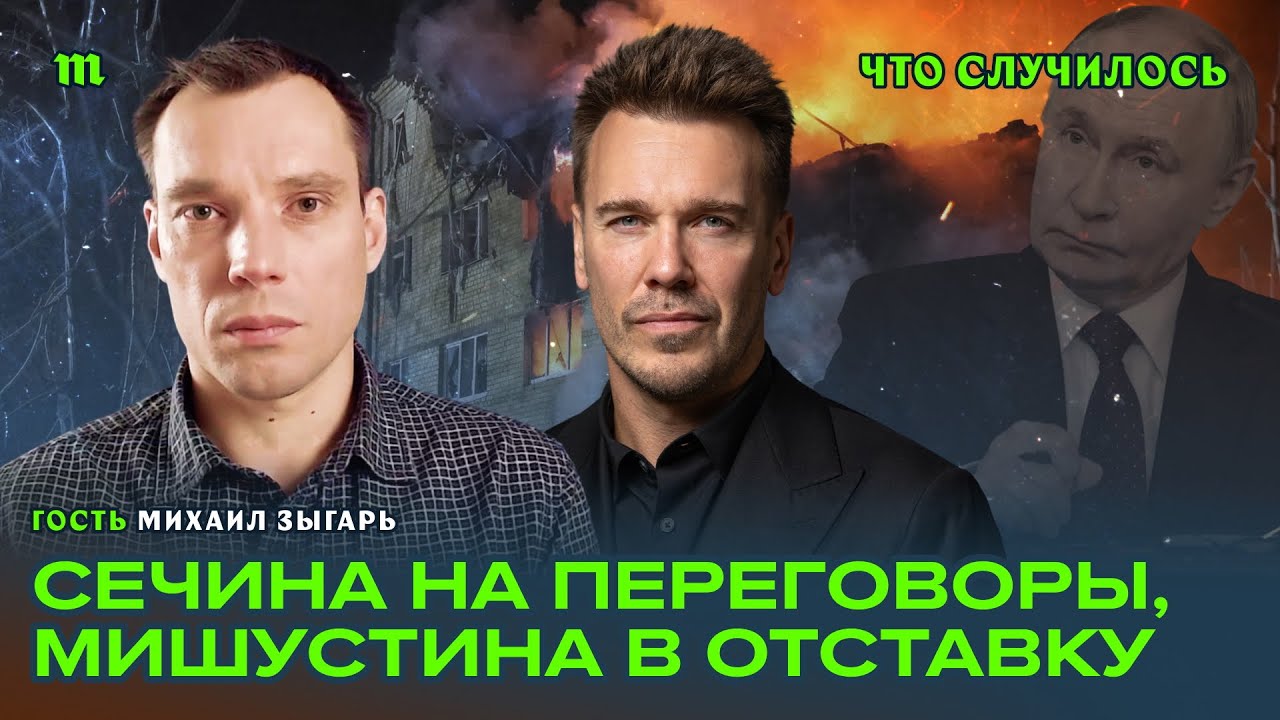
This YouTube video features a conversation with writer and journalist Mikhail Zygar, focusing on his insights into the Russian government and recent political events. Zygar discusses potential shifts in Russia's approach to negotiations with the U.S., the role of key figures like Igor Sechin, and internal dynamics within the Russian government, including the position of Prime Minister Mikhail Mishustin. He also touches on the relationship between the government and big business, highlighting the pressures and expectations placed on wealthy individuals to contribute to state initiatives.
- Potential shifts in Russia's approach to negotiations with the U.S.
- The role of key figures like Igor Sechin.
- Internal dynamics within the Russian government, including the position of Prime Minister Mikhail Mishustin.
- The relationship between the government and big business.
Книги Михаила Зыгаря
The host introduces Mikhail Zygar, a writer and journalist, to discuss recent sensational revelations about the Russian government. The host encourages viewers to like the video, leave comments, and subscribe to the channel. He also promotes Zygar's books, available for purchase on the Meduza website, including "Тёмные стороны земли" (Dark Sides of the Earth) about the history of the Soviet Union and a subscription for all of Zygar's books to be released in 2026.
О чем колонка про Путина в NYT
Zygar discusses his New York Times article, focusing on potential changes in Putin's plans regarding negotiations with the United States and Ukraine. He asserts that previous negotiators representing Russia were not serious, exemplified by figures like Medinsky and the involvement of individuals like Kirill Dmitriev without a genuine mandate. Zygar suggests that Russia was considering a shift towards real negotiations with the U.S. due to the difficult state of the Russian economy, with Igor Sechin potentially appointed to lead these efforts. However, these plans were stalled due to the situation with Iran, though Zygar doesn't rule out the possibility of them being revived later.
Роль Сечина
Zygar explains that Igor Sechin has played a significant role since the beginning of the war, acting as a key architect of Russia's counter-sanctions and responses to Western sanctions. When foreign companies left Russia in 2022, Mishustin proposed buying their assets for a symbolic ruble, but Sechin opposed this, advocating for simply taking them. Sechin, responsible for Russian oil revenues, has been a crucial figure, with a decree signed by Putin requiring his approval for the sale of Russian oil companies and banks involving departing foreign entities. Zygar describes Sechin as a gatekeeper between the Russian and global economies, noting his past relationships with American companies and his involvement in foreign policy, such as his ties to Latin America and relationships with figures like Hugo Chávez and Nicolás Maduro. He also had friendly relations with American oil executives like Rex Tillerson. Zygar emphasizes that Sechin is a logical choice for negotiations due to Putin's trust in him and his ability to communicate and negotiate firmly with the West.
Мишустин в опале?
Zygar shifts the discussion to the situation of Prime Minister Mikhail Mishustin and internal dynamics within Russia. He notes that an individual closely associated with Mishustin became the subject of a criminal case, which was initially dropped but later revived. Zygar suggests that Mishustin's position may not be as secure as it seems, citing other similar cases. He speculates that a change in government could occur, a topic frequently discussed in recent months. The host questions the reasons for potential dissatisfaction with the government, given its apparent success in managing the economic challenges posed by sanctions and the war. Zygar responds that decisions are often based on internal factors and Putin's changing perceptions rather than objective performance metrics.
Экономика не важна для Путина?
Zygar clarifies that economic factors are not a primary concern for Putin, though they do play a role. He mentions that Putin has started to heed some economic arguments, particularly regarding the potential for mass bankruptcies among major Russian companies. There are concerns that these economic issues could undermine Russia's ability to sustain a prolonged war.
Путину нужны переговоры с США?
Zygar states that Putin is skeptical of Donald Trump and any American administration, viewing them as temporary. He believes any U.S. administration is temporary, so while active engagement is necessary, long-term trust and significant concessions are impossible. Putin prefers dividing negotiations into multiple tracks, addressing issues like oil, sanctions, and potentially even projects like a Trump Tower in Moscow, while keeping Ukraine as a separate issue. Zygar addresses a statement by Dmitry Peskov, who dismissed Zygar's publication as false while also acknowledging that critical issues remain unresolved. Zygar interprets Peskov's response as a confirmation of the situation.
Путин берет с бизнеса деньга на войну
Zygar discusses how Putin views wealthy individuals as sitting on "his" money, a concept that predates the war and continues today. He describes a system where companies are randomly seized for seemingly arbitrary reasons to fund the war effort, creating a "post-apocalyptic" atmosphere in the Russian economy. While the very largest owners are not targeted, they understand that nothing truly belongs to them and are expected to offer contributions to avoid losing everything. Smaller owners, who may have once believed in their ownership, now realize that their assets can be taken at any moment for the sake of the country. Zygar references a quote from Peskov confirming that wealthy individuals are expected to make significant contributions to the state, viewing it as a moral obligation stemming from their business beginnings in the 1990s. This expectation is not formalized in law but is presented as a moral debt that can never be fully repaid.
Где прочитать всю историю современной России
Zygar concludes by encouraging viewers to purchase his books from the Meduza store, describing them as a comprehensive history of Russia in the 20th and 21st centuries. He suggests that his books provide context for understanding how Russia arrived at its current state, particularly for those who have not followed the news for the past 25 years.

