
Brief Summary
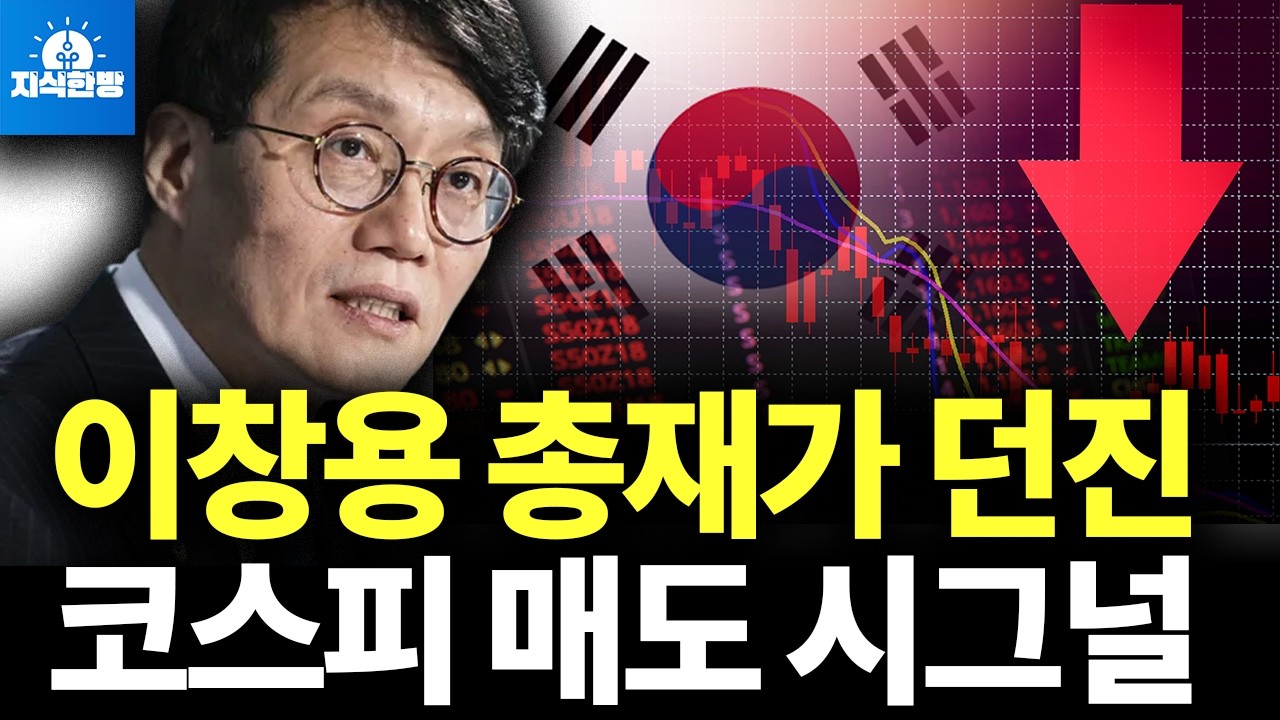
This video analyzes the recent instability in South Korea's financial market, attributing it to remarks made by the Bank of Korea governor, Lee Chang-yong, in a Bloomberg TV interview. The video discusses how these remarks, perceived as a potential shift in monetary policy, triggered a surge in government bond yields and a significant stock price drop due to foreign investors' reactions. It also explores the historical context of the Bank of Korea's communication strategies and the potential consequences of the governor's direct approach, especially concerning foreign exchange reserves and market sentiment.
- Governor Lee Chang-yong's remarks on Bloomberg TV caused market instability.
- Foreign investors reacted strongly, leading to a stock price plunge.
- The video suggests careful management of exchange rates and fiscal policy to stabilize the market.
Introduction
South Korea's financial market is currently experiencing instability, largely influenced by remarks made by the Bank of Korea governor. These remarks, delivered during a Bloomberg TV interview, have led to a surge in government bond yields and a subsequent drop in stock prices. The video aims to analyze the connection between the governor's statements and the market's reaction, assessing whether the KOSPI can stabilize or if further decline is inevitable.
Governor's Remarks and Market Reaction
On November 12th, the Governor of the Bank of Korea, Lee Chang-yong, gave an interview on Bloomberg TV where he openly discussed Korea's economic situation. He mentioned that Korea's growth rate is below its potential and hinted at possible changes in interest rate policy based on new economic data. He also stated the Bank of Korea's willingness to intervene in the foreign exchange market if the won-dollar exchange rate experiences excessive volatility. These remarks were perceived as a signal of a potential shift towards raising interest rates, causing foreign investors to sell off 3-year Treasury bond futures, leading to a surge in national bond interest rates.
Comparison with Past Communication Strategies
Historically, the Bank of Korea has been cautious in its communication, especially regarding policy shifts. The bank typically uses a phased approach to signal changes, starting with subtle adjustments in language and gradually increasing the intensity of the message to minimize market confusion. This contrasts sharply with Governor Lee Chang-yong's direct remarks, which were perceived as a sudden suggestion of a rate hike. The video also compares the Bank of Korea's approach with that of the U.S. Federal Reserve, which also emphasizes cautious communication and thorough preparation before signaling policy changes.
Impact on Government Bond Market
The governor's remarks led to a surge in the government bond market, exacerbating existing concerns about the issuance of 110 trillion won worth of deficit bonds. Foreigners reacted by dumping 3-year Treasury bond futures, causing national bond interest rates to spike. Despite attempts by the Bank of Korea and the Planning and Budget Office to correct the misunderstanding, the government bond market continued to fluctuate, leading to criticism of the governor's remarks.
Stock Price Plunge and Foreign Investor Sentiment
The governor's remarks, combined with existing concerns about the U.S. stock market and the AI bubble, created a perfect storm for a stock price plunge in Korea. The remarks were interpreted by foreign investors as a signal that the Korean economy was in decline and that interest rates might rise. The Bank of Korea's willingness to intervene in the foreign exchange market was seen as an opportunity to sell stocks at a higher won value before the bank's foreign exchange reserves were depleted. This led to a massive sell-off by foreign investors, reaching the highest level in four and a half years.
Hope for KOSPI and Potential Opportunities
Despite the recent turmoil, the video expresses hope for the KOSPI market. It suggests that the situation can be resolved through careful management of exchange rates and fiscal policy. If the U.S. stock market can avoid a trigger event and experience a rally, it could improve investment sentiment in Korea. The video also suggests that the instability caused by the governor's remarks could be an opportunity to address underlying weaknesses in the Korean economy.
Recommendations for Stabilizing the Market
To stabilize the market, the video recommends being cautious about defending the exchange rate, as depleting foreign exchange reserves below $400 billion could be dangerous. It also suggests reexamining fundamental monetary and fiscal policies to stabilize the exchange rate. Additionally, the video recommends reviewing the issuance of 110 trillion won in deficit government bonds and reducing unnecessary expenditure to dispel distrust among foreign investors. By addressing these issues, the video concludes that the current crisis could be a turning point for the Korean economy.

