
Brief Summary
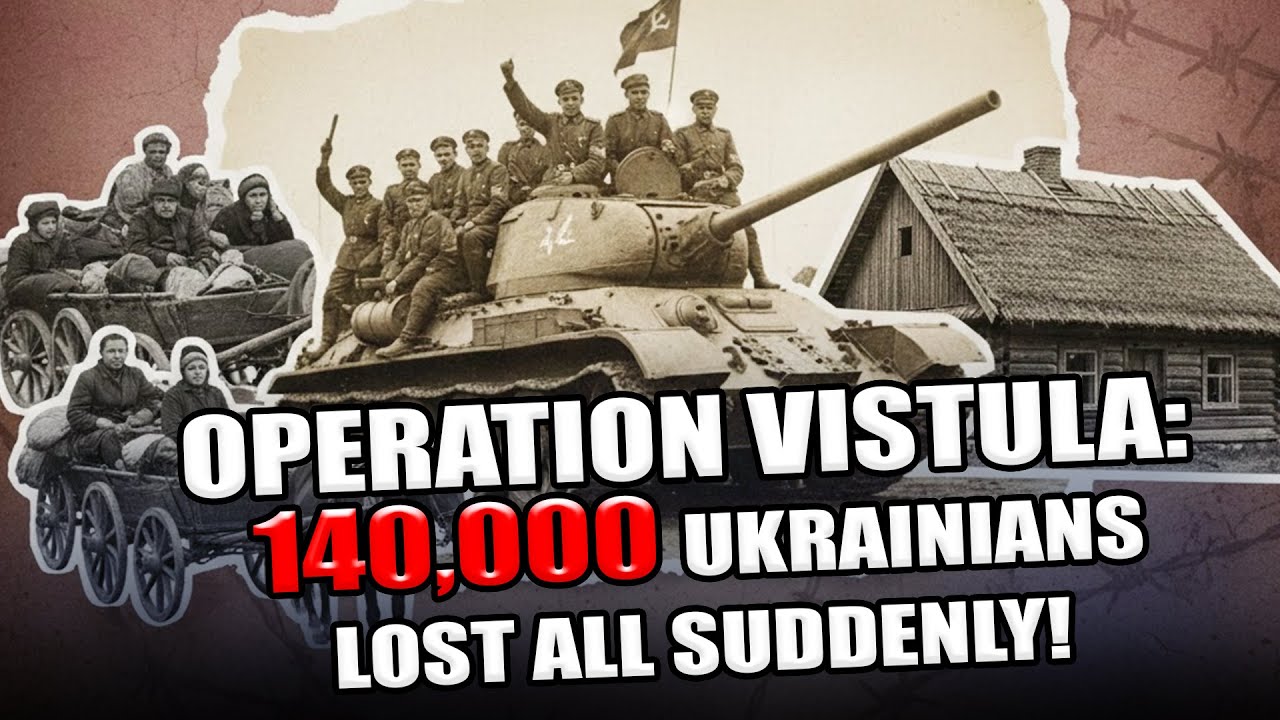
This video discusses Operation Vistula, a forced deportation of over 140,000 Ukrainians from their ethnic lands in 1947 by the Polish army and special services. It explores the historical context, motivations behind the operation, the brutal methods used, and the long-lasting consequences for Ukrainians, including cultural erasure, assimilation attempts, and the enduring impact on Polish-Ukrainian relations.
- Forced deportation of Ukrainians from their ethnic lands by Polish authorities.
- Operation Vistula aimed to eradicate Ukrainian culture and the Ukrainian Insurgent Army (UIA).
- Brutal methods included violence, murder, and displacement into hostile environments.
- Attempts to assimilate Ukrainians into Polish society by dispersing families and suppressing Ukrainian identity.
- Condemnation of Operation Vistula by Polish authorities after the fall of the Soviet Union.
Introduction to Forced Deportation
The video begins by highlighting how differences in ethnicity, nationality, faith, and race often lead to conflict and human rights violations, including genocide and deportation. It mentions that Germany and the Soviet Union were actively involved in forced resettlements during the 20th century. The Nazis initially planned to deport Jews to Madagascar, while the Soviets forcibly persecuted the Crimean Tartars and expelled Ukrainians and Poles. This sets the stage for the story of Operation Vistula, a Polish operation in 1947 that resulted in the displacement of over 140,000 Ukrainians.
Historical Context of Operation Vistula
In 1944, the USSR and Polish puppet authorities signed an agreement for the mutual exchange of population in border areas, which led to forced deportations. Ukrainian schools were closed, and Ukrainians were persecuted to force them to leave their homes. Poland and the USSR redivided territories, with 22,000 square kilometers of Ukrainian ethnic lands going to Warsaw. Ukrainians living in these territories were planned to be resettled to lands once occupied by Germany, such as Prussia. The agreement was signed by the Polish Committee of National Liberation established in Moscow as a provisional government.
Methods of Forced Displacement
The "voluntary transfers" of Ukrainians began in 1944, but they were far from voluntary. People were forced to move, beaten, and tortured, with the elderly and those who refused to leave their homes often killed. Polish soldiers showed no sympathy, aiming to clear territories of Ukrainians and create a monocultural state. Villages were burned to prevent the deported from returning, erasing Ukrainian culture and traditions. Nearly 500,000 people were deported, with some evading deportation by fleeing to forests or being defended by the Ukrainian Insurgent Army (UIA).
Operation Vistula: Planning and Execution
The Polish leadership decided to carry out Operation Vistula to destroy the Ukrainian liberation movement in Zakazonia by evicting all Ukrainians. Despite claims that it was a response to the UIA, planning for Vistula began before the death of Polish deputy minister Carol Suvski. The operation involved the coordinated efforts of Poland, Czechoslovakia, and the USSR, with tanks, reconnaissance aircraft, and troops deployed to prevent escape. Ukrainians were to be resettled in dispersed locations, primarily North Prussia, to prevent the formation of compact groups.
The Deportation Process
On April 28th, Polish troops surrounded Ukrainian villages, giving residents only two hours to gather their belongings and leave. The military robbed and confiscated possessions, with people transported to railway stations and then to their destinations in freight cars. Those who refused to go were shot or tortured, with particular hatred directed towards those who supported or had family ties to the UIA. The journey to the new place of residence was long and tiring, lasting up to two months in freight cars with children and livestock.
Life After Resettlement and Assimilation Attempts
Ukrainians were taken to places where they would assimilate into Polish society, with no more than six families settled in one village and dispersed in different corners to prevent the formation of communes. It was forbidden to identify as Ukrainian, and the special certificate issued by the Polish military contained a mark indicating "not Ukrainian, but not Pole either." Ukrainians were settled in dilapidated sheds in territories from which Germans had been driven, facing hostility from locals who had been warned about "bandits" and "bandera members."
Repressions and Concentration Camps
Deported Ukrainians were divided into categories, with those accused of aiding the UIA subjected to special punishment in concentration camps like Jaworzno, a branch of Auschwitz-Birkenau. The camps aimed to re-educate and extract information about the Ukrainian underground, with prisoners enduring brutal treatment, torture, and starvation. Even claiming Polish nationality during interrogation did not guarantee safety, as executioners reasoned that a normal Pole would not be sent to such a place.
Aftermath and Legacy
Operation Vistula lasted until the end of July, with former Ukrainian territories erased of Ukrainian memory through the burning and destruction of churches, villages, and graves. Those resettled in Prussia lived in constant fear and faced psychological shock, struggling to start a new life. Ukrainians grew afraid to identify as Ukrainians, fearing persecution and ridicule. Resettlement and forced assimilation lasted until the 1950s, with Ukrainians deprived of the right to their lands and property.
Recognition and Reconciliation
Operation Vistula was hushed up for a long time, but after the fall of the Soviet Union, archival documents began to emerge. In 1990, the Polish Senate condemned Operation Vistula, and in 2002, the Polish President expressed condolences to the Ukrainian people. In 2007, a joint statement by the Polish and Ukrainian Presidents condemned the operation. After the collapse of the Soviet Union, most Ukrainians decided not to return to their former lands, having established new lives in the territories where they were resettled.

