
Brief Summary
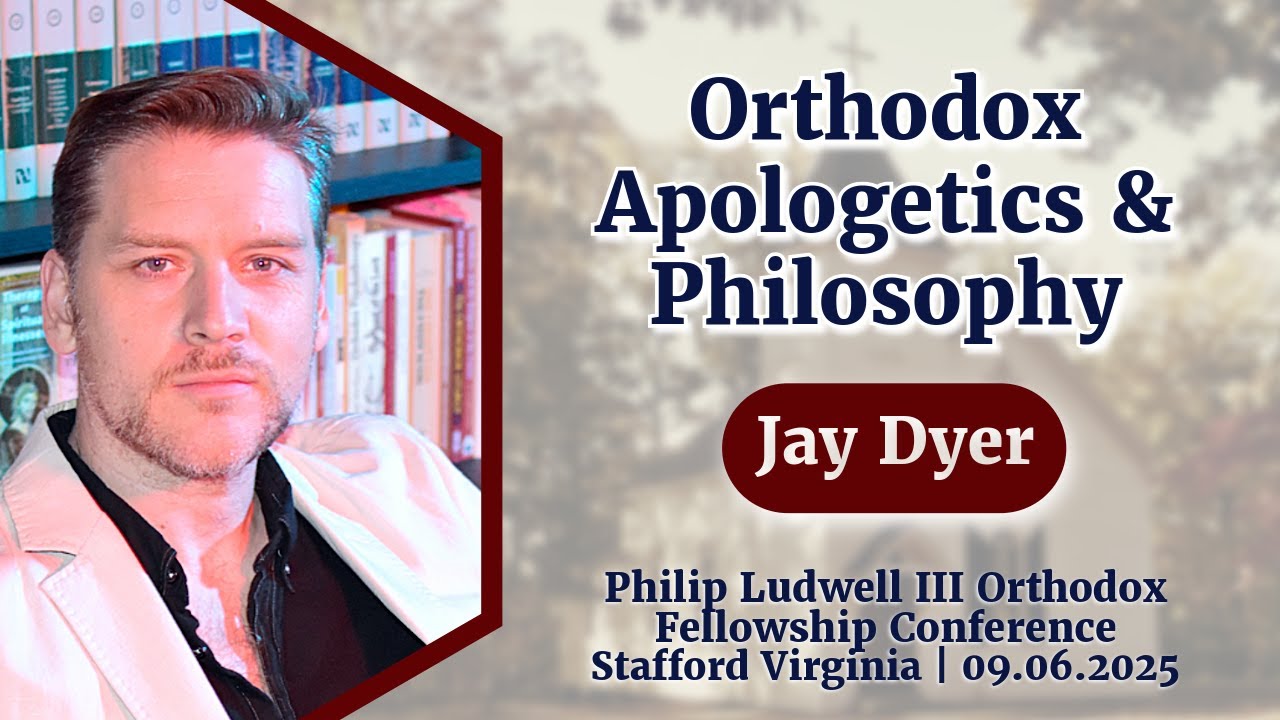
The speaker discusses the perceived worthlessness of secular philosophy in contrast to the personal, relational God of Orthodox Christianity. He contrasts the classical theist god of philosophers like Aristotle and Aquinas with the incarnate Christ, emphasizing the importance of divine revelation over metaphysical speculation. He also touches on the commonalities and differences between Orthodox Christianity and other religions like Islam and Judaism, particularly regarding the concept of perfection and divine love.
- Philosophy is worthless in contrast to the personal, relational God of Orthodox Christianity.
- Classical theism presents a deity that is incompatible with the incarnate Christ.
- Orthodox Christianity uniquely offers participation in uncreated divine love, unlike other religions.
Introduction
The speaker begins with a humorous introduction, joking about his heritage and affiliations. He then transitions to the main topic, which is the perceived worthlessness of philosophy. He clarifies that he is referring to secular, abstract philosophy, not the wisdom of God embodied in Christ.
The Personal God of Revelation vs. the Abstract God of Philosophy
The speaker contrasts the logos in John 1 with the logos of Hellenism, emphasizing that the former is rooted in the Hebrew wisdom tradition and represents a personal, relational God. He references the triads of St. Gregory Palamas, highlighting God's self-revelation as "I am he" rather than an impersonal force. This personal God is contrasted with the classical theist god of philosophers like Aristotle, Plato, and Aquinas, whom the speaker argues is more akin to a supreme essence or thing.
Classical Theism and World Religions
The speaker discusses his interactions with various religions and notes commonalities in their conceptions of the deity, often aligning with classical theism. He argues that this classical theist god, found in Roman Catholicism, Islam, and Judaism, is fundamentally different from the personal, relational God of Orthodox Christianity. He points out that these religions often prioritize metaphysical perfection and abstract principles over a personal relationship with God.
The Incarnation and the God of the Philosophers
The speaker argues that the philosophical god of the Hellenists is a god of abstract principles, a number or a force, unlike the relational God of Orthodox Christianity. He cites Dr. Ed Faser's assertion that the classical theist god cannot be in time and space, which poses a problem for the doctrine of the Incarnation. He explains that the God of the philosophers is an undifferentiated unity, a pure monad, an impersonal thought thinking itself, which is incompatible with the deity that becomes incarnate and responds to prayer.
Biblical Examples of God's Personal Manifestation
The speaker uses biblical examples to illustrate the personal nature of God's interactions with humanity. He cites the appearances of God to Jacob in Genesis 28 and 32, where God is seen standing and wrestling, and the manifestation of God's glory to all the people in Leviticus 9. These theophanies, or appearances of God, demonstrate a deity who is not confined to abstract metaphysical categories but actively engages in time and space.
The Kenosis and the Perfect Man
The speaker references Philippians 2, discussing the Kenosis, where Christ, being in the form of God, humbled himself and took on the form of a servant. He explains that this act of self-limitation demonstrates the difference between God's essence and energies. He quotes St. Justin Popovich, who argues that perfection is not an abstract metaphysical concept but is embodied in the God-man, Jesus Christ, who is both perfect God and perfect man.
Questions and Answers
In the Q&A, the speaker addresses questions about apologetics, particularly when discussing perfection with those of other faiths like Islam. He emphasizes the importance of questioning the arbitrary standards of perfection and highlighting the unique Orthodox Christian understanding of divine love as participation in uncreated energy. He also notes that Orthodox Christian theology is unique in its essence-energies distinction, which is crucial for understanding God's relationship with creation.

