
Brief Summary
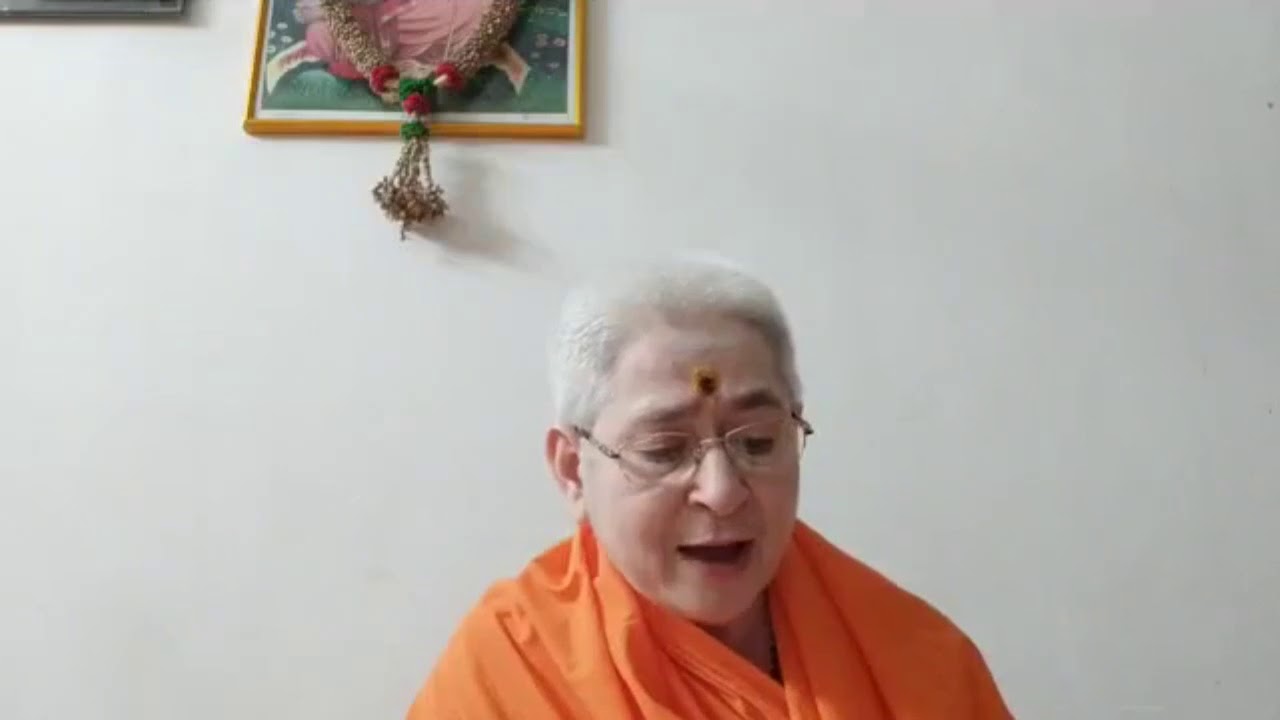
This video explores the concept of Vedanta, emphasizing the importance of tradition, the role of a guru, and the nature of reality. It explains that the Vedas are not of human origin but are manifestations of divine knowledge, passed down through a lineage of teachers. The video stresses the necessity of a guru in dispelling ignorance and realizing one's true nature as Brahman.
- Vedas are not of human origin, but divine knowledge.
- Guru is essential for dispelling ignorance.
- Realizing true nature as Brahman.
Introduction
The video begins with traditional chants and salutations, setting a spiritual tone for the discourse on Vedanta. These opening prayers honor the lineage of gurus and invoke peace and auspiciousness.
The Nature of Brahman and the World
The speaker explains that the Vedas are the voice of God, not created but eternally present. Brahman is both the efficient and material cause of the universe, meaning everything originates from and is sustained by Brahman. The world, with all its names and forms, is a manifestation of Brahman, and ignorance veils this reality. Just as clouds obscure the sun, ignorance covers our perception of the true nature of reality.
The Vedas and Their Manifestations
The Vedas, including the Rigveda, Yajurveda, Samaveda, and Atharvaveda, along with history, Puranas, and Upanishads, are all manifestations of Brahman. The creation of the universe is effortless for Brahman, akin to breathing. The speaker emphasizes that everything, including all beings and phenomena, arises from Brahman without any strain or effort on Brahman's part.
The Concept of "Nasha" (Destruction)
The speaker clarifies the meaning of "Nasha" (destruction) in Sanskrit, explaining that it does not mean absolute annihilation but rather transformation. Just as water changes form from liquid to vapor, substances undergo changes without being utterly destroyed. Energy and matter are interconvertible, and this transformation is a continuous process.
Manifestation and Dissolution
The speaker discusses the cycle of manifestation and dissolution, where things move from an unmanifest (avyakta) state to a manifest (vyakta) state and back again. This cycle is continuous, and the Vedas are not created but are eternally present, revealed to the Rishis (seers). The Vedas are "apaurusheya," meaning not of human origin, and are revealed rather than authored.
The Role of Rishis and the Guru Parampara
The Rishis are seers who perceive the Vedic mantras in their enlightened state. They are not the authors but the "seers" of the mantras. The speaker emphasizes the importance of the Guru Parampara, the lineage of teachers, through which this knowledge is transmitted. The Guru Parampara begins with Sada Shiva (Lord Shiva) and extends through Shankaracharya to one's own guru.
Guru Parampara: Tradition and Lineage
The speaker elaborates on the Guru Parampara, explaining that it is a lineage that starts with Sada Shiva, passes through Shankaracharya, and extends to one's own guru. Different traditions have different starting points, such as Narayana or Brahma. The key is that the knowledge is transmitted through an unbroken chain of teachers.
Two Types of Tradition: Sruti and Bindu Parampara
There are two types of tradition: Sruti Parampara (hearing tradition) and Bindu Parampara (lineage tradition). Sruti Parampara involves a guru imparting knowledge to a disciple through hearing, while Bindu Parampara involves a lineage of teachers, such as from a father to a son. Both traditions emphasize the importance of a qualified teacher.
The Necessity of a Guru
The speaker quotes Shankaracharya, emphasizing that those without a guru are like মূর্খ (fools) and should be disregarded. A guru is essential for dispelling ignorance and guiding one towards self-realization. The speaker addresses the question of who the first guru is, explaining that just as there must be a first father, the ultimate guru is Paramatma (the Supreme Self).
The Eternal Tradition
The tradition of knowledge is eternal, originating from Ishvara (God). The speaker stresses the importance of being connected to this tradition and taking pride in studying within it. By studying Vedanta, one connects to Shankaracharya and Sada Shiva, becoming part of an unbroken lineage.
The Guru's Incalculable Gift
The speaker explains that the gift a guru gives, which is the realization of Brahman, is so immense that it cannot be repaid. The only way to honor the guru is to continue the tradition by passing on the knowledge to others. The speaker cautions against keeping the knowledge to oneself, as this can lead to its loss.
The Importance of Tradition and Avoiding Self-Proclaimed Gurus
The speaker asserts that no one can become a guru on their own. Self-proclaimed gurus are not part of the tradition and cannot impart true knowledge. Just as a college needs teachers, spiritual knowledge requires a guru who is part of a lineage.
The Necessity of a Guru in Brahmajnana
The speaker explains that even if someone has studied many scriptures, they cannot attain Brahmajnana (knowledge of Brahman) independently. This is because Brahman is all-pervading, and ignorance obscures our true nature. The speaker emphasizes that the contradiction between our true nature (as blissful, all-pervading Brahman) and our experience (of suffering and limitation) is what necessitates a guru.
The Role of Avidya (Ignorance)
The speaker discusses Avidya (ignorance), which prevents us from recognizing our true nature as Brahman. Avidya is not opposed to consciousness but is illuminated by it. Therefore, Avidya cannot be removed on its own. The speaker quotes scriptures to support the idea that ignorance cannot be dispelled without the guidance of a guru.
The Guru's Role in Removing Ignorance
The speaker emphasizes that only a guru who is free from ignorance can remove the ignorance of others. The guru's intellect, which is devoid of ignorance, can dispel the disciple's ignorance. This knowledge can only be obtained through the Guru Parampara.
Different Types of Gurus
The speaker outlines different types of gurus, including Shiksha Guru (who imparts education), Buddha Guru (who provides enlightenment), Patha Guru (who teaches scriptures), Acharya (who lives according to the Vedas), and Sadguru (who imparts the knowledge of Brahman). The Sadguru's role is to remove ignorance and reveal the true nature of reality.
The Importance of Continuous Learning and Teaching
The speaker stresses the importance of continuous learning (Svadhyaya) and teaching (Pravachana), along with avoiding negligence and laziness. These practices should be integrated into all aspects of life, from daily routines to interactions with guests. The guru must also engage in continuous learning and teaching.
The Guru's Goal: Removing Ignorance
The ultimate goal of the Sadguru is to remove ignorance and reveal the true nature of reality. The speaker reiterates that Vedanta can only be obtained through the Guru Parampara and not through independent study. While intellectual understanding is important, the true realization (Anubhuti) comes through the guru's guidance.
The Three Ways to Acquire Knowledge from a Guru
The speaker outlines three ways to acquire knowledge from a guru: reverence, inquiry, and service. Serving the guru is the highest form of learning. The knowledge received through service is superior to knowledge gained through exchange or fear.
The Importance of Faith and Tradition
The speaker concludes by emphasizing the importance of faith (Shraddha) in the Vedas and the Guru Parampara. This faith is not blind belief but a conviction in the authority of the Vedas and the lineage of teachers. With this faith, one can begin the study of Panchadasi and understand the true nature of reality.
Conclusion and Prayers
The video concludes with prayers for peace, well-being, and the removal of suffering. These prayers invoke auspiciousness and express the wish for all beings to be happy and free from disease. The final chants honor the gurus and express gratitude for the knowledge imparted.

