
Brief Summary
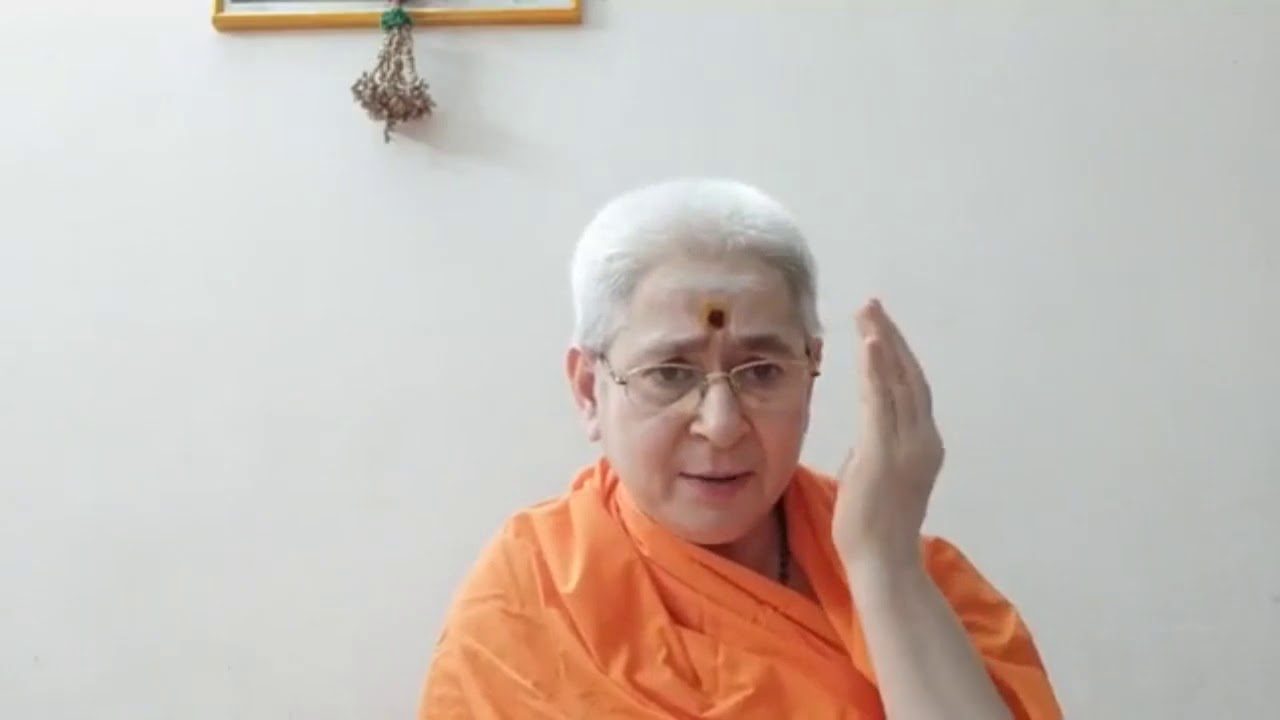
This video provides an in-depth explanation of a Mangala Charanam, focusing on its significance, purpose, and the underlying concepts it embodies. It explores the three aspects of Mangala Charanam, the definition of "Moha" (delusion), and how it relates to our perception of reality and the self. The speaker also discusses the role of a Guru in dispelling ignorance and guiding individuals towards self-realization.
- Mangala Charanam's three aspects: salutations to the deity, the Guru, and the essence of truth.
- "Moha" is defined as a delusion where we perceive what is not real and fail to recognize what is.
- The Guru's role is to eradicate ignorance and guide individuals towards realizing their true nature.
Invocation and Introduction
The video begins with a traditional invocation, chanting various Sanskrit verses. These verses are prayers for auspiciousness, peace, and well-being. The speaker then transitions into an explanation of the Mangala Charanam, a practice of invoking blessings at the beginning of a discourse or text.
Mangala Charanam: Meaning and Significance
The speaker breaks down the Mangala Charanam into its three key components: "Namah" (salutation), "Sri Sankarananda Guru Padambuja Janmane" (born from the lotus-like feet of Sri Sankarananda Guru), and "Savilasa Maha Moha Graha Grasai Ke Karmane" (the one whose actions destroy the great delusion). He explains that this Mangala Charanam is a salutation to the Guru, whose lotus feet are revered. The Guru, identified as Sri Sankarananda, embodies the qualities of both Shankara (the divine) and Ananda (bliss).
Purpose of Mangala Charanam
The speaker explains the three primary purposes of Mangala Charanam: to ensure the uninterrupted completion of the work, to facilitate its widespread dissemination, and to encourage its study by qualified individuals. He elaborates on the obstacles (Vighnas) that can hinder the completion of a work, categorizing them into three types: physical (Adhi Bhautika), internal (Adhyatmika), and external (Adhi Daivika). The Mangala Charanam seeks to remove these obstacles, ensuring the successful completion and propagation of the teachings.
The Role and Actions of the Guru
The speaker focuses on the phrase "Savilasa Maha Moha Graha Grasai Ke Karmane," which describes the Guru's actions. The Guru's primary purpose is to destroy the "Maha Moha Graha," the great delusion that keeps individuals bound to suffering. This delusion is likened to a crocodile (Graha) that seizes and devours its victims.
Understanding "Moha" (Delusion)
The speaker explains "Moha" as a state of delusion where we misperceive reality. He provides three examples: mistaking a rope for a snake, misunderstanding the true nature of the self, and projecting qualities onto something that it does not possess. He emphasizes that "Moha" is not simply ignorance but a specific kind of ignorance where we superimpose false attributes onto reality.
The Nature of "Maha Moha" (Great Delusion)
The speaker explains that "Maha Moha" is rooted in "Mula Avidya," the fundamental ignorance of our true nature. This ignorance is not merely a lack of knowledge but a positive misapprehension of reality. He uses the analogy of mistaking a coiled rope for a snake in dim light. The general awareness of something being there (general knowledge) combined with the lack of specific knowledge leads to the misidentification. Similarly, we have a general awareness of our existence and consciousness but lack the specific knowledge of our true, infinite, and blissful nature.
The Consequences of "Maha Moha"
The speaker explains that being in the grip of "Maha Moha" leads to suffering and endless cycles of action and reaction. Because we don't recognize our true nature, we create false identities and engage in activities driven by desires and fears. This leads to karma, which binds us to repeated cycles of birth and death.
The Guru's Role in Eradicating "Maha Moha"
The speaker emphasizes that the Guru's primary role is to eradicate this fundamental ignorance, not to solve our everyday problems. By dispelling the "Maha Moha," the Guru removes the root cause of suffering, leading to the cessation of karma and the cycle of rebirth. He uses the analogy of burning the thread to destroy the cloth, highlighting that destroying the cause automatically destroys the effect.
The Nature of Reality and the Guru's Guidance
The speaker emphasizes that the Guru's role is to dispel the illusion of a separate, suffering self. He quotes Gaudapada, stating that one must first prove the existence of the world before seeking liberation from it. The Guru reveals that the world, as we perceive it, is a projection of our ignorance and that our true nature is already free and blissful.
The Four Aspects (Anubandha Chatushtaya) of a Text
The speaker introduces the concept of "Anubandha Chatushtaya," the four essential aspects that must be considered when creating or studying a text: the subject matter (Vishaya), the qualified student (Adhikari), the purpose (Prayojana), and the relationship between them. He explains that the subject matter of Vedanta is the unity of the individual self (Jiva) and the ultimate reality (Brahman). The purpose is to eradicate ignorance and realize one's true nature as infinite bliss. The qualified student is one who desires liberation from suffering.
Conclusion and Closing Prayers
The video concludes with closing prayers for the well-being of all beings. These prayers express the wish for peace, prosperity, and freedom from fear for everyone.

