
Brief Summary
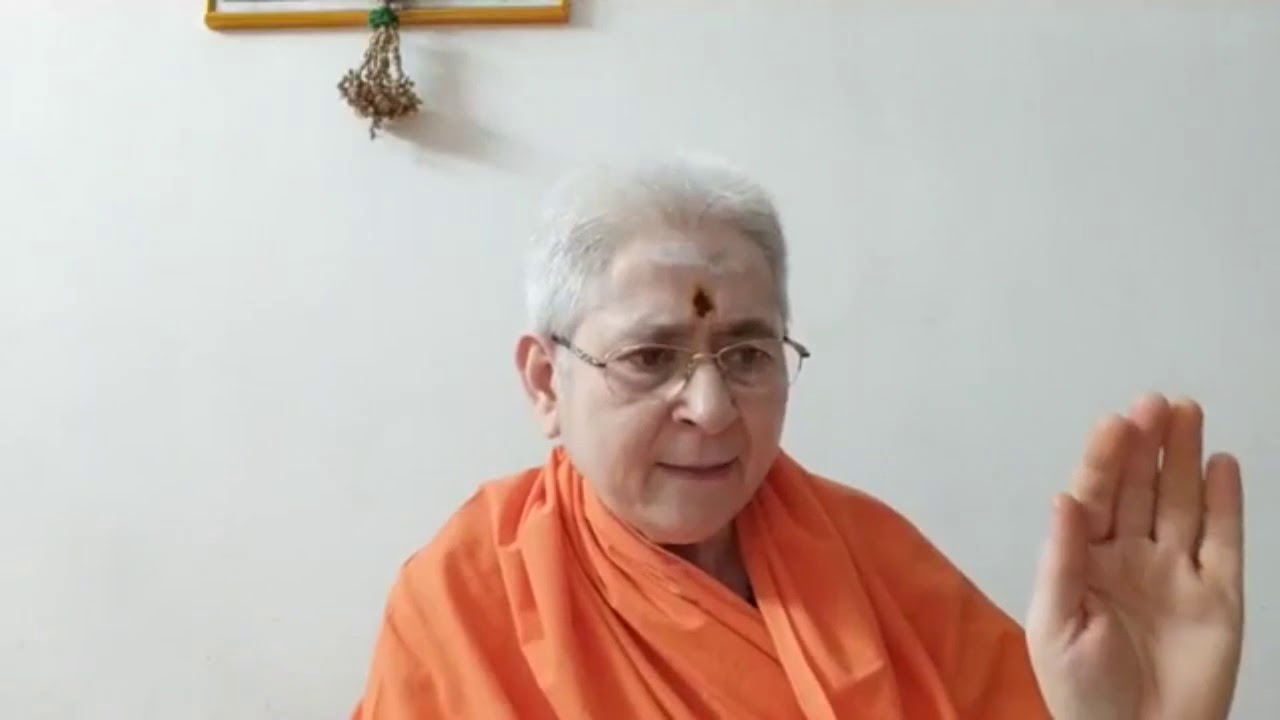
This video introduces the study of the Panchadasi, a significant text in Advaita Vedanta. It explores the text's authorship, attributing it to Vidyaranya Muni, and discusses his life, background, and the various teachers he had. The video also touches on the structure and content of the Panchadasi, including the different perspectives on which sections were written by Vidyaranya and Bharati Tirtha. Additionally, it explains the importance of logic in understanding Vedanta and introduces the commentaries and translations that will be used for studying the text. The session concludes with the chanting of the Mangalacharan, the invocatory verse, and a detailed explanation of its meaning, emphasizing the role of the guru and the inherent आनंद (bliss) in the universe.
- Introduction to Panchadasi text and its author Vidyaranya Muni.
- Discussion of Vidyaranya's life, background, and teachers.
- Explanation of the Mangalacharan and its significance in Advaita Vedanta.
Introduction to Panchadasi
The speaker introduces the study of the Panchadasi, a text generally attributed to Vidyaranya Muni, a Shankaracharya of the Sringeri Math. Vidyaranya was a multifaceted figure, deeply knowledgeable in various fields of learning. Historical accounts of his life vary, but he is known to have been born in the Vijayanagara kingdom in the 13th century to parents Srimati and Mayana. Before taking Sanyasa, his name was Madhavacharya.
Vidyaranya's Background and Teachers
Vidyaranya Muni had two brothers, Somanatha and Bhoganatha, both of whom were also scholars. He studied the scriptures with them. Vidyaranya belonged to the Krishna Yajurveda, specifically the Taittiriya branch, followed the Bodhayana Sutra, and was from the Bharadwaja Gotra, belonging to the Sayana family. Before his life as a renunciate, Vidyaranya served as a minister to the Vijayanagara kings, Harihara I and Bukka I, and was also their Kulguru (family teacher). He even established a town named Madhavapura for learned Brahmins. Vidyaranya had three main gurus: Sankarānanda, Bhāratī Tīrtha, and a guru from whom he learned the Vedas and rituals. Sankarānanda was his Sanyasa guru, while Bhāratī Tīrtha was his Vidya guru, from whom he gained knowledge of Vedanta.
Structure and Content of Panchadasi
The Panchadasi consists of 15 chapters, with varying opinions on authorship. Some believe Vidyaranya wrote all 15 chapters, while others suggest that Bharati Tirtha wrote chapters seven through ten. The remaining chapters are attributed to Vidyaranya. The text uses logic to explain Vedanta, focusing on Shakti (divine power). To understand the Panchadasi, one needs logic and a deep understanding of the verses. The speaker mentions that Pandit Ramakrishna has written a Sanskrit commentary on Panchadasi.
Commentaries and Translations
The speaker shares that they will be using multiple books for studying and teaching the Panchadasi, including a Gujarati translation by Natthura Sharma, a Sanskrit edition with commentary by Pandit Ramakrishna, a simple Hindi translation by Khemaraj from Mumbai, and an English translation based on Pandit Ramakrishna's commentary published by the Sringeri Math. The primary reference will be Pandit Ramakrishna's commentary.
Mangalacharan: Invocation
The session proceeds to the first verse of the Panchadasi, the Mangalacharan, which is an invocation. The speaker chants the verse twice, first alone and then with the audience. The verse is: "Om Namah Sri Sankarananda Guru Padambujanamane, Sarva Vilasa Maha Moha Graha Grasika Ramanne." The speaker explains that in Sanskrit, words should not be broken during pronunciation, as the verse is a continuous compound.
Meaning of the Mangalacharan
The Mangalacharan can be done by remembering the Guru, the divine, or the elements. This Mangalacharan includes all three. "Namah" means "I bow down" to Sri Sankarananda, where "Sri" signifies various forms of wealth and knowledge. Sankara refers to one who brings कल्याण (well-being) and is of the nature of आनंद (bliss). The speaker connects this to the concept of wanting सुख (happiness) and शांति (peace), which are often disconnected from our actions. Pandit Ramakrishna states that Sankara is the one who gives सुख (happiness) and आनंद (bliss) to the entire world.
Understanding Anand in the World
The speaker addresses the apparent contradiction between the statement that the world is full of आनंद (bliss) and the reality of conflict and suffering. The world, as perceived through अहंता-ममता (ego and attachment), is संसार (suffering). However, the world created by ईश्वर (God) is आनंदस्वरूप (full of bliss). Anand exists where there is no conflict or विसंवाद (disharmony). Quoting Swami Chinmayananda, the speaker says, "Everything is in order."
Disorder and Harmony
The speaker explains that what we perceive as disorder is part of a larger order. Using the example of constructing a house, the initial state appears chaotic, but it is a necessary stage in creating a harmonious home. The speaker shares a story about a mother who tidied her son's room, only to upset him because she disrupted his personal sense of order. What seems like विसंवाद (disharmony) from one perspective can be संवादिता (harmony) from another.
Perspective and Bliss
Drawing from the Chandogya Upanishad, the speaker emphasizes that a narrow perspective cannot bring सुख (happiness) or आनंद (bliss). The broader the perspective, the greater the आनंद (bliss). What we call विसंवाद (disharmony) is part of a larger संवादिता (harmony). The speaker references Swami Chinmayananda's teachings on seeing ईश्वर (God) in the form of संवादिता (harmony).
The Nature of the Guru
The speaker concludes that the परमात्मा (supreme being) is the one who brings आनंद (bliss) to the entire world. The guru, Sankarananda, is not separate from the Atma (soul). In Vedanta, the answer is present from the beginning. The guru is the विद्याश्री (wealth of knowledge) that brings सुख (happiness) to our lives. The verse "Guru Padambujanamane" refers to bowing down to the lotus feet of the guru.
Guru's Role and Conclusion
The speaker defines the role of the guru, contrasting the उत्तम (best), मध्यम (medium), and अधम (worst) types of gurus. The उत्तम guru removes our चित्त (mind's impurities), while the अधम guru only takes our धन (wealth). The speaker concludes by stating that the guru's role is to destroy the अविद्या (ignorance) and मोह (delusion) in the disciple's heart. The session ends with prayers for well-being and peace.

