
Brief Summary
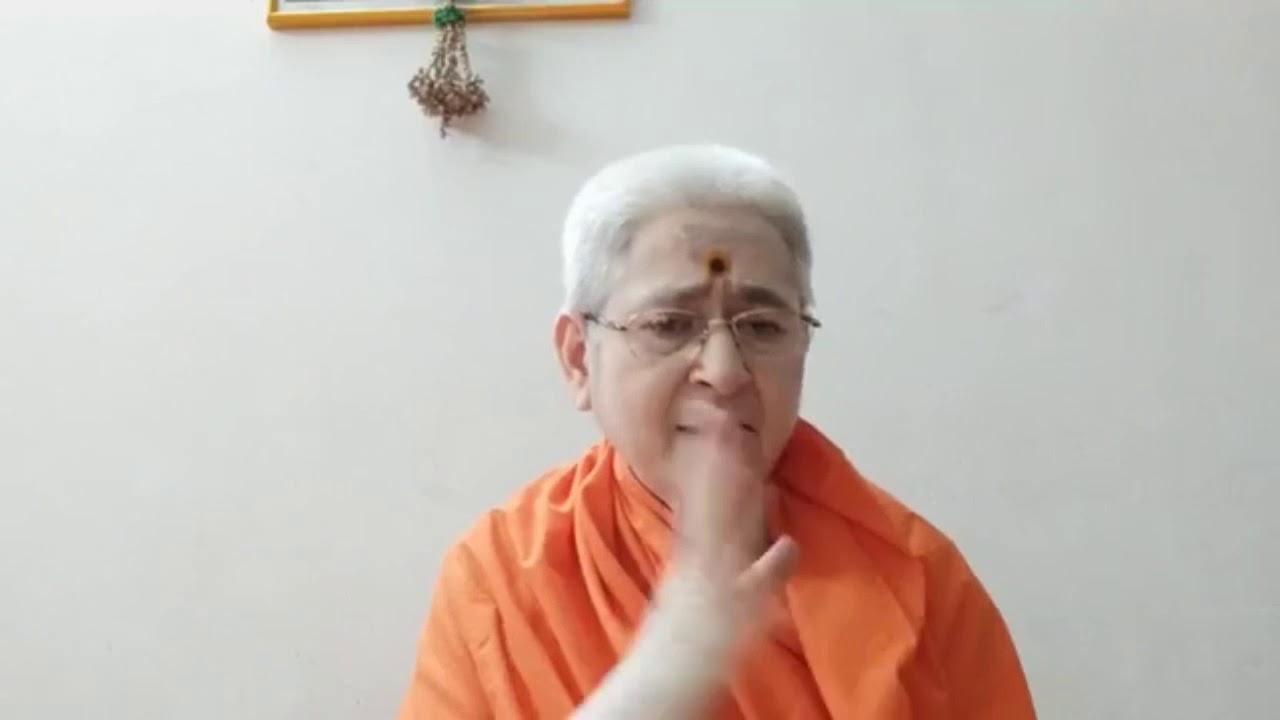
This video provides an in-depth exploration of the core principles of Advaita Vedanta, focusing on the essential qualifications and motivations required to study sacred texts. It emphasizes the importance of eradicating fundamental ignorance (Mula Avidya) to resolve practical problems, highlighting that true resolution comes from understanding the underlying reality rather than merely addressing surface-level issues. The discussion also covers the significance of a pure mind (Nirmala Chetasa) achieved through selfless service to the Guru and adherence to Dharma, which leads to genuine peace and happiness.
- The ultimate goal of studying sacred texts is to eliminate fundamental ignorance (Mula Avidya).
- A pure mind (Nirmala Chetasa) is essential for understanding Brahma Vidya.
- True happiness comes from inner peace and adherence to Dharma.
Invocation and Introduction
The video begins with a traditional invocation, setting a spiritual tone for the discourse. The speaker transitions into discussing the importance of understanding the context and purpose behind the composition of any sacred text, referencing the "Anubandha Chatushtaya," which includes the subject matter (Vishaya), the qualified student (Adhikari), the purpose (Prayojanam), and the relationship (Sambandha).
Subject Matter and Purpose of the Text
The subject matter of the text is the identity between the individual soul (Jiva) and the ultimate reality (Brahman). The purpose of the text is to completely eradicate the root ignorance (Mula Avidya) along with all its effects. This eradication is described as "Savilasa Maha-Moha Graha Grasaika Karmane," meaning the destruction of the great delusion along with all its manifestations.
The Qualified Student (Adhikari)
The qualified student is someone who seeks to eliminate their fundamental ignorance and resolve their core existential problems. Unlike worldly problems addressed in schools, colleges, and corporate settings, this text aims at resolving the deepest issues of human existence. The speaker references Sankaracharya, emphasizing that the true Guru is one whose sole purpose is to eradicate this fundamental ignorance.
The Nature of Ignorance and True Resolution
Ignorance is likened to darkness, and knowledge to light. A true Guru is one who dispels this darkness of ignorance. The speaker contrasts solving practical problems with addressing the root cause, using the analogy of mistaking a rope for a snake. True resolution comes from recognizing the rope (the underlying reality), which simultaneously eliminates the illusion of the snake (the perceived problem).
The Importance of a Pure Mind (Nirmala Chetasa)
The text emphasizes that only those with a pure mind (Nirmala Chetasa) are qualified to study Brahma Vidya. This purity cannot be achieved through mere austerities, sacrifices, or charity, but only through the purification of one's inner being. Knowledge, whether worldly or spiritual, is processed in the intellect (Buddhi), making its purity essential.
Qualities of a Pure Mind
A pure mind is free from attachments and aversions (Raga-Dvesha Rahitam). The speaker quotes the Bhagavad Gita, stating that those swayed by राग (attachment) and द्वेष (aversion) cannot attain Brahma Jnana. One must be free from the control of these emotions while still engaging with the world.
The State of Prasada and Its Significance
The state of "Prasada" (serenity or contentment) is achieved when the mind is free from राग (attachment) and द्वेष (aversion). This state is likened to clear, still water in autumn. The ultimate achievement in life is to maintain a प्रसन्न (happy) mind, regardless of external circumstances. Inner peace is more valuable than any amount of wealth, power, or fame.
The Role of Dharma in Achieving Mental Purity
The speaker emphasizes that धर्मनिष्ठा (adherence to Dharma) is essential for mental purity and happiness. When the mind is troubled, it indicates a deviation from Dharma. The speaker shares an anecdote about their grandmother, illustrating that those who are virtuous and पुण्यशाली (meritorious) experience restful sleep, indicating inner peace.
Guru Seva and Its True Meaning
The video explains that serving the Guru's feet (Guru Padamburuha Dwandwa Seva) purifies the mind. This service involves supporting the Guru's life and activities, ensuring they have the necessary resources for their spiritual work. Creating an environment where the Guru can contemplate the Self and study the scriptures is also a form of service.
Practical Aspects of Guru Seva
The speaker details traditional practices in a Gurukulam (Guru's household), such as waking up before the Guru, maintaining a respectful posture, and providing food through भिक्षा (alms). The emphasis is on minimizing speech and listening attentively to the Guru. The speaker shares a story about Maharaji, illustrating that true service is not about physical acts alone but about creating an environment conducive to spiritual growth.
The Importance of Shastra Adhyayana
The speaker emphasizes that studying the scriptures (Shastra Adhyayana) diligently is also a form of Guru Seva. By engaging deeply with the teachings, the disciple pleases the Guru and progresses spiritually. The video concludes by reiterating that the qualified student is one whose mind has been purified through service to the Guru and ईश्वर (God).
The Transformation from Mumukshu to Jignasu
The discussion shifts to the transformation from being a "Mumukshu" (one who desires liberation) to a "Jignasu" (one who desires knowledge). While everyone may initially seek freedom from suffering, true liberation comes through तत्व ज्ञान (knowledge of the truth). The Mumukshu, realizing that मूल अविद्या (root ignorance) is the problem, becomes a Jignasu, seeking knowledge to solve it.
The Nature of Spiritual Progress
Spiritual progress is not linear but occurs in leaps, similar to a frog leaping from one lily pad to another. The speaker emphasizes that the desire for knowledge (जिज्ञासा) arises in a mind purified by service to the Guru and ईश्वर (God). This desire leads to तत्व विवेक (discrimination of truth), which is essential for liberation.
Conclusion and Benediction
The video concludes with a benediction, praying for the well-being of all beings and the peace and prosperity of the world.

