
Brief Summary
This video provides an overview of the Philippine financial system, detailing its structure, the institutions that comprise it, and the regulatory framework governing it. It highlights the roles of various regulatory agencies, including the Bangko Sentral ng Pilipinas (BSP), Securities and Exchange Commission (SEC), Insurance Commission (IC), and Philippine Deposit Insurance Corporation (PDIC), in maintaining the stability and integrity of the financial system.
- The Philippine financial system is composed of banks, non-bank financial institutions, and payment system operators.
- Banks are classified into seven types: universal, commercial, thrift, rural, cooperative, Islamic, and digital.
- Financial supervision is a shared responsibility among the BSP, SEC, IC, and PDIC.
- The BSP acts as the central monetary authority, oversees payment systems, and ensures financial stability.
Introduction to the Philippine Financial System
Selen Dino from Bangko Sentral ng Pilipinas (BSP) introduces a discussion about the financial system in the Philippines, covering its structure, supervision, and regulation. The Philippine financial system is described as a strong pillar of the domestic economy, comprising various institutions that offer financial products and services like banking, investing, and insurance.
Components of the Financial System
The Philippine financial system includes banks and non-bank financial institutions such as investment houses, financing companies, non-stock savings and loan associations, pawn shops, investment companies, insurance companies, securities dealers, and brokers, as well as payment system operators. It is supported by the national payment system (NPS), which encompasses all payment systems, instruments, processes, procedures, and participants that facilitate the circulation of money and movement of funds in the Philippines.
Classification of Banks in the Philippines
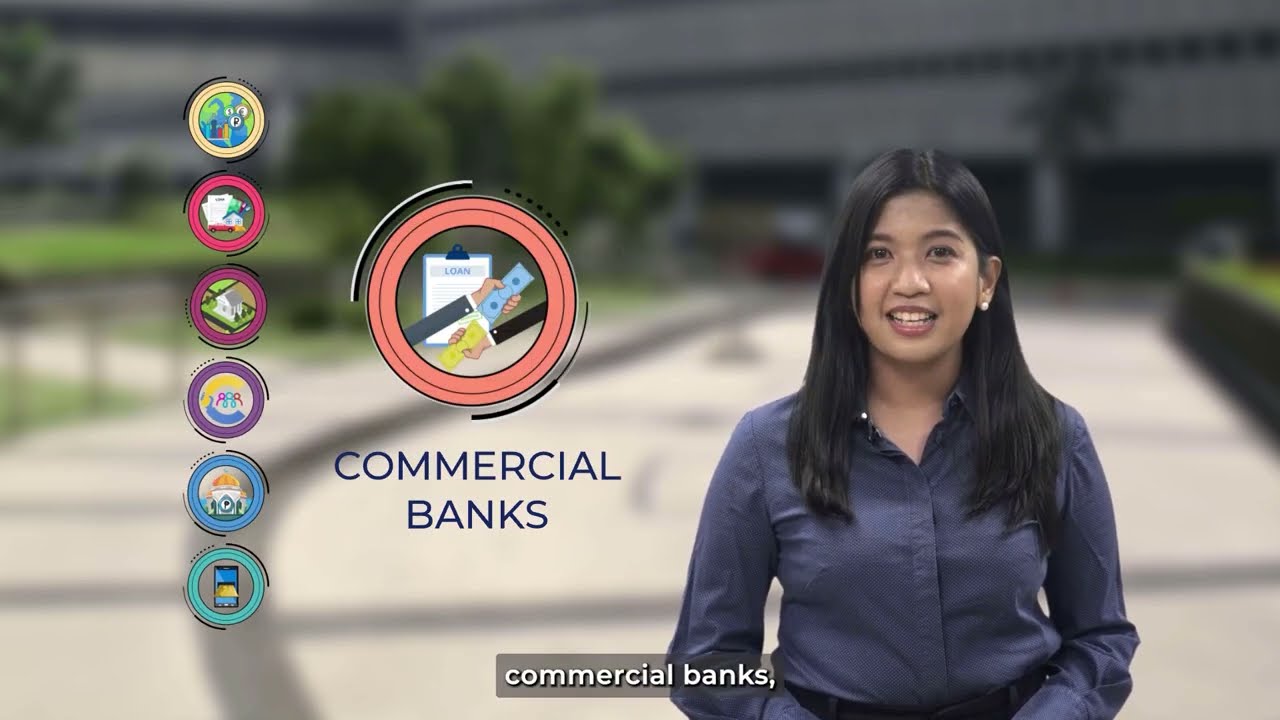
Philippine banks are classified into seven types: universal banks, commercial banks, thrift banks, rural banks, cooperative banks, Islamic banks, and digital banks. These banks differ mainly in their powers, scope of authorities, and the products and services they are allowed to offer.
Regulation and Supervision of the Financial System
Financial supervision in the Philippines is a shared responsibility among primary financial regulatory agencies: the BSP, the Securities and Exchange Commission (SEC), the Insurance Commission (IC), and the Philippine Deposit Insurance Corporation (PDIC). The BSP supervises banks and quasi-banks, including their financial allied subsidiaries and affiliates, excluding insurance companies, non-stock savings and loan associations, pawn shops, trust corporations, non-bank credit card issuers, electronic money issuers, and payment system operators, as provided by its charter and other laws.
Roles of SEC, IC, and PDIC
The SEC regulates capital market participants, securities markets, and other non-bank financial institutions (NBFIs) such as financing and lending companies. The IC supervises and regulates insurance, pre-need, and health maintenance organization industries. The PDIC provides deposit insurance coverage and shares some supervisory powers with the BSP over banks.
BSP's Role as Central Monetary Authority and Macroprudential Regulator
Apart from being a financial system supervisor, the BSP is the country's central monetary authority, overseeing the country's payment and settlement systems (NPS). It is also a macroprudential regulator with a financial stability mandate. The BSP has the power to obtain data and information from parent and affiliate companies for statistical and policy development purposes, enabling it to manage potential negative impacts on the financial system's safety and soundness. The BSP works closely with other financial regulators and government authorities to safeguard financial stability.
Further Resources
The video encourages viewers to explore other videos about BSP-supervised financial institutions (BSFIs) and the BSP's role as a supervisor and regulator. It directs viewers to the BSP website and social media channels for additional learning resources.

