
Brief Summary
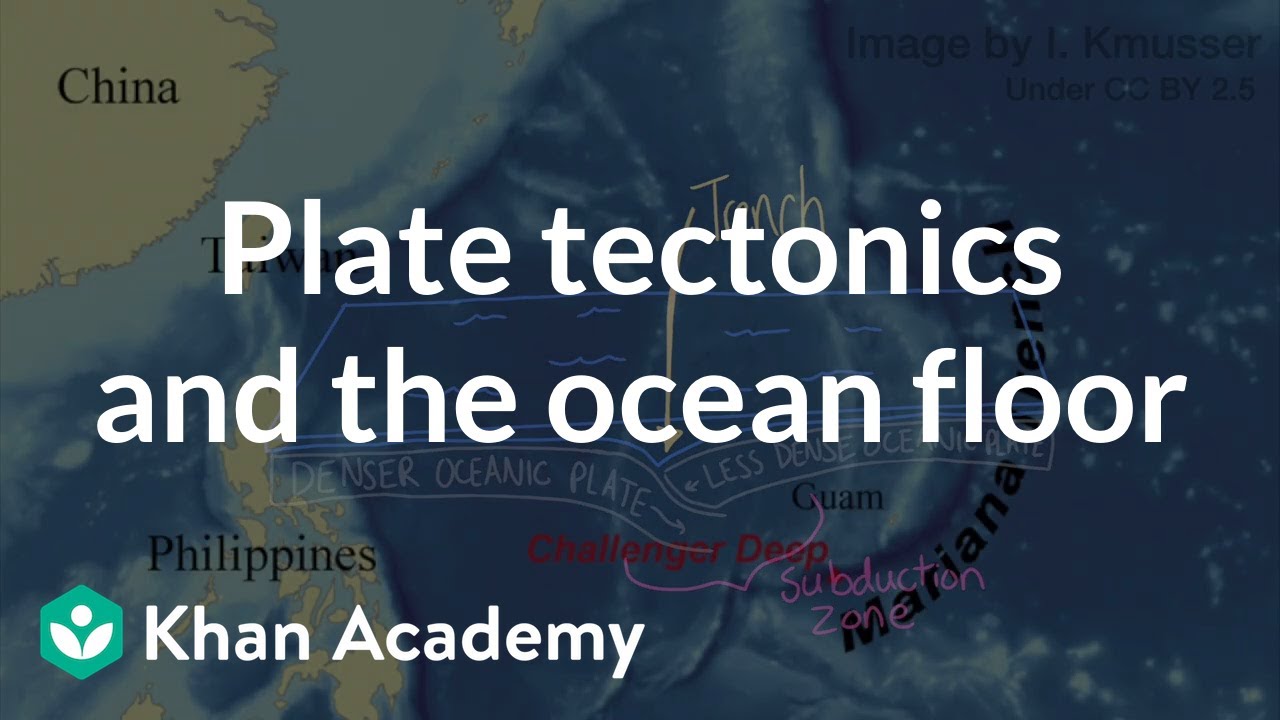
This video explains the dynamic processes that shape the Earth's seafloor. It covers the structure of tectonic plates, differentiating between oceanic and continental plates based on their composition and density. The video details how plate interactions at convergent and divergent boundaries lead to the formation of trenches, volcanoes, and mid-ocean ridges, illustrating the continuous cycle of seafloor creation and destruction.
- Tectonic plates are large puzzle-like chunks that make up Earth's lithosphere and move slowly over the asthenosphere.
- Oceanic plates, denser due to their basalt composition, subduct under less dense plates at convergent boundaries, forming trenches and volcanoes.
- New seafloor is created at divergent boundaries, specifically at mid-ocean ridges, where magma rises and cools, pushing older crust away in a continuous cycle.
Introduction to Tectonic Plates
The Earth's lithosphere is divided into tectonic plates, which are large, puzzle-like sections comprising the crust and the upper mantle. These plates move slowly over millions of years on the asthenosphere, a section of the mantle below the lithosphere. There are two types of tectonic plates: oceanic and continental. Continental plates form the continents, while oceanic plates make up the sea floor.
Oceanic vs. Continental Plates
Oceanic and continental plates differ primarily in the type of crust they possess. Continental crust is rich in granite, an igneous rock, whereas oceanic crust contains a lot of basalt, another type of igneous rock. This compositional difference results in varying densities; oceanic crust is denser than continental crust, with a cubic centimeter of continental crust weighing about 2.7 grams compared to 3 grams for oceanic crust. The higher density of oceanic crust causes it to sink slightly more into the asthenosphere compared to continental plates.
Convergent Boundaries and Subduction Zones
At convergent boundaries, where tectonic plates collide, the denser plate always subducts beneath the less dense plate. When an oceanic plate converges with a continental plate, the oceanic plate, being denser, dips under the continental plate. Similarly, when two oceanic plates collide, the older, denser plate subducts under the newer, less dense one. This subduction process leads to the denser plate being recycled into the asthenosphere over time. The area where the plates collide is known as a subduction zone, and the bending of the denser plate creates a trench, such as the Mariana Trench, which is approximately 11 kilometers deep.
Volcano Formation at Subduction Zones
As the plate subducts into the asthenosphere, water and fluids trapped within it heat up and rise to the surface. These hot fluids can cause sections of the mantle rock to melt into magma, which then ascends and forms volcanoes. This process illustrates how the destruction of the seafloor at subduction zones is linked to volcanic activity.
Divergent Boundaries and Mid-Ocean Ridges
New seafloor is continuously created at divergent boundaries, where tectonic plates move away from each other. In the middle of the ocean, this divergence results in the formation of underwater mountain ranges called mid-ocean ridges. As the plates separate, magma rises, cools, and solidifies, forming new lithosphere. This process can be likened to a slow conveyor belt, where new oceanic crust is generated at the ridges and gradually moves away over millions of years.
Seafloor Age and Density
The oceanic crust nearest to the mid-ocean ridge is the youngest, becoming progressively older and denser as it moves away. As the crust ages, it cools and its density increases. Eventually, this older, denser crust subducts back into the asthenosphere at trenches, completing the cycle of seafloor creation and destruction.

