
Brief Summary
This video addresses three frequently asked questions about biblical teachings: whether eating pork is permissible, if Sabbath keeping is optional, and whether homosexuality is a sin. It explains the historical context of dietary and Sabbath laws within Judaism, contrasting them with New Testament teachings. It also discusses homosexuality as a sin, emphasizing the importance of love, truth, and support for those struggling with their sexual orientation.
- Pork eating is permissible for Christians, as dietary laws were specific to the Old Covenant with Israel.
- Sabbath keeping is optional, as the New Testament emphasizes seeking God daily rather than adhering to strict Sabbath rules.
- Homosexuality is consistently presented as a sin in the Bible, but it is forgivable through Christ, and Christians should respond with love and truth.
Intro
The speaker begins by referencing Luke 24:44-45, emphasizing the importance of understanding the scriptures with the Lord's help. He prays for the opening of understanding to comprehend the scripture and connect its truth to the minds of the listeners. He also mentions that participating in this process is an assurance of being in God's family, as Christ seeks to open minds and witness His presence.
Pork Eating
The speaker addresses the question of whether God's Word says pork eating is okay. He notes that some divisions of Christendom have differing views on this topic. Leviticus states that pork is not for Jews, while Mark states that Jesus declared all foods clean. Peter's vision in Acts 10 reinforces that there are no dietary constraints for New Covenant believers. Paul also addresses this in Colossians. The speaker concludes that pork eating was wrong for Jews under the Old Covenant, but there are no dietary laws now.
Sabbath Keeping
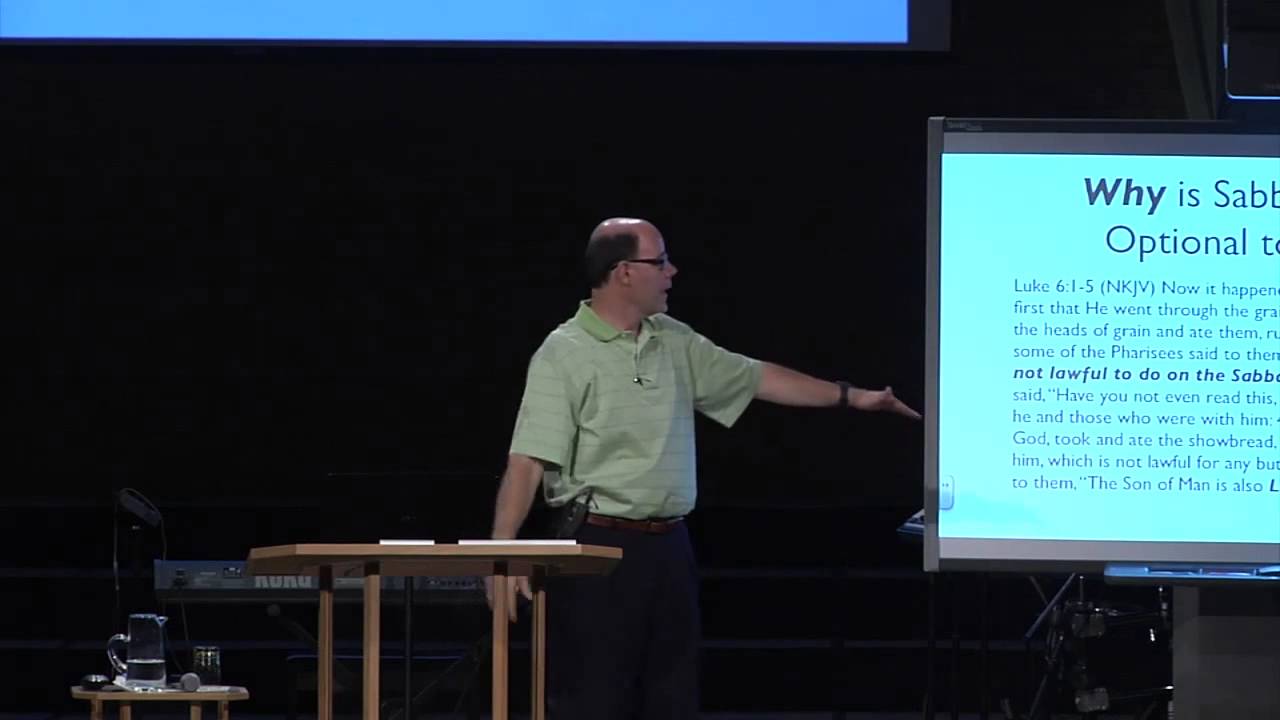
The speaker discusses whether Sabbath keeping is optional. He references Romans, where Paul suggests that observing a day above another is a personal choice, but one should not judge others for their choices. The speaker clarifies that there is no biblical connection between Sunday and the Sabbath, which is on Saturday. He explains that Sabbath keeping was not optional for Jews under the Old Covenant, referencing the fourth commandment in Exodus 20:8-10. Jesus, however, declared himself Lord of the Sabbath in Luke, challenging the strict interpretations of religious leaders. Paul, in Colossians, states that the Sabbath is a shadow of things to come, with Christ being the substance. The speaker summarizes that from Genesis 2 until the establishment of Israel, no one mentions or observes the Sabbath day. The fourth commandment is never repeated in the New Testament, and in Acts 15, James does not mention the ceremonial laws of the Sabbath day.
Homosexuality
The speaker addresses whether homosexuality is a sin. He states that Leviticus says lying with a male as with a woman is an abomination. Deuteronomy 22:5 prohibits a woman from wearing anything that pertains to a man and vice versa, calling it an abomination to the Lord. Paul reiterates this in Romans 1, stating that women exchanging natural use for what is against nature and men leaving the natural use of women, burning in their lust for one another, is shameful. In 1st Corinthians 6, Paul says that homosexuals will not inherit the kingdom of God, but some of them were washed, sanctified, and justified. The speaker clarifies that homosexuality is not presented as the way a person is born but as a choice to live in sin. He emphasizes that while homosexual acts are sinful, they are forgivable, and Christians should respond with love and truth.
Clarification and Conclusion
The speaker addresses a question about Deuteronomy 22:5, clarifying the difference between childish activity and chosen, willful cross-dressing. He emphasizes the importance of affirming the truth while not going overboard. He concludes by announcing that the next discussion will be about tattoos and whether the modern fad of tattooing is biblical. He closes with a prayer, asking for the opening of understanding, realization of freedom in Christ, and love to exemplify Christ in the community.

