
Brief Summary
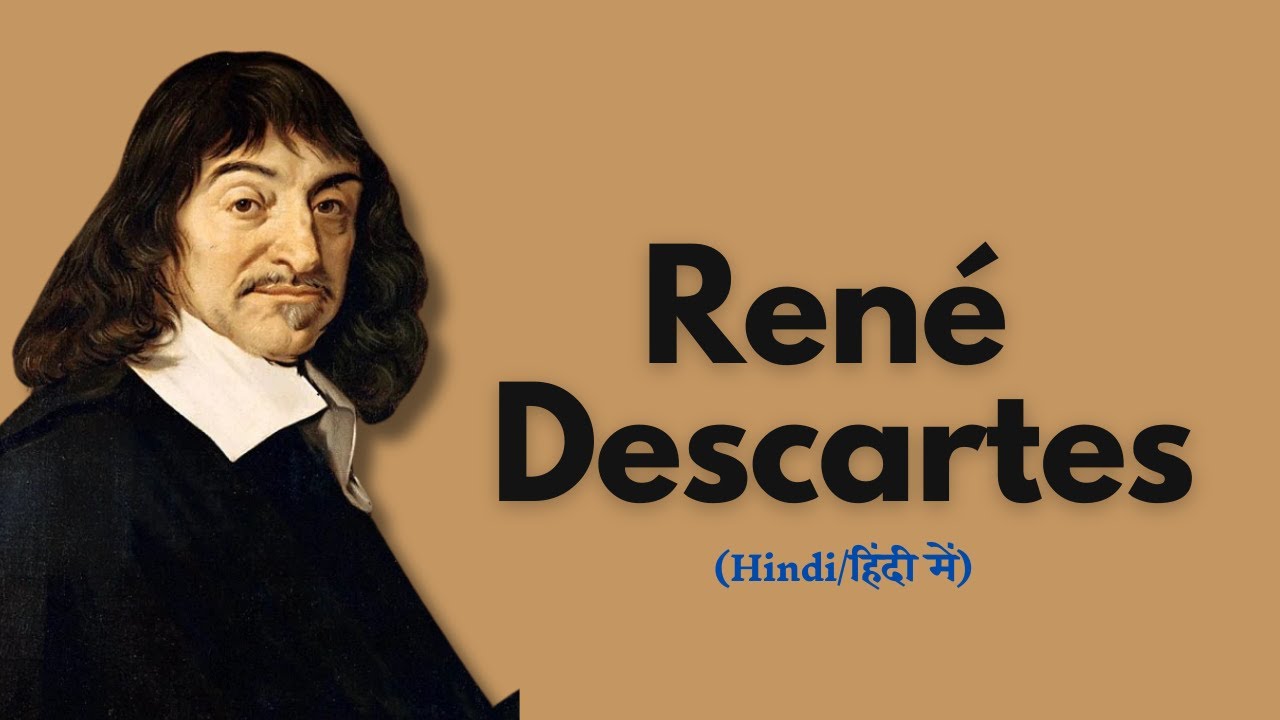
This video explores the philosophical contributions of René Descartes, focusing on his revolutionary ideas that bridged science and philosophy during the 17th century. It covers his method of doubt, the famous "Cogito, ergo sum," his ontological argument for the existence of God, his dualistic view of mind and body, and his significant impact on mathematics and science. The video also discusses the criticisms of his work and his lasting influence on modern thought.
- Descartes' method of doubt and its impact on epistemology.
- His dualistic view of mind and body and the challenges it posed.
- His contributions to mathematics and science, including Cartesian geometry and the mechanistic view of the universe.
Introduction: The Dynamic Era of Science and Philosophy
The 17th century in Europe was a period of significant change in both science and philosophy. During this time, figures like Galileo, Kepler, and Bacon spearheaded the Scientific Revolution, challenging old philosophies with new experiments. Galileo's use of the telescope demonstrated that the universe operated differently from established doctrines, emphasizing the growing importance of science and reasoning in Europe.
Challenging Scholasticism: Descartes' Mission
European universities were dominated by Scholasticism, a thought process that combined Greek and Roman philosophy, mainly Aristotle, with Christianity. Aristotle's philosophy was considered the final word, and questioning his ideas was not allowed. Descartes disagreed with this rigid approach and sought to re-evaluate philosophy. He advocated for doubting old principles to discover truth based on new foundations, marking the beginning of a new approach where doubt was the first step.
First Principles: Building a New Foundation of Knowledge
Descartes aimed to reconstruct philosophy on a new foundation by questioning existing knowledge. He doubted everything, including sensory experiences and reasoning, to establish basic principles. This approach, known as "first principles," sought to create a solid base for knowledge that is clear and undeniable. Descartes' goal was to find certainties beyond doubt, essential for understanding science, math, and philosophy.
Early Life and Education: The Seeds of Doubt
Born in 1596 in France, René Descartes came from a noble family. He was sent to the Jesuit College of La Flèche at the age of eight, where he received a classical education focused on Latin, Greek, and philosophy based on Aristotle's rules. Descartes found this system superficial, as it emphasized rote learning and repetition of Aristotle's ideas. While the college taught him logic, it also sparked a curiosity for a new system based on doubt and solid logic. Exposure to mathematics and geometry at the college led him to believe that similar certainties could be achieved in philosophy.
Military Training and Travels: Broadening the World View
In 1618, Descartes joined the Dutch military, focusing more on self-reflection and gaining new ideas through travel than on military strategies. His travels exposed him to different countries, cultures, sciences, and traditions, broadening his worldview. Despite being in the military, he maintained his focus on science and philosophy, engaging with scientific communities in the Netherlands and Germany. Descartes believed that this outsider's perspective allowed him to question existing systems and think in new ways, which was reflected in his philosophy.
Influences: Galileo, Bacon, and Kepler
Galileo's explanation of the universe's structure, showing that the Earth revolves around the Sun, deeply impacted Descartes. He was also influenced by Francis Bacon's concept of the scientific method, which emphasized observation and experimentation. Kepler's use of mathematical formulas to explain planetary motion further inspired Descartes, proving that certainty in science was possible through combining math and reasoning. These influences led Descartes to incorporate the scientific method into his thinking, setting aside old dogmas in favor of new experiments and solid reasoning.
Methodical Doubt: Questioning Everything
Descartes' methodical doubt, or radical skepticism, involved doubting everything that could be doubted to establish a foundation of knowledge. He began by doubting sensory knowledge, questioning whether our senses are always accurate. He extended his doubt to the external world, questioning the certainty of its existence, and even doubted mathematics, suggesting a deceptive force could cause incorrect calculations. This radical skepticism aimed to find something indubitable, a reality that is entirely certain.
Cogito, Ergo Sum: The Foundation of Existence
Through radical doubt, Descartes arrived at the fundamental discovery: "Cogito, ergo sum" - "I think, therefore I am." He realized that while everything else could be doubted, the act of thinking itself was undeniable. This statement provided Descartes with a foundation free from doubt, establishing that the act of thinking proves one's existence. This became his first principle, a certainty upon which to build further knowledge.
Reason as the Tool: Gaining Knowledge
Having established his existence, Descartes turned to understanding how to gain knowledge, emphasizing reason as the most important tool. He argued that while senses can be unreliable, reason is reliable when used logically and carefully. Reason, according to Descartes, is the power that leads to truth, surpassing empirical observations that can be deceptive.
The Existence of God: Guaranteeing Truth
Descartes considered the existence of God crucial, believing that proving God's existence would provide certainty in knowledge. He presented an ontological argument, attempting to establish God's existence through thought alone, without external proof or experience. Descartes argued that the idea of a perfect and infinite being in our minds could not have originated from ourselves, as we are limited and imperfect. Therefore, this idea must have come from a perfect being, which is God.
Ontological Argument: Critiques and Defense
Descartes' ontological argument faced criticism from philosophers like David Hume and Immanuel Kant. Hume argued that ideas do not necessitate real-world existence, using the example of a unicorn. Kant challenged the argument by stating that existence is not a predicate, meaning that the existence of something does not add to its qualities. Descartes defended his argument by asserting that the idea of a perfect being could only originate from an actual perfect being, central to his system because doubting God would collapse his entire knowledge system.
Substance Dualism: Mind and Body
Descartes introduced substance dualism, the concept that humans are composed of two separate substances: the mind (res cogitans) and the body (res extensa). The mind is a thinking substance, while the body is a physical substance. Descartes argued that the mind is non-physical and responsible for thoughts and emotions, while the body is a mechanical machine governed by physical laws. Despite their separation, Descartes believed that the mind and body interact, though he struggled to explain how this interaction occurs.
The Interaction Problem and Criticisms
The interaction problem posed a significant challenge to Descartes' dualism: how do the non-physical mind and the physical body interact? Descartes proposed that the interaction occurs in the pineal gland, a small gland in the center of the brain. However, this explanation was criticized for not fully resolving how a non-physical mind could interact with a physical entity. Philosophers like Spinoza and Leibniz offered alternative theories, such as monism and pre-established harmony, to address this problem.
Clear and Distinct Ideas: The Criterion for Truth
A central concept in Descartes' philosophical system was the pursuit of certainties. He established a criterion for truth based on clear and distinct ideas, which are self-evident and require no further proof. Examples include mathematical truths like 2 + 2 = 4. Descartes also introduced the concept of innate ideas, which are inherent to the mind and not learned through experience, such as the idea of God.
Innate Ideas and the Role of Senses
Innate ideas, according to Descartes, are fundamental truths present in the mind from birth, forming the basis of reasoning. He argued that the idea of God is innate, as humans cannot generate the concept of an infinite being through limited understanding. While Descartes acknowledged the usefulness of sensory knowledge, he considered it unreliable and not certain. He emphasized that true knowledge is achieved through reason, which leads to clear and distinct ideas, while senses can be deceptive.
Cartesian Geometry: Bridging Algebra and Geometry
Descartes made a significant contribution to mathematics with Cartesian geometry, which combines algebra and geometry. He developed a coordinate system where algebraic equations can be plotted in geometric form, allowing any geometric figure to be described through equations. This innovation bridged the gap between algebra and geometry, enabling complex problems to be solved more effectively and influencing fields like engineering, physics, and computer graphics.
Mechanistic View of the Universe: Science Contributions
Descartes proposed a mechanistic view of the universe, suggesting that the physical world operates like a machine governed by predetermined laws. He argued that everything could be explained in mathematical terms, similar to how a clock's parts function in a specific manner. His work in physics included laws of motion that laid the foundation for Newton's laws. Descartes also contributed to optics, attempting to explain light refraction as a mechanical phenomenon.
Meditations on First Philosophy: A Detailed Breakdown
Descartes' "Meditations on First Philosophy" systematically develops his philosophical ideas through six meditations. The first meditation introduces methodological doubt, questioning all knowledge to find certainty. The second meditation leads to the discovery of "Cogito, ergo sum," establishing the existence of the thinking self. The third meditation argues for the existence of God, guaranteeing the truth of clear and distinct ideas. The fourth meditation explains the origin of error, attributing it to the misuse of free will. The fifth meditation discusses the essence of material things, understood through reason. The sixth meditation concludes with the existence of the external world and the distinction between mind and body.
Ethical and Moral Thought: Living Well Through Reason
Descartes' ethical theory aimed at achieving a life of happiness and contentment based on reason. He emphasized controlling one's will and making logical decisions, aligning decisions with reason and controlling emotions. Comparing Descartes' ethical views with contemporaries like Thomas Hobbes and Immanuel Kant, Hobbes focused on external laws and social agreements, while Kant's ethics were closely aligned with Descartes but more formalized.
Rationalism: The Foundation of Knowledge
Descartes' work laid the foundation for rationalism, the philosophical tradition that fundamental truths can be understood through reason without relying on experience. This idea, linked to his clear and distinct ideas, posited that some truths are innate. This clashed with empiricism, which holds that all knowledge comes from experience. Figures like John Locke and David Hume challenged Descartes' concept of innate ideas, arguing that the mind is a blank slate filled through sensory experience.
Relevance in Modern Thought: A Lasting Legacy
Descartes' philosophical framework remains relevant in modern philosophy, artificial intelligence, neuroscience, and science. His emphasis on doubt and the pursuit of certainty continues to influence scientific methods and critical thinking. In fields like AI and machine learning, questions of self-awareness and consciousness echo Descartes' exploration of "Cogito, ergo sum." Neuroscience continues to investigate the mind-body connection, stemming from Descartes' dualism. His principles of methodological doubt are used in scientific inquiry, logical reasoning, and problem-solving processes today.

