
Brief Summary
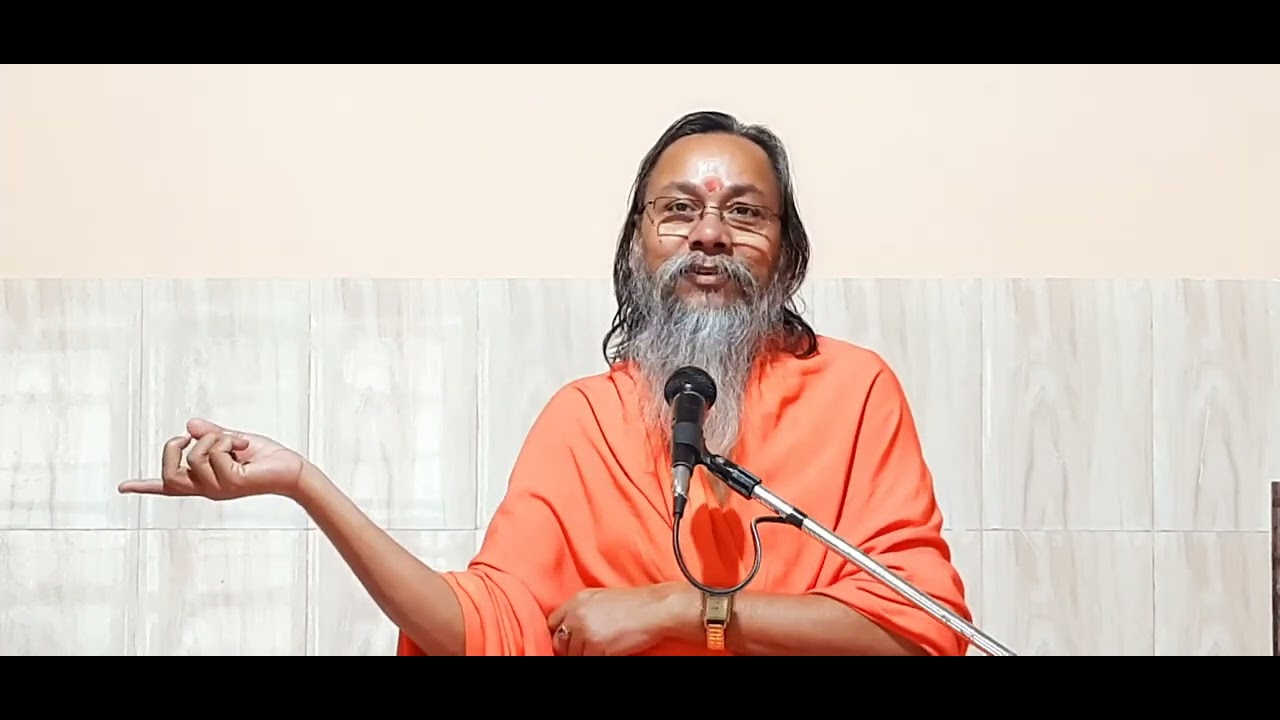
This video features Mahamandleshwar Swami Abhayanand Saraswati discussing the characteristics of divine and demonic natures as described in the Bhagavad Gita. He explains how these qualities manifest in individuals and influence their actions and destinies. The Swami emphasizes the importance of cultivating divine qualities for spiritual progress and liberation, while avoiding demonic traits that lead to bondage.
- Divine qualities lead to spiritual progress and liberation.
- Demonic traits lead to bondage.
- Understanding these qualities helps in self-assessment and spiritual growth.
Introduction
The video opens with devotional music and chants, setting a spiritual tone for the discourse. The initial segments include chants like "Om Namah Shivaya" and "Jai Shri Krishna," creating a sacred atmosphere.
Defining Divine and Demonic Qualities
The speaker explains that divine and demonic qualities are not confined to specific people or places but exist within every human being. Divine qualities include virtues like love, forgiveness, and compassion, while demonic qualities encompass selfishness, arrogance, and deceit. The presence of these qualities determines whether a person is inclined towards divine or demonic behavior.
Characteristics of Demonic Nature
The speaker describes several characteristics of demonic nature, including hypocrisy ("Dharma Dhwaj") where individuals outwardly display religious symbols but lack genuine faith. He cautions against associating with those who exploit religion for personal gain, as their actions can be detrimental. The speaker also touches on the misuse of power and knowledge, where individuals use their abilities for destructive purposes.
Misuse of Power and Knowledge
The speaker illustrates how even virtuous actions, when misdirected, can lead to negative outcomes. He gives example of a woman who worships God but uses the power gained from her devotion to support her unrighteous husband. This misuse of spiritual power aligns her with demonic qualities, leading to adverse consequences.
The Nature of Dharma
The speaker discusses the essence of "Dharma" (righteousness) and how it can be distorted. He explains that outward displays of religiosity without inner transformation are meaningless. True Dharma involves aligning one's actions with divine principles and avoiding hypocrisy.
Defining Key Terms
The speaker emphasizes the importance of understanding the definitions of key terms like "Adharma" (unrighteousness) and "Timana" (arrogance). He explains that "Adharma" involves fragmenting the unified perception of the divine, while "Timana" is the internal belief in one's superiority, even without expressing it outwardly.
Manifestations of Arrogance
The speaker describes various ways arrogance manifests, such as boasting about one's possessions, family, or achievements. He cautions against using these attributes to elevate oneself above others, as this reflects a demonic nature.
Understanding "Atimana"
The speaker defines "Atimana" as an excessive sense of self-importance, even when unexpressed. He contrasts this with divine qualities, where individuals recognize that everything they have is a result of divine grace.
The Importance of Truthful Speech
The speaker stresses the importance of truthful and kind speech. He cautions against using harsh or sarcastic words, as they can deeply wound others. He also warns against flattery that is insincere or intended to mock someone's shortcomings.
Ignorance and Misguided Knowledge
The speaker defines ignorance ("Agyan") as a distorted understanding of reality, where individuals act contrary to what is right. This misguided knowledge is a characteristic of demonic nature, leading to actions that harm oneself and others.
Superior Birth and Divine Qualities
The speaker clarifies that being born into a high social class or having a privileged background does not automatically confer divine qualities. True divinity is reflected in one's actions and character, not merely in one's birth.
The Consequences of Divine and Demonic Natures
The speaker explains that divine nature leads to liberation from the cycle of birth and death, while demonic nature leads to bondage. He emphasizes that cultivating divine qualities is essential for spiritual progress.
Arjuna's Divine Nature
The speaker reassures Arjuna that he possesses divine qualities and should not be discouraged. He explains that Arjuna's inherent nature is inclined towards righteousness and that he is destined for liberation.
The Two Types of Creation
The speaker describes the two types of creation: divine and demonic. He explains that at the beginning of creation, both divine and demonic beings emerged, each with distinct qualities and tendencies.
The Story of Creation
The speaker narrates the story of creation, where Brahma created various beings, including gods and demons. He recounts how the demons disrupted the process of creation, leading to the emergence of negative forces in the world.
The Conflict Between Gods and Demons
The speaker describes the conflict between the gods and demons, where both sought to gain dominance. He explains how the demons corrupted the sacred Vedic rituals, leading to negative consequences.
The Prevalence of Divine and Demonic Natures
The speaker emphasizes that both divine and demonic natures are prevalent in the world. He explains that individuals with divine qualities strive for righteousness, while those with demonic qualities are driven by selfishness and greed.
The Purpose of Understanding These Qualities
The speaker reiterates the purpose of understanding divine and demonic qualities: to cultivate divine virtues and avoid demonic traits. He emphasizes that this knowledge is essential for spiritual growth and liberation.
Conclusion
The speaker concludes by summarizing the key points of the discourse. He emphasizes the importance of recognizing and overcoming demonic qualities to attain spiritual liberation. The video ends with devotional chants and music, reinforcing the spiritual message.

