
Brief Summary
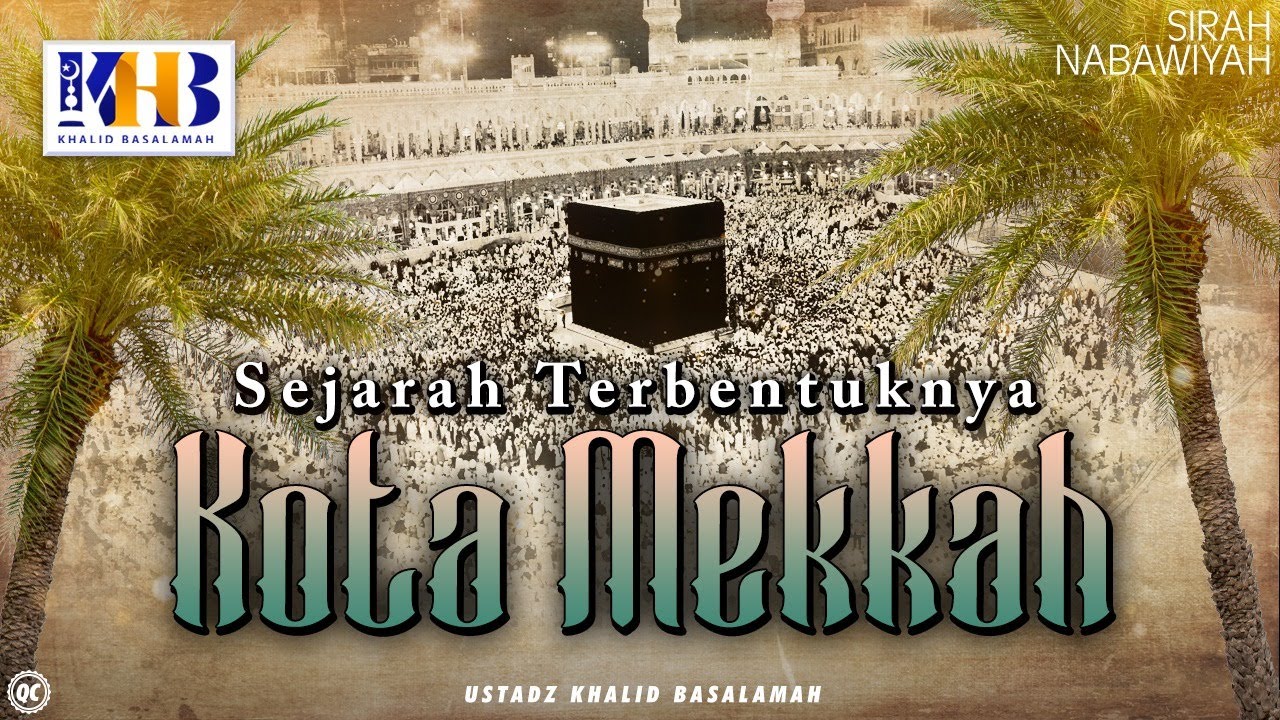
This lecture discusses the history and significance of Mecca, focusing on the lineage of Prophet Ibrahim (Abraham) and Ismail (Ishmael), the construction of the Kaaba, and the origins of pre-Islamic practices. It also addresses various Islamic rulings and principles related to Hajj, sacrifice, and interactions with people of differing beliefs.
- The lineage of Prophet Ibrahim and Ismail and their role in establishing Mecca as a sacred city.
- The construction of the Kaaba and its importance in Islam.
- The origins of pre-Islamic practices and their deviation from the teachings of Prophet Ibrahim.
- Islamic rulings and principles related to Hajj, sacrifice, and interactions with people of differing beliefs.
Introduction: Praise to Allah and Salutations to Prophet Muhammad
The lecture begins with expressions of worship and praise to Allah, acknowledging His power, wisdom, and role as the provider of all needs. Salutations are offered to Prophet Muhammad, the leader of all humans, who brought the commands and prohibitions of the Creator, guiding people to happiness in this world and eternal life in heaven.
Formation of Mecca and the Story of Ismail
The discussion shifts to the formation of Mecca due to the presence of Zamzam water and the story of Prophet Ibrahim. Ismail grew up in Mecca, mingling with the Jurhum tribe, an Arab tribe from Yemen that spoke Arabic. Ismail married the daughter of the Jurhum tribe's chief, leading to the term "musta'aribah" (Arabized Arabs).
Ibrahim's Visits to Ismail and the Doorpost Message
Prophet Ibrahim received orders to visit Mecca and his wife Hajar. During one visit, he found that Ismail was married but away hunting. Ibrahim asked Ismail's wife about their life, and she complained, prompting Ibrahim to leave a message for Ismail to "replace the doorpost." Upon Ismail's return, his wife told him about the visit and the message, leading Ismail to divorce her, understanding it as a divine command.
Ibrahim's Second Visit and the Command to Keep the Doorpost
Ibrahim visited again after some years and found Ismail married to another woman. This wife praised Allah for their life. Ibrahim left a message to "keep the doorpost." When Ismail returned and learned of the visit, he understood that he was to stay married to her.
The Dream of Slaughtering Ismail and the Sacrifice
Ibrahim dreamed of slaughtering his son Ismail and consulted him about it. Ismail, considered by scholars to be of prophetic age, urged his father to follow the command. They went to a place between Muzdalifah and Mina, where the devil tempted Ibrahim, who threw pebbles at him. As Ibrahim prepared to slaughter Ismail, Allah replaced Ismail with a lamb, establishing the law of sacrifice.
Quranic Verses on the Sacrifice of Ismail
Verses 102-111 from Surah As-Saffat (37) are recited and explained, detailing the conversation between Ibrahim and Ismail, their submission to Allah's will, and the divine intervention that replaced the sacrifice of Ismail with a lamb. This event is commemorated every year during Eid al-Adha, and Ibrahim and Ismail continue to receive rewards for this act of devotion.
The Significance of Jumrah and the Story of Ibrahim
The act of throwing stones at the devil, as Ibrahim did, is now a ritual in Hajj called 'jumrah'. Pilgrims throw stones at three points, and each throw is considered a reward for Ibrahim. This act, along with the story of Ibrahim's faith, serves as a reminder of devotion to Allah.
The Building of the Kaaba
After the incident, Allah ordered Ibrahim and Ismail to build the Kaaba on its foundation in Mecca. They constructed it from simple materials, and the place where Ibrahim stood to oversee the construction became known as Ibrahim's tomb. Ismail brought the Black Stone (Hajar Aswad) from Allah, which Ibrahim placed in the Kaaba. Allah then ordered them to guard the house from polytheism and taught them the procedures for tawaf.
Quranic Verses on the Kaaba and Ibrahim's Prayer
Verses 125-129 from Surah Al-Baqarah (2) are recited and explained, highlighting the Kaaba as a gathering place and a place of safety. It also mentions Ibrahim's prayer for Mecca to be a secure city with provisions for its inhabitants. The verses emphasize the importance of purifying the Kaaba for those who perform tawaf, i'tikaf, ruku', and sujud.
The Significance of the Black Stone and the Actions of Umar Bin Khattab
The Kaaba is respected because Allah commands respect, similar to the Black Stone, which is kissed due to divine command. Umar Bin Khattab's statement about the Black Stone emphasizes that it is respected because the Prophet kissed it, not for any inherent power. Umar also cut down a tree where the Prophet pledged allegiance, preventing people from worshipping it.
Ibrahim's Call to Hajj and the Verses in Surah Al-Hajj
Allah ordered Ibrahim to call people to Hajj, and his voice was carried by the wind to all corners of the earth. Verses 26-29 from Surah Al-Hajj (22) are recited and explained, describing how people come to Mecca on foot and on lean camels from distant lands to witness benefits and mention Allah's name on appointed days.
The Rituals of Hajj: Mina, Arafah, and Muzdalifah
The lecture describes the rituals of Hajj, including staying in Mina on the 8th of Dhulhijjah (Tarwiyah day), proceeding to Arafah on the 9th, and staying in Muzdalifah. It explains the significance of Arafah, where pilgrims seek forgiveness and those not performing Hajj are encouraged to fast. The lecture also covers the acts of worship performed on Eid al-Adha and during the days of Tasyrik (11th, 12th, and 13th of Dhulhijjah).
Virtues of Hajj and Sacrifice
The virtues of Hajj are highlighted, including the forgiveness of sins and the reward of Paradise for a Hajj Mabrur (accepted Hajj). Performing Hajj and Umrah consecutively removes hardship and poverty. The lecture emphasizes the importance of sacrifice (qurban) and encourages giving to the poor and needy.
The Significance of Goats and Sheep in Islam
Goats and sheep are significant in Islam, with the Prophet Muhammad favoring goat meat. They are used in Aqiqah (birth celebration) and Eid al-Adha sacrifices. The lecture discourages keeping pets like cats and birds, as they are not typically used for food or trade and may involve cruelty.
The Emergence of Polytheism: Amru Bin Luhay
The lecture discusses the origins of polytheism in Mecca, attributed to Amru Bin Luhay, who introduced idols into the Arabian Peninsula. Amru Bin Luhay was a leader who, after visiting Syria, brought back the idol Hubal and placed it in Mecca, ordering people to worship it. He also instructed each tribe to create their own idols, leading to the widespread worship of various deities.
The Story of Isaf and Nailah and Other Pre-Islamic Practices
Amru Bin Luhay ordered the worship of Isaf and Nailah, two lovers who were turned into statues for committing adultery in front of the Kaaba. He also promoted the practice of killing female infants, a common custom in pre-Islamic Arabia. Additionally, he altered the Talbiyah (a prayer recited during Hajj) and introduced the concept of sacred animals (Bahirah, Saibah, Wasilah, and Ham).
Quranic Verses on Pre-Islamic Practices and the Condemnation of Polytheism
The lecture references Quranic verses condemning the practice of killing female infants (Surah An-Nahl 16:58-59, Surah Az-Zukhruf 43:17, Surah Takwir 81:8-9) and the pre-Islamic customs of Bahirah, Saibah, Wasilah, and Ham (Surah Al-Maidah 5:103). These verses highlight the deviation from the true teachings of Prophet Ibrahim and the importance of monotheism.
Questions and Answers: Islamic Rulings and Principles
The lecture concludes with a Q&A session, addressing various Islamic rulings and principles. Topics include the permissibility of eating goat meat, the importance of seeking knowledge, the concept of hijrah (migration), the virtues of Hajj, and the permissibility of praying in mosques that are not strictly following the Sunnah. The speaker emphasizes the importance of adhering to the Quran and Sunnah and seeking guidance from knowledgeable scholars.

