
Brief Summary
This video explains how to create dynamic poses in drawings using curves and disruptions to those curves. It introduces the concept of a "curved T" as a tool to visualize the body in 3D space and add movement. The video presents three methods, from easy to challenging, to achieve dynamic poses: using the curved T for full-body poses, employing foreshortening for half-body poses, and utilizing curvilinear perspective to create dynamic backgrounds.
- Using curves and disruptions to create dynamic poses.
- Introduction to the "curved T" as a tool for visualizing the body in 3D space.
- Three methods for achieving dynamic poses: curved T for full-body, foreshortening for half-body, and curvilinear perspective for backgrounds.
Nightmare
The video addresses the challenge of creating dynamic poses in drawings, especially when lacking suitable references. It highlights the issue of wanting to create a dynamic pose from scratch. The presenter introduces a solution involving a curved "T" shape in 3D space as a method to easily add movement to drawings. The video promises to demonstrate three ways to draw dynamically, ranging from easy to challenging, and explains how this simple T shape can change the way one thinks about drawing poses.
The Curved “T”
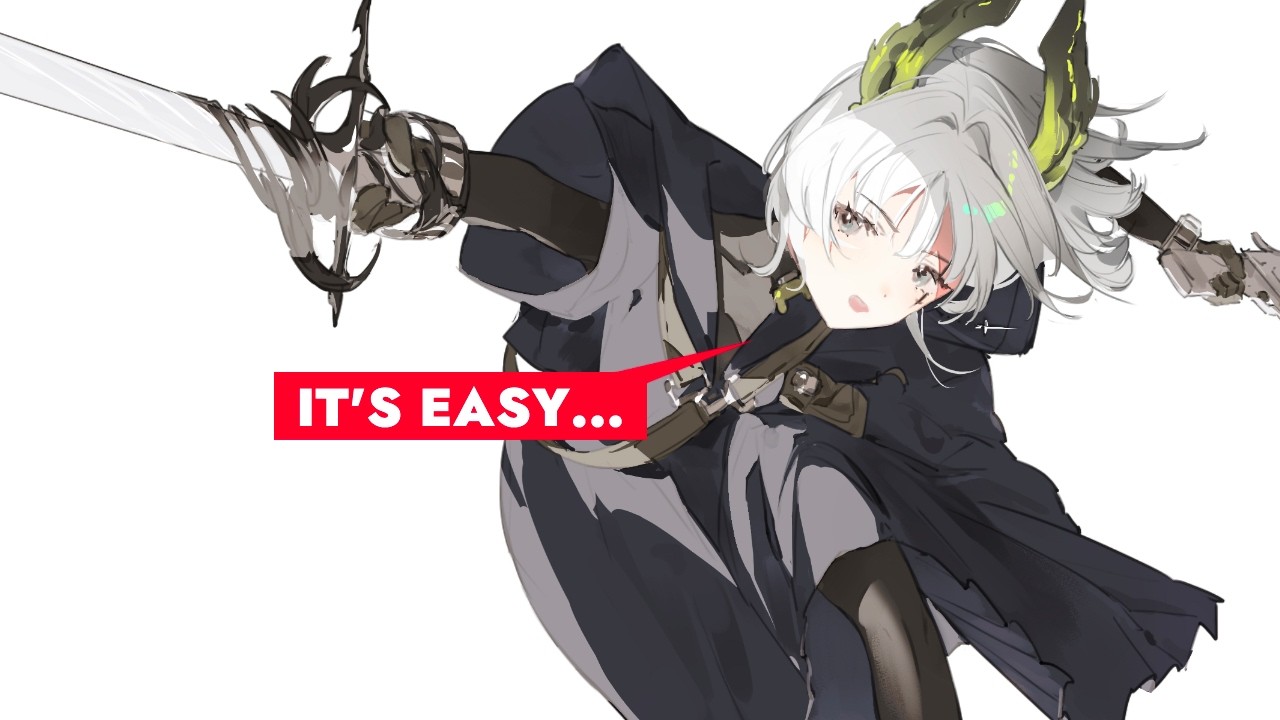
The presenter introduces the "curved T" technique as a solution for creating dynamic full body poses. This method involves drawing a curved line, shaping it into a ribbon in 3D space, and then adding another ribbon perpendicular to the first to create a T-shape. The orientation of the T indicates the front and back of the body, helping to visualize the pose in 3D. The presenter explains that the curved T adds movement to the body, especially when combined with actions like attacking with a weapon. Using the curved T helps to visualize the body in 3D with volume and flow.
Opps No Legs
The video transitions to creating dynamic half-body poses, acknowledging the challenge of having fewer joints and limbs to work with compared to full-body poses. The presenter suggests using the long part of the T to represent an outstretched limb towards the camera, with the body positioned perpendicular to the limb for greater impact. This technique involves foreshortening, which requires distorting the limb to make it appear larger as it gets closer to the viewer, adding complexity. The presenter notes that while foreshortening the body is manageable, adding clothing introduces further difficulty in maintaining the illusion of depth and accurately drawing folds.
Solution No.3 - Exploding Background
The presenter discusses creating dynamic poses even when the character is standing straight and still. The solution involves using curved space and distorting the environment around the character to create a sense of movement. The presenter introduces four or five-point curvilinear perspectives, which distort space in a predictable way, similar to a fish-eye lens. Using these perspectives requires knowledge of foreshortening and the ability to follow perspective grids to accurately draw distorted backgrounds. The presenter recommends resources for learning curvilinear perspective and emphasizes that this method can create extremely dynamic and unreal environments.
Colour
The video briefly touches on coloring the sketches, with the presenter expressing a preference for harsh lighting to complement the dynamic poses. They mention using hard light layers to paint in shadows and lights, referencing techniques explained in previous videos about lighting and color. The video concludes by summarizing that curves, a curved T, and more curves are essential for making drawings more dynamic. The presenter teases the completion of the sketches in future videos and encourages viewers to keep drawing.

