
Brief Summary
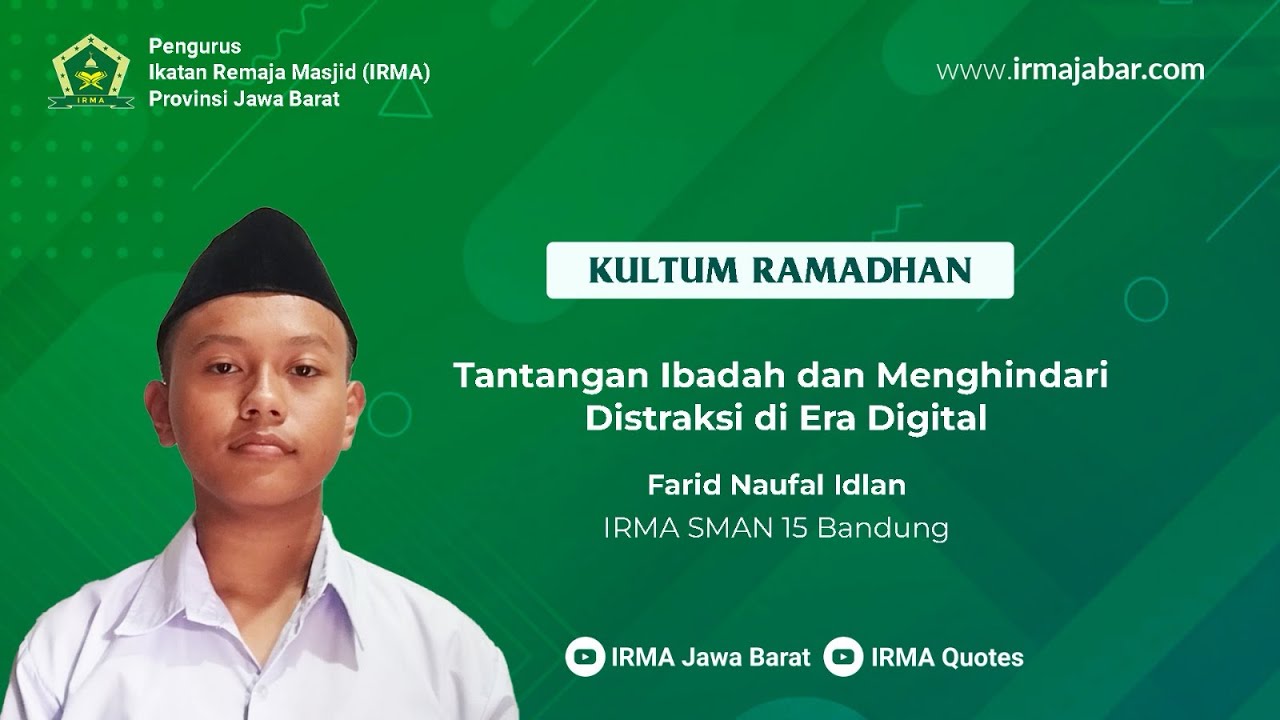
Farid Novalidlan discusses the challenges and distractions of the digital era, particularly concerning worship during Ramadan. He highlights how cellphones, social media, and the internet can detract from sincere devotion. He suggests reframing digital technology from a threat to a potential field of worship by using it to share beneficial content and engage in religious activities with others. The goal is to transform challenges into opportunities for blessings and benefits for oneself and the community.
- Digital technology can be a distraction from worship.
- Ramadan is a crucial time for prayer and seeking forgiveness.
- Digital platforms can be used to enhance worship and share beneficial content.
- Engaging in religious activities with family and friends online can bring blessings.
Introduction
Farid Novalidlan from Irma SMA Negeri 15, Bandung City, introduces a short talk about the challenges and distractions presented by the digital era, especially concerning worship. He points out that people often find themselves forgetting their worship and sincerity due to the influence of cellphones, social media, and the internet. He acknowledges that this is a common feeling, even among his peers.
The Importance of Ramadan
Farid emphasizes the significance of Ramadan as a crucial time for prayer, worship, and seeking forgiveness. He references a hadith by al-Bayhaqi, which states that three prayers are never rejected: those of a righteous leader, a fasting person until they break their fast, and a wronged person. He focuses on the second category, "the one who fasts until he opens," highlighting the importance of this period.
Reframing Digital Technology
Farid encourages a shift in perspective regarding digital technology, such as social media, cellphones, and laptops. Instead of viewing them as threats or challenges to worship, he suggests transforming them into potential tools for worship. This involves using technology to create and share interesting and useful posts that promote worship.
Practical Applications
Farid provides practical examples of how to use technology for worship. He suggests replacing time spent idly on social media with creating and sharing beneficial content. Additionally, he recommends using platforms like YouTube and Facebook to watch religious talks (Tausiyah) with friends, family, and siblings, emphasizing the abundance of such content available online.
Conclusion
Farid concludes by expressing hope that these changes will bring blessings and benefits not only to individuals but also to their friends, family, and the wider community. He reiterates his name and expresses his hope that his words will be useful to everyone. He ends with a closing prayer and Islamic greeting.

