
Brief Summary
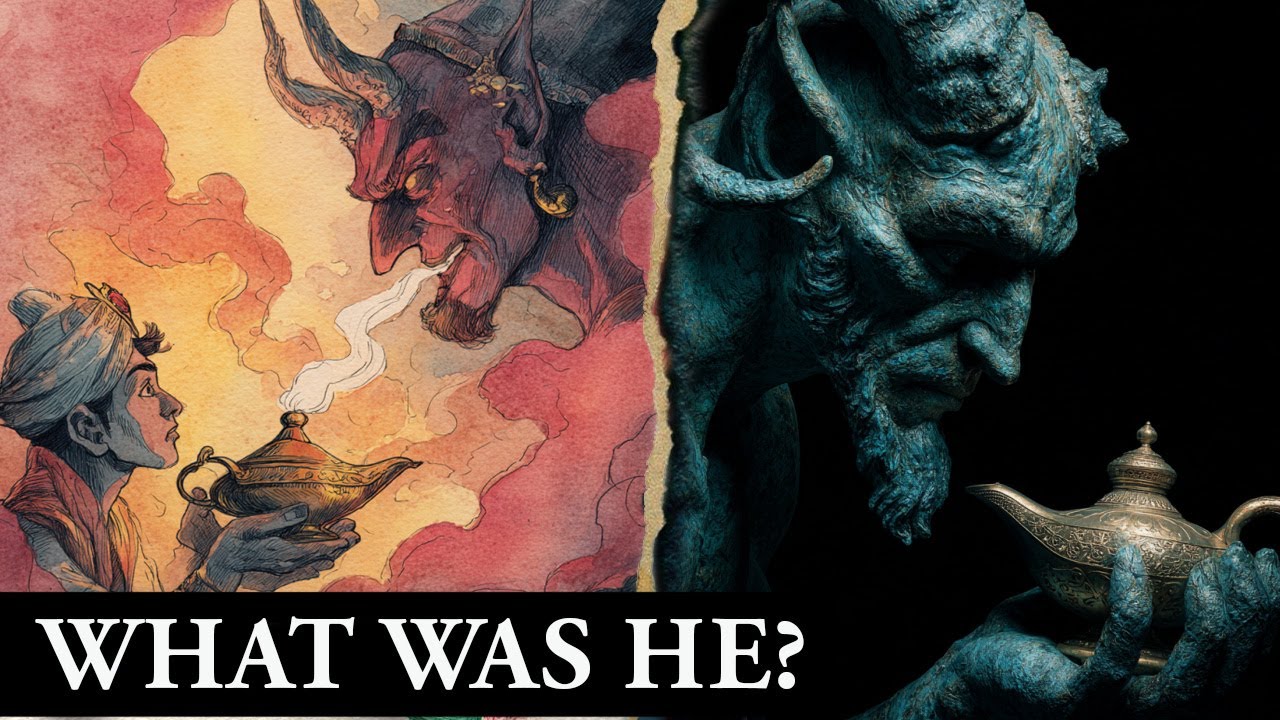
The video explores the origins and hidden meanings behind the tale of Aladdin, revealing its connections to ancient folklore, mythology, and religious beliefs. It traces the story's journey from its addition to "One Thousand and One Nights" by French scholar Antoan Galon to its roots in pre-Islamic Arabian beliefs about jinn and Mesopotamian demonology. The video also discusses the significance of the genie as an enslaved spirit, linking it to the legends of King Solomon and the motif of imprisoned entities in various cultures. Finally, it interprets the cave in the story as a symbolic underworld, drawing parallels to similar motifs in ancient myths and rituals.
- The tale of Aladdin is not part of the original Arabic manuscripts of "One Thousand and One Nights" but was added later by a French scholar.
- The concept of jinn predates Islam and is rooted in ancient Arabian beliefs about supernatural beings inhabiting the world.
- The genie in Aladdin's story is portrayed as an enslaved spirit, reflecting the legends of King Solomon and his power over demons.
- The cave in the story symbolizes the underworld, representing a place of transformation and rebirth.
The original Aladdin tale
The original Aladdin story is about a poor, idle boy named Aladdin living in a city in China. A sorcerer from Maghreb, disguised as Aladdin's uncle, tricks him into retrieving a lamp from an enchanted cave. Aladdin finds the lamp but refuses to hand it over to the sorcerer, who then traps him inside the cave. In despair, Aladdin rubs a ring the sorcerer gave him, summoning a genie who helps him escape. Later, Aladdin's mother rubs the lamp, releasing an even more powerful genie who grants Aladdin wealth and power. Aladdin marries Princess Bador and builds a magnificent palace with the genie's help. The sorcerer returns, steals the lamp, and transports the palace to Maghreb. Aladdin uses the ring's genie to reach the palace, defeats the sorcerer, and returns the palace to its original location. After dealing with the sorcerer's vengeful brother, Aladdin eventually becomes the Sultan and rules wisely.
Aladdin wasn’t in the original text
The tale of Aladdin is famous from the Arabian Nights, but it wasn't in the original Arabic versions. It's an "orphan tale" with no known Arabic source. It was added in the 18th century by French scholar Antoan Galon, who heard it from Syrian storyteller Hannah Diab around 1709. Galon's French version introduced Aladdin to Europe in 1712, becoming very popular. Researchers think it was likely an oral folk tale from the Middle East that Diab learned in his youth, possibly in Aleppo or during his travels.
How Aladdin entered 101 Nights
Antoan Galon, a French scholar, included the story in his French publication of "One Thousand and One Nights" after hearing it from Hannah Diab, a Syrian storyteller, around 1709. The story quickly gained popularity in Europe after its introduction in 1712.
Where the Aladdin story came from
Some speculate that Hannah Diab's own experiences influenced the story. In his memoirs, Diab recounts traveling with a French adventurer and witnessing a local boy uncovering treasures from an underground chamber. This real-life event might have inspired the magical ring and lamp in Aladdin's tale.
Why Aladdin is set in “China”
Aladdin's story was shaped by many cultures, with the first written record being Gallon's French version. The story has elements from the Middle East, Central Asia, and Europe. Although the original tale is set in China, it feels Middle Eastern, with a sultan as the ruler and characters swearing by Allah. In folklore, China was often used to represent a distant, exotic land. Some scholars believe the setting was inspired by regions on the Silk Road, like Turkistan in western China, where Islamic and Chinese cultures mixed. The Chinese setting is superficial, adding a bit of oriental flavor to a story that is fundamentally from the Islamic world.
A global folktale pattern (ATU 561)
Over time, Aladdin's tale was translated, re-translated, and embellished. By the 19th century, it spread back into the Middle East in Arabic translations of the European versions. Variants of the Aladdin story have been found in oral traditions worldwide, from the Middle East to India and throughout Europe. Folklorists classify Aladdin as tale type ATU561, which includes stories about a poor young man discovering an enchanted object and a supernatural servant. This storyline, involving a rise from poverty through a magic item, a supernatural helper, the loss of the item to a villain, and its eventual recovery, is a common motif across many cultures, making the tale feel both timeless and universal.
The dark origins of jinn
Aladdin's magic lamp and genie distinguish it from other tales. The concept of an enslaved genie granting wishes requires looking into history. The genie, or jin in Arabic, is a powerful spirit bound to an object. While modern pop culture often portrays genies as comical wish-granters, their true origin is darker and older. Long before Islam and Aladdin, Arabs believed in jin, supernatural beings inhabiting the world, often invisible, capricious, and dangerous. The concept of jin predates written history in the Middle East, making these entities ancient.
From nature spirits to demons
As newer religions and high gods emerged, older nature spirits were demoted to jin, demonized by the new faiths but never entirely forgotten. These ancient spirits may date back 5,000 to 6,000 years or more.
Mesopotamian demon ancestors
Pizuzu, a wind demon from Sumerian and Babylonian mythology, appears in Mesopotamian sources from around 1,000 BC, though the wind demon tradition is much older. He is depicted as a monstrous hybrid with a lion's head, wings, and a scorpion's tail, embodying sandstorms and desert winds. Across ancient Mesopotamia, Assyrian palaces were guarded by carvings of winged genies, powerful, half-divine beings with wings, carrying ritual objects or raising their hands in gestures of blessing. Scholars have noted that Pizuzu and other Mesopotamian demons resemble early prototypes of the Arabian jin, belonging to a tradition of chaotic spirits of air and darkness that predates written myths. Aladdin's genie may have roots in the dawn of civilization.
Jinn in Islam and folklore
The word "jin" comes from an Arabic root meaning "to hide" or "to conceal." Jin move invisibly through the world, manifesting only when they choose, often in frightening forms. When Islam emerged, it incorporated these spirits into its worldview. The Quran states that God created jin from smokeless fire as a parallel race to humans, who were made of clay. In Islamic tradition, jin have free will; some are good, many are evil, and all will be judged by God. Despite the theological integration, old folklore persisted. For over a thousand years, people across the Middle East told jin stories, wore amulets, and blamed jin for unexplained events. Medieval Islamic scholars cataloged them, including ghouls, efrits, and merids.
How jinn became “genies”
In Western translations, the Arabic "jinny" became "genie," echoing the Latin "genius," a personal guardian spirit. This shift changed the perception of the jin. French readers imagined a clever household guardian rather than a terrifying desert spirit. What began as a dangerous, volatile being became a magical helper in European imagination, still powerful and exotic but tamed.
Solomon and enslaved spirits
Aladdin's genie is essentially a demon of the lamp, a fire spirit forced into servitude. Folklore across cultures contains tales of magicians binding otherworldly beings, with King Solomon being a prominent figure. Solomon, the biblical son of David, was said in Jewish, Christian, and Muslim traditions to have authority over spirits. The Testament of Solomon and Middle Eastern legends claim Solomon possessed a signate ring, the Seal of Solomon, inscribed with God's name or magical symbols, which allowed him to command demons and jin. The original Aladdin story features two genies, one in the lamp and another in a ring, suggesting a connection to Solomon's power. The Quran hints at Solomon's control over the jin, who labored under his command. Arabic folk tales claim Solomon used the jin to build the Temple of Jerusalem and other wonders.
The genie as a prisoner
Those who rebelled against Solomon were imprisoned in brass or iron vessels, sealed with his magic ring. The tale "The Fisherman and the Jinny" from the Arabian Nights illustrates this. A fisherman finds a copper bottle sealed with Solomon's seal. Upon breaking the seal, a powerful ifrit emerges, furious at being trapped for 400 years. The jin initially vows to kill his rescuer but is tricked back into the bottle and forced to swear an oath not to harm the fisherman. This tale reveals that a genie in a bottle is serving a sentence, and the bottle is a prison. Aladdin's genie was likely imprisoned long before the story begins, trapped by a sorcerer or Solomon himself, bound to serve the lamp's holder. In the original story, there is no limit to the wishes, making the notion terrifying. Gaining power over a demon was dangerous because violently sealed spirits were sealed for a reason.
The cave as the underworld
In modern retellings, the cave of wonders is a magical vault, but in the original story, it is an underworld. Caves are thresholds where our world touches the next. Greeks believed entrances to Hades were through deep caverns, and Babylonians saw the underworld as a subterranean realm reached through pits. Arabian folklore warns that caves and ruins are dwelling places of jin and the dead. The sorcerer leading Aladdin to the cave is not a simple errand but a descent, a catabasis, where a hero journeys into darkness and returns with something powerful. Gilgamesh, Prometheus, and Hercules all undertook similar journeys. Aladdin's cave is a test, a place of transformation. In Near Eastern folk magic, spirits sealed in vessels were buried underground. A sealed lamp in a cave is not a coincidence but where a magician would hide something dangerous. The sorcerer not entering the cave himself is a telltale sign, as guides to the underworld never cross the threshold. Aladdin reflects a ritual descent, a boy led into the underworld, taking a demon from the shadows, a story reaching back to humanity's first myths.

